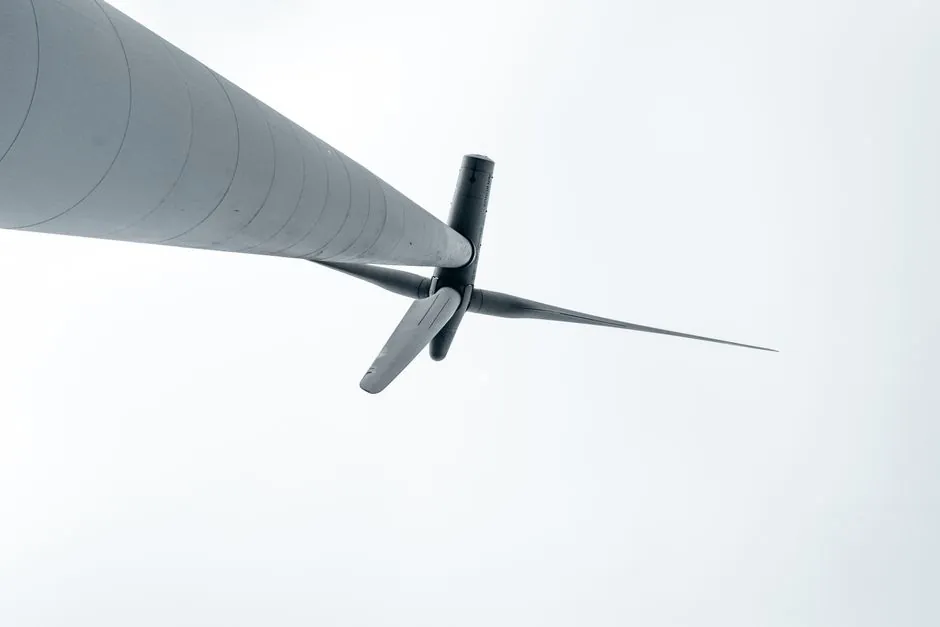
A hybrid concrete tower can have a concrete lower section and a steel upper section, with components either precast in an existing factory or cast in situ in a factory built specifically for the project.
The decision depends on transport limits, crane capacity, joint design, foundation loads, local concrete supply and lifecycle cost rather than a universal steel-versus-concrete rule [S2][S4].
Core tower configurations and their structural roles
A hybrid tower uses steel and concrete in different elevations, while a concrete-shaft design may transition to a steel upper section and nacelle adapter. Concrete construction can be precast in an existing plant or cast in situ in a purpose-built facility near a wind farm; each tower section commonly contains 2–6 elements connected by vertical joints, with sections joined by horizontal grouted joints [S4].
Tubular steel remains the established onshore configuration because steel mills, plate-fabrication shops, bolted flange procedures and transport routes are mature. The 2006 evaluation also found that semi-self-erecting the nacelle at 50 m rather than 100 m did not create a strong cost advantage over a hybrid steel-concrete tower, which makes erection strategy part of the tower comparison rather than a separate decision [S1].
Hybrid designs therefore attempt to allocate each material to the elevation where its structural and logistical performance is most useful [S2].
Selection criteria for an onshore hybrid tower
Transport route width, road curvature and permitted oversize loads govern how many steel sections must be split. Modular composite or hybrid construction can permit on-site assembly where a complete steel tower section is impractical, particularly for installations approaching or exceeding 120 m hub height [S2].
Crane capacity governs the allowable shipping weight of the tower, nacelle and blade set. A hybrid design is attractive when concrete can be supplied near the site and heavier transport sections can be lifted safely, but it is weaker when the site lacks a production yard, heavy-lift crane or tested connection system.
Foundation design is the second major criterion. Concrete towers use added mass and stiffness to reduce structural demand and can permit a smaller foundation than the standard shallow foundation used with a comparable steel tower [S4]. The foundation comparison must include excavation, reinforcement, concrete volume, grouting and connection loads, not only the tower purchase price.
Steel, full concrete and hybrid compared

Steel scores well on fabrication repeatability, section weight, transport efficiency and established repair methods. Its practical weakness is the dimensional and transport burden of large rolled sections, particularly above conventional road and lifting limits [S2].
A full-concrete tower can use a small upper adapter between the final section and the nacelle, while its components may be precast in an existing factory or cast in situ in a project-specific factory. Its constraints are local production capacity, the need for vertical and horizontal joints, grouting, embedded cable systems and construction of a project-specific casting facility if precast supply is unavailable [S4].
A hybrid structure sits between those cases. It can reduce foundation demand and retain steel fabrication at the upper tower, but it adds interface, joint and quality-control requirements. The explicit choice is therefore: select steel for conventional transport and crane envelopes, full concrete for high stiffness and large local production capacity, and hybrid where foundation savings or logistics justify the extra connection complexity [S1][S4].
Best-fit projects and unsuitable applications
A project-specific factory for cast-in-situ concrete tower components makes sense for large wind farms with dozens of wind turbines.
Steel is the better fit for smaller or dispersed onshore fleets, sites with established steel delivery routes, limited heavy-lift equipment and projects that cannot support a dedicated concrete plant.
Concrete towers are not automatically corrosion-free in every environment. Reinforcement and embedded steel still require protection, while joints, grout and construction tolerances need inspection. The cited offshore comparison identifies concrete as advantageous against saltwater exposure, but that argument does not eliminate the need to protect reinforcement or verify the land-project exposure class [S3].
Supply-chain risks, interfaces and failure modes
Supply risk moves from plate mills and heavy transport toward concrete plants, reinforcement cages, formwork, grout, tendons and specialist installation crews. A project with multiple turbines can justify an on-site casting plant, but a project with only a few units cannot spread that fixed investment as readily [S4].
The most failure-sensitive interfaces are the horizontal section joints, vertical precast joints, steel-concrete transitions, grout pockets and embedded cable routes. Sections are assembled with vertical joints, tower sections are joined with horizontal joints, and the joints are generally grouted, while a cable system commonly runs through the tower to the foundation [S4].
Quality control must include joint geometry, grout strength and filling, tendon or anchorage performance, concrete curing, reinforcement continuity, coating protection and dimensional tolerances at the steel-to-concrete connection. Hybrid sourcing should require a single interface design and defined responsibility matrix rather than separate steel and concrete packages with an undefined gap.
Cost, sourcing basis and procurement criteria
Cost evaluation must compare the delivered tower, not the fabricated material. Steel-heavy solutions expose the buyer to plate price, welding, flange machining, coating, oversized transport and crane picks. Concrete-heavy solutions replace some of that exposure with cement and aggregate logistics, plant setup, casting labor, curing time, joint works and foundation optimization [S1][S4].
The most defensible procurement split is a site-specific total-cost model using hub height, tower diameter, steel tonnage, concrete volume, transport route, crane capacity, number of turbines, foundation type and joint responsibility. The evidence supports concrete and hybrid options becoming competitive at 100 m and above, but it does not establish a universal cost threshold that applies to every onshore site [S4].
For sourcing, request the steel grade and coating system, concrete strength and exposure class, reinforcement specification, joint and grout qualification, transport weights, erection sequence and foundation interface. Confirm plant certification and witness points before contract award. For additional context, a comparison of steel and composite wind-tower technologies can clarify why hybrid concepts are being considered for transport-constrained, high-hub installations.
The next procurement checkpoint is the signed single-line design showing shipped section weights, crane radius, concrete delivery rate, joint inspections and foundation quantities, because those six items expose whether the hybrid tower has a measurable project advantage over an all-steel tower.