
Concrete anchor pull-out capacity rises with compressive strength, but compressive strength is governed by water-cement ratio and paste quality, not cement mass alone [S2]. Above the mix-design optimum, extra cement adds shrinkage and heat of hydration without proportional strength gains, so anchor capacity plateaus [S2].
For an engineer sizing a chemical anchor or an expansion anchor, this matters: specifying a richer mix by dumping more cement into the truck is the wrong lever, and the right ones are w/c, aggregate grading, supplementary cementitious materials, and curing moisture [S1][S2][S3].
Why cement content alone is a weak lever
Cement is the most expensive and most carbon-intensive ingredient in ready-mix concrete, so over-dosing it costs money and environmental budget for negligible structural return [S3]. The University of Arkansas thesis on Class S(AE) bridge-deck concrete explicitly investigated reducing cement content while holding fresh and hardened properties to spec, a clear signal that the highway-engineering community treats cement content as optimisable, not sacred [S3].
The 4:2:1 rule (4 parts coarse aggregate, 2 parts sand, 1 part cement) is one practical field anchor: it is built on ideal particle packing, not on maximising cement, and excess cement in that ratio is described as making the mix brittle and prone to cracking [S5]. For anchor work, that brittleness shows up as a smaller concrete cone, more micro-cracking at the bore interface, and lower post-crack residual capacity.
What actually moves anchor holding strength
Water-cement ratio is the single strongest predictor of compressive strength: lower w/c produces higher strength and lower capillary porosity, while on-site water additions to fix slump quietly destroy both strength and durability [S2]. Admixtures (water reducers, HRWR, accelerators, retarders) are usually the cheapest way to hold w/c down while keeping workability, and trial batching is the verification gate [S2].
Aggregate quality and grading matter because aggregates are the majority of the volume, well-graded, clean, angular aggregate reduces voids and paste demand and lifts the ceiling on achievable compressive strength [S2]. Curing moisture over several weeks is a chemical requirement, not a nicety: a slow, moist cure consistently produces a stronger slab than a richer mix that dries out early [S4].
Comparing the levers side by side
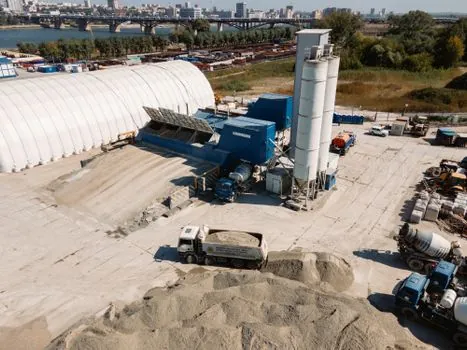
On a 0-10 scale of impact on anchor-relevant compressive strength and on cost, the levers rank roughly: water-cement ratio (impact 9, cost low), curing moisture and duration (impact 8, cost low to moderate), aggregate grading and cleanliness (impact 7, cost moderate), supplementary cementitious materials like fly ash, slag, silica fume (impact 6, cost neutral to slightly higher), water-reducing admixtures (impact 6, cost low), and raw cement content above the mix-design optimum (impact 2, cost high) [S1][S2][S3].
Silica fume is the SCM that most directly pushes strength and reduces permeability for high-strength applications, fly ash improves workability and long-term strength, slag supports later-age strength and durability, and the optimal blend depends on exposure, schedule, and temperature [S2]. Picking SCMs by spec is far more productive than adding bag after bag of Portland cement, especially when anchor embedment depths are already fixed.
How this maps onto anchor failure modes
For headed studs, expansion anchors, and chemical anchors, design codes tie characteristic resistance to concrete compressive strength f'c, usually as a power law, so the apparent penalty for under-strength concrete is steep at low f'c and flattens at high f'c. That is exactly why pushing cement from, say, a 25 MPa design mix to 35 MPa by w/c reduction helps, but pushing from 50 MPa to 70 MPa by adding more cement alone gives almost no usable gain and risks shrinkage cracking at the anchor bore. [S2]
A secondary lever is concrete density and uniformity, which both rise with proper aggregate grading and good vibration, and that uniformity controls whether the breakout cone is the textbook shape or a ragged, low-capacity half-cone. Overworking the mix at the surface, a common field mistake, pulls paste to the top, weakens the top 20-30 mm, and is the hidden reason many through-bolt anchors underperform their catalog value even when the truck ticket shows a strong mix [S4].
Limits and what the research does not nail down
The cited material is unanimous that more cement does not automatically mean stronger, but none of the sources quotes a specific inflection point (for example, a kg/m³ threshold above which additional cement ceases to raise 28-day strength) [S2][S3][S5]. Project-specific mix optimisation against the actual aggregate source and the actual SCM supply is still required, and that is exactly the work the Arkansas DOT study and Caltrans Chapter 3 procedures are designed to discipline [S1][S3].
For site crews, the practical rules reduce to: order the mix by w/c and target strength, not by cement bags; use HRWR to hold workability at low w/c; verify with trial batches and field cubes; moist-cure for at least several days; and treat any field water addition as a documented, evaluated event, not a free fix [S2][S4]. A specifier who follows those rules gets more usable anchor capacity per dollar than any contractor who simply "ordered extra cement."
Two trackable signals for the next planning window: ACI 318 Chapter 17 anchor provisions continue to be the controlling reference in U.S. practice, and suppliers are increasingly tagging truck tickets with w/c rather than cement content, so a ticket review by w/c is the cleanest audit a QA team can do on anchor-critical pours. For procurement teams weighing cement vs SCM pricing, the same w/c-tagged tickets are the input to the Degradable Paper and PVA Bags: Direct-Add Packs for Ready-Mix Trucks workflow, since SCM dosing at the truck is the lever that keeps w/c constant while lowering total cement.