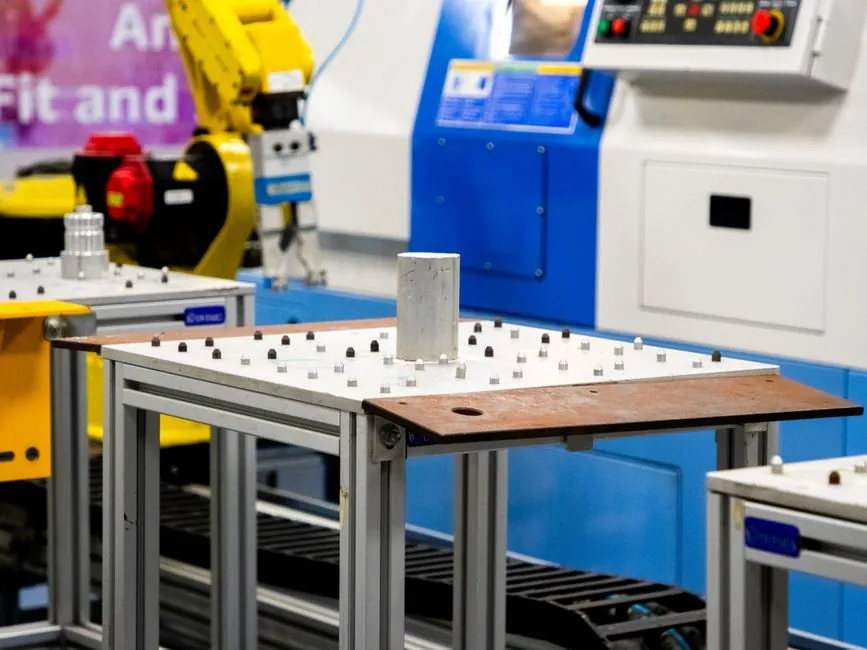
Motion capture can provide objective, detailed movement data for ergonomic assessment in real-world working conditions [S3].
The workflow suits engineering, ergonomics, safety, and production teams that need evidence for workstation redesign, task balancing, operator training, and production-cycle improvement.
What Motion Capture Measures on an Assembly Line
Motion capture replaces pen-and-paper observation with a repeatable movement dataset covering kinematics, exposure, coordination, and task-specific outcomes [S3].
For assembly-line analytics, this supports a sequence of engineering decisions: compare two workstation layouts, identify the cycle phase associated with poor posture, quantify an intervention, and retain the measurements as a before-and-after baseline.
These are workload observations, not medical diagnoses. Ergonomic teams must still apply a suitable assessment method and interpret the results within the task, workforce, and workstation context [S3].
Optical, Inertial, and Computer-Vision Options
Optical motion capture, inertial measurement units, and computer vision each support movement analysis, but their operating conditions and data-processing requirements differ. A 2026 comparison found that computer-vision-based motion capture has potential for evaluating human posture, while the broader research set does not establish one capture method as universally superior [S9].
Optical systems such as the MAS architecture use a network of depth cameras for markerless capture in an industrial workstation [S1]. Its software combines task timing, workspace use, hand movement, visited locations, and whole-body ergonomic analysis [S1]. The MAS implementation evaluated a water-pump assembly station, demonstrating that optical motion capture can be integrated with production and ergonomic analysis rather than used only for laboratory motion studies [S1].
Inertial motion capture can provide objective, detailed movement data captured in real-world conditions [S3]. IMU-based approaches use wearable sensors, while video-based methods can support markerless analysis [S8]. Practical selection should account for camera occlusion, sensor donning, work-cell geometry, interference with assembly work, data export, and the need to synchronize motion with production events.
Selection Criteria for Production Deployments
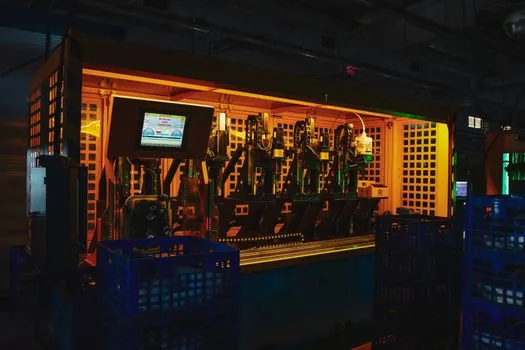
Capture quality must be specified as a system requirement, not inferred from the camera or sensor label alone. Motion capture is more objective and repeatable than manual observation, yet its value depends on whether the recorded movement accurately represents the actual task [S3]. Required outputs should therefore include joint angle, orientation, velocity, acceleration, duration, frequency, and task-segment labels wherever those variables drive the decision [S3].
Require the delivered dataset to expose the sensor model, sampling configuration, filtering method, coordinate system, calibration procedure, and software revision so another engineering team can reproduce the analysis.
Do not select a system by one best metric. Optical capture can measure without wearable markers but depends on visible body geometry and camera coverage [S1]. IMU capture supports mobile work but adds wearable setup and drift-management requirements. Computer vision can reduce manual marker placement, yet its pose estimates and occluded segments must be validated for the assembly task [S9].
Comparing the Main Capture Approaches
A defensible comparison separates measurement coverage, setup burden, environmental constraints, and output suitability. No single method controls all four criteria, so the preferred architecture depends on whether the pilot prioritizes precision, low operator burden, task coverage, or rapid deployment. [S1]
Optical motion capture offers detailed segment tracking and supports markerless workflows, but camera placement, occlusion, and workstation geometry determine whether the relevant joints remain visible [S1]. Inertial capture is suited to full-cycle movement in operating environments and can expose posture, repetition, and asymmetry, but wearables introduce donning time and calibration work [S3]. Computer vision offers video-based analysis with potential for automated posture assessment, although occlusion and pose-estimation accuracy require task-specific validation [S9].
Marker-based optical systems are another option when controlled accuracy and explicit skeletal references are required [S4]. For routine production monitoring, the practical question is whether measured exposures are repeatable enough to justify the sensor, software, processing, and data-governance burden.
From Movement Data to Ergonomic Indexes
The MAS architecture integrates motion capture with ad hoc software developed for productive and ergonomic analysis of the operator during manufacturing and assembly tasks [S1]. These methods provide recognized analytical frameworks for evaluating posture and related risk, while motion capture supplies the measured movement inputs that observation alone may miss [S1][S3].
A production-grade workflow should preserve the path from sensor signal to engineering decision. Store raw or minimally processed pose data, document filtering and segment definitions, record task labels and line events, generate ergonomic indexes, and retain representative visual clips for review. This structure makes it possible to distinguish a genuine workstation change from sensor drift, task variation, or an analysis-rule change.
Threshold selection must remain method-specific. A joint-angle value should not be transferred between incompatible index systems without confirming its definition, body segment, posture model, and exposure context. The defensible output is an indexed score or exposure result tied to a documented assessment procedure, not an unqualified claim that one capture metric proves injury risk.
Production Use Cases Beyond Ergonomics
Motion capture can support production analysis alongside ergonomic analysis, including task execution time, workspace use, hand trajectories, and locations visited by the operator [S1]. This dual output is valuable on assembly lines where a redesign intended to reduce reaching also changes cycle time, operator travel, or the sequence of work steps.
One practical use is a controlled intervention test: capture the same task before and after changing fixture height, tool presentation, part orientation, or workstation layout. Compare posture duration, reaching frequency, trunk contribution, task time, and movement variability against the baseline [S1][S3]. A second use is training, where recorded movement provides a concrete reference for demonstrating an improved technique without relying only on verbal instruction.
Continuous or real-time feedback is also emerging as a direction for manufacturing design, including objective movement assessment and automated ergonomic analysis [S7]. That does not make every station ready for live intervention. Validation should establish that feedback does not alter the task, distract the operator, create safety conflicts, or generate alarms faster than operators can respond.
Data Quality, Validation, and Failure Modes
Manual observation has limits that include short recording windows, observation bias, and simplification, while motion capture can improve consistency but can still fail through tracking loss, poor calibration, synchronization error, and inappropriate metric definitions [S3]. The strongest validation compares captured variables with independent references such as observed task phases, manually timed cycle intervals, known joint angles, or a reference sensor system [S3].
Optical capture is vulnerable to occlusion when the operator, workpiece, rack, or machine blocks a camera. Markerless poses can also change when body shape or loose clothing alters the visible geometry. IMU systems can be affected by magnetic interference, sensor placement, calibration drift, and movement outside the tracked model. Computer-vision systems inherit lighting, occlusion, person-detection, and pose-estimation constraints [S1][S3][S9].
Protect operator privacy and clarify deployment scope before installation. Record only the variables required for the assessment, limit access to identifiable video, define a deletion period for raw footage, and separate ergonomics research from individual performance surveillance. A system that produces usable posture evidence but is perceived as worker monitoring may fail adoption even when its measurements are technically sound.
Sourcing a Pilot and Deciding Whether It Worked
A defensible pilot links 3 kinds of evidence: measured movement, production performance, and ergonomic assessment output. Motion capture provides posture, repetition, asymmetry, and exposure across the task cycle, while MAS-style analysis also records task time, used space, hand movements, and visited locations [S1][S3].
Set the decision threshold before collection. For a workstation redesign, define the critical joints, body segments, task phases, and exposure frequencies to be compared, plus the production metrics that must not deteriorate. Require repeated observations across operators or work cycles where staffing permits, because one recorded cycle is weak evidence for a long-term ergonomic conclusion [S3].
For broader operational context, real-time cycle data for production-line balancing can connect assembly timing with the motion-capture dataset. This is useful when the goal is to determine whether ergonomic changes also affect station balance, but it does not replace task-specific exposure analysis.
A successful rollout produces traceable measurements, validated movement variables, documented ergonomic calculations, and a workstation decision. A system that reports only joint angles or a single ergonomic score without task labels, production context, and data-quality checks is not ready to support high-stakes decisions.