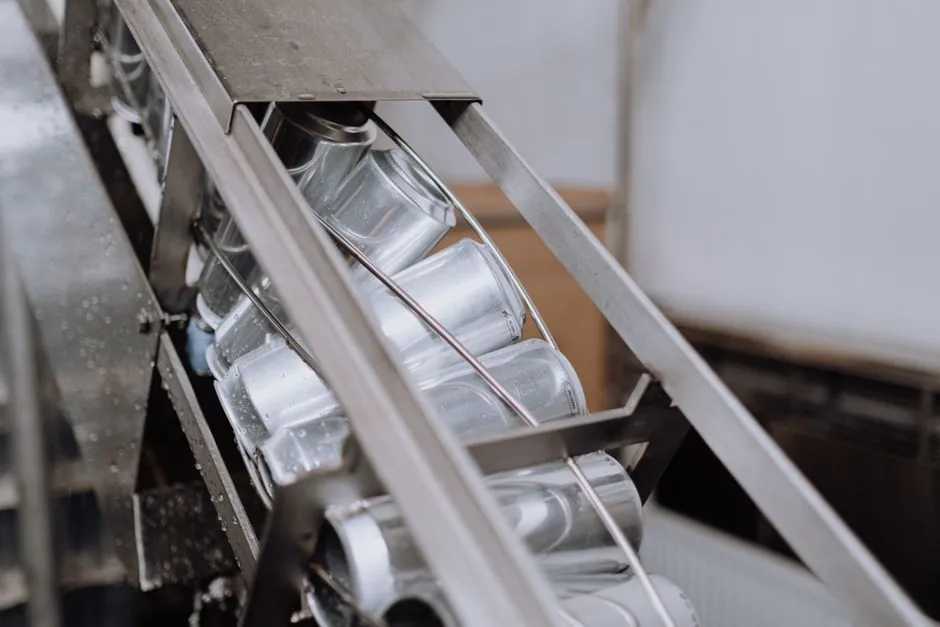
Offsite prefabrication automation can combine CNC machining, automated handling, robotic assembly, and BIM-based design checking to shift construction work into a controlled factory environment [S1][S2][S3].
Define the Factory Workflow Before Selecting Equipment
Offsite prefabrication is not a single machine category but a coordinated production system that converts design data into repeatable factory operations.
MODLOGIQ describes a factory sequence in which modules are built under controlled conditions and, once the foundation is ready, are installed in days [S5]. Its stated completion target is up to 90% before installation at the site [S5].
Match the Line to Four Production Variables
Product geometry, repeat volume, process variability, and logistics determine the appropriate degree of automation for a prefabrication line. The main options should be compared by those criteria rather than by an assumed preference for robotics [S1][S3].
Standalone CNC machines suit factories that need to replace or upgrade one operation without redesigning the entire plant. An integrated line provides better coordination among cutting, machining, fastening, handling, assembly, inspection, and shipping, but it carries more upstream design and process-control work [S1].
Robotic cells are appropriate for repeatable tasks with defined geometry and stable presentation, while manually assisted stations retain flexibility for variable products. The published comparative literature identifies BIM, simulation, robotics, and AI-driven automation as complementary technologies rather than substitutes for one another [S3].
For modular builders, factory automation also depends on whether modules are assembled as volumetric units or as panelized elements. The reference implementation combines modules in the plant to their final configuration before site work proceeds, which makes fit verification a factory task [S5].
Connect Design Data to Machine Execution
Machine automation begins with manufacturable design data, and digital model checking can identify geometry conflicts before production equipment consumes time or material [S2][S3]. MODLOGIQ says its BIM and “Build Together” approach ensures precise fit and finish, eliminating installation delays and on-site remediation [S5].
These are identifiable software families within its product portfolio, not a guarantee that every factory requires the same control stack [S1].
AI and model checking can catch design errors before they become manufacturing problems, while simulation can test sequencing and resource requirements before equipment is committed [S2][S3]. The 2024 comparative study specifically frames offsite automation around BIM and simulation, robotics, and AI-driven automation [S3].
For broader production architecture, electrical automation provides the context for the control layer, while construction tools covers the portable and onsite tools that still complete work outside the factory.
Design Material Flow for Line-Side Output
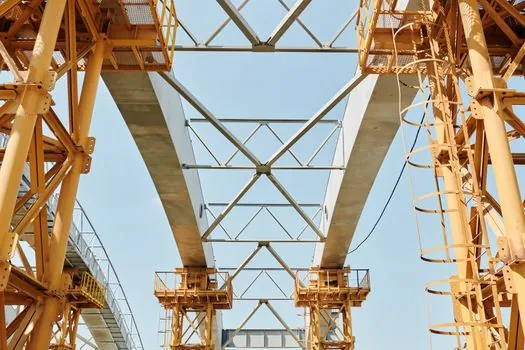
A prefabrication line must move panels, frames, modules, and finished components through each station without creating an uncontrolled queue between manufacturing and dispatch. MODLOGIQ identifies cranes, jigs, and assembly lines as core elements of industrialized offsite construction and describes the production environment as offering flexible configuration [S5].
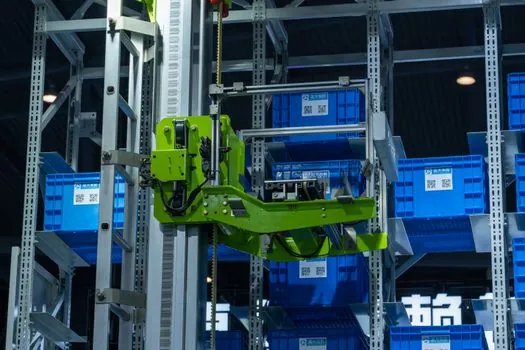
Automation supports reliable material handling through positioners, conveyors, lifting equipment, and robotic transfer. Stiles lists Material Handling among its process categories [S1].
Quality control must occur before parts become inaccessible inside a module. Suitable checkpoints include dimensional verification after CNC processing, joint and fastening checks during assembly, and fit verification against the coordinated model [S2][S5]. Inline metrology is covered in Choose Inline Metrology or End-of-Line Inspection.
Dispatch planning cannot be separated from factory automation because module dimensions, weight, lifting points, transportation sequence, and site readiness determine the viable completion state. Automatic planning has been identified as a requirement spanning prefabrication, transportation, and onsite assembly [S4].
Separate Verified Benefits from Marketing Claims
Controlled production removes weather exposure from factory work and allows tasks that occur in parallel offsite to continue while site preparation advances [S5]. The MODLOGIQ implementation states that modules up to 90% complete can be installed in days, and it reports schedules up to 50% shorter than conventional construction [S5].
That 90% completion and 50% schedule figure describes one supplier’s operating model, not a universal performance guarantee for every automated factory [S5]. A project-specific validation should compare design maturity, module configuration, factory capacity, transport constraints, and site readiness before treating schedule reduction as an engineering input.
Stiles states that its stand-alone or integrated solutions can increase production speed and reduce labor cost, but no universal savings percentage is established in the supplied material [S1]. The correct business case therefore uses the factory’s actual cycle time, labor content, rework rate, material yield, and dispatch performance rather than an industry-wide labor statistic [S1][S4].
The molding line concept is relevant where production includes forming, pressing, or panel preparation, but a volumetric module line also requires framing, service installation, inspection, and logistics equipment beyond molding machinery.
Set Control, Traceability, and Failure-Response Requirements
Line control must preserve the relationship between each digital design release, raw material, machine operation, inspection result, and finished component. Automatic planning and real-time planning are established requirements for coordinating offsite prefabrication, transportation, and onsite assembly [S4].
Three failure modes deserve explicit design review. First, an unresolved design clash can propagate into every downstream copy of the module. Second, inaccurate positioning or drilling can make factory assembly impossible to correct economically. Third, incomplete factory records can obstruct diagnosis, warranty claims, or traceability when a defect appears after dispatch [S2][S3][S5].
Automation also changes workforce requirements. Repetitive cutting, fastening, handling, and positioning can be assigned to machines or robots, while technicians retain responsibility for model review, station supervision, exception handling, inspection, and work requiring variable judgment [S3][S4].
Implementation should therefore test the smallest practical scope first. For a single-process upgrade, validate machine cycle time and material yield. For an integrated line, add station interlocks, conveyor logic, robot handoffs, inspection gates, and dispatch data. For a fleet-wide rollout, extend the same logic to automatic planning, transportation coordination, and onsite installation [S1][S4].
The first trackable project signal is a frozen design-to-station process map with defined cycle times and inspection gates, followed by measured line performance against those baselines; these are the practical next controls for converting an automation concept into a repeatable prefabrication operation [S1][S4].