
Narrowbodies built 693 units through the first seven months of 2026, against 134 widebodies, a 5.2-to-1 ratio that mirrors the orderbook split forecast by Airbus' 2026-2045 Global Market Forecast (33,920 single-aisle vs 8,140 twin-aisle deliveries) [S1][S2]. July alone produced 113 narrowbodies and 20 widebodies, the highest single-month widebody tally of the year so far but still flat against May and June's 19-unit pace [S1].
Total commercial aircraft output reached 863 units YTD through July 2026, with regional jets at 22 and turboprops at 14 [S1]. Airbus and Boeing combined delivered an estimated 124 aircraft in July, down from 136 in June, a deceleration that reflects the normal Q2-to-Q3 hand-off rather than a demand shock [S1].
Production rate: narrowbody programs at or above target, widebody programs flat
The A320neo and 737 MAX are stabilising at or above their current target rates as of September 2026, with the narrowbody side performing broadly as expected [S3]. Widebody output has posted virtually no production growth over the past year, dragging down the segment's contribution to overall OEM performance [S3].
The A350 program is the clearest underperformer: having stabilised at roughly six aircraft per month heading into 2025 with ambitions to reach ten per month by 2026, the line has slipped in the opposite direction and is now struggling to hold six per month, a degradation that has continued since mid-2025 [S3]. The 787 program destabilised from its target rate in late 2025 and early 2026, though trends are improving as of September 2026 [S3]. Widebody July output of 20 units, up one from May and June's 19, is consistent with the stagnant description rather than a recovery [S1][S3].
Delivery lead times: 24 days for narrowbody, 150 days for widebody
Average production-to-delivery lead time for narrowbodies dropped to 24 days in July 2026, a 3-day improvement over June's 27 days and well below May's 34 days, driven by efficiency gains across the A320neo family lines and a stable 737 MAX flow [S1]. By contrast, widebody lead times surged to roughly 150 days in July, up from 68 days in June and just 20 days in May, a distortion attributed to the delivery of long-stored 787 inventory dating back to 2020 [S1].
Excluding that long-stored inventory, freshly produced 787s averaged just 17 days from production to delivery, indicating that the assembly-line output itself is moving efficiently [S1]. The A350 continues to lag even without stored-inventory distortion, posting a 42-day average lead time, well above the 30-day threshold that Forecast International considers healthy for a widebody program [S1].
Backlog and demand split: 17,000 unfilled orders, 12-year queue
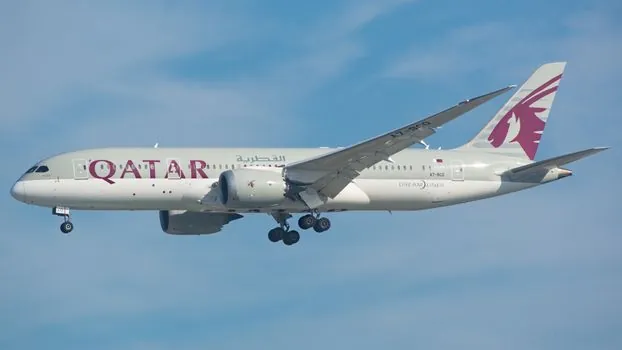
Airbus and Boeing together held 17,000 unfilled orders as of July 2026, a queue that would take over 12 years to clear at current production rates, a figure that turns delivery slots into strategic assets in their own right [S5]. Airlines that ordered three years ago are only now taking aircraft, and customers ordering today face late-2030s delivery windows [S5].
The demand split favours narrowbodies by volume: 693 narrowbody vs 134 widebody units built YTD through July 2026 [S1], and Airbus' 20-year forecast calls for 33,920 single-aisle and 8,140 twin-aisle deliveries, a 4.2-to-1 ratio [S2]. Of the total forecast new deliveries, 19,820 (close to half) are for replacement rather than growth [S2]. Narrowbodies' daily utilisation of 10-12 hours across more sectors, against 14-16 hours for widebodies but on fewer routes, gives single-aisle types broader network reach and lower per-cycle crew cost [S5].
Selection criteria: when narrowbody wins, when widebody still wins
For "long-thin" routes, city pairs with sufficient demand for one daily frequency but not enough to fill a widebody twice daily, next-generation narrowbodies are the clear winner, with the A321XLR able to operate 4,700 nautical miles at full payload and connect secondary European cities to North America without hub routing [S5]. Narrowbodies also offer lower crew costs and access to virtually any commercial gate, advantages that the 737 MAX family extends with significantly improved range over prior generations [S5].
Widebodies retain the edge on high-demand trunk routes where premium cabin yields dominate revenue: London-New York, Singapore-Sydney, and Dubai-London can generate business and first class revenue that exceeds the total revenue of a narrowbody on the same sector [S5]. United Airlines is taking roughly 20 new widebodies in 2026, predominantly 787s, with a target of 200+ by 2032, and American Airlines is expected to finalise its widebody selection within 12-18 months [S5]. For carriers outside the top 20 by revenue, Boston Warwick's analysis puts the number of genuinely profitable widebody routes at 15-20 city pairs, a narrower set than many airlines assume [S5].
Three variables that shape the narrowbody-widebody decision
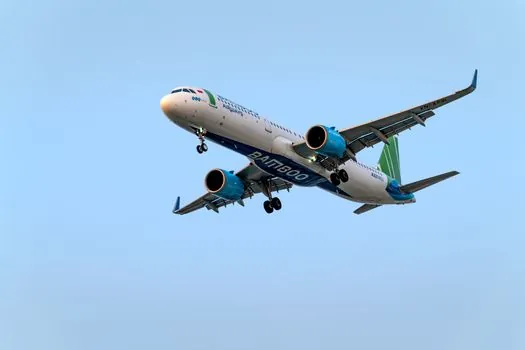
Airport-level constraints (runway length, elevation, gate availability, slot restrictions) filter aircraft viability at the route level, with an A321XLR operating from a 2,800-metre runway at 5,000 feet elevation showing materially different range and payload than the same airframe at sea level with 3,500 metres available [S5]. Fuel exposure by route is the second underweighted variable, since fleet choices optimised at $800/tonne jet fuel look very different from those modelled at $1,200/tonne, and the Strait of Hormuz disruption pushed Northwest European fuel prices above $1,000/tonne in 2026 [S5].
Competitive dynamics at the city-pair level form the third variable, since a route that looks profitable in isolation becomes marginal when a competitor adds capacity with a lower-cost aircraft type [S5]. On the supply side, the narrowbody-widebody spread is reinforced by IBA's January 2026 revision of base value forecasts for out-of-production types, a signal that secondary-market pricing is being repriced as fleet planners re-evaluate mid-life asset strategies amid the production split [S6]. For airlines and lessors weighing 20-year decisions, the industrial valve and flow meter supply chains feeding the A320neo and 737 MAX ramp matter as much for delivery timing as the airframe ramp itself.
Failure modes and constraints to watch through year-end
The A350's inability to break out of the six-per-month band, combined with a 42-day lead time well above the 30-day healthy-program threshold, is the most visible execution risk in the widebody segment [S1][S3]. 787 lead-time inflation from 20 days in May to 150 days in July is a measurement artefact of long-stored inventory clearance, but the underlying question is whether fresh-build 787 throughput can hold the improving trend noted in September 2026 [S1][S3].
Narrowbody production approached its 2026 peak periods in Q3, and any slippage in A320neo or 737 MAX target rates would compress an already 12-year backlog queue further [S1][S5]. Widebody segment performance, tracked through the A350 monthly rate and the 787 fresh-build lead time, remains the key signal for whether the production gap narrows or widens by year-end [S1][S3]. Maintenance, repair, and overhaul exposure on long-stored 787s entering revenue service will be a parallel watch item for lessors and airline engineering teams through Q4 2026 [S5][S6].
Two trackable signals: the August and September 2026 Forecast International production tallies, which will show whether the A350 returns to a stable six-per-month rate and whether the 787 fresh-build lead time stays under 30 days as the stored-inventory tail clears [S1][S3].
Spec-level background on the components involved: pressure transmitter.
For related coverage, see #40 vs #60 vs #80 roller chain pitch, dimensions, and sizing rules.