
Pneumatic system demand in 2026 is being pulled in two directions at once: bulk material handling is expanding at a stated 5.8% CAGR toward USD 48.36 B by 2030 [S5], while discrete-fluid-power loops on the factory floor are being re-engineered around smarter valve manifolds and tighter CFM-leak accounting [S2]. Buyers in mid-2026 should spec pneumatic actuators, pneumatic cylinders and pneumatic fittings against a changed baseline, not the BOM template used in 2019.
Three forces are simultaneously rewriting the spec sheet: software-defined vehicle/factory electrification cycles (which are pulling new pneumatic buyers into EV battery, solar and semiconductor fabs) [S4]; EU/UK regulatory pressure on compressed-air energy use that has made leakage a hard cost line, not a maintenance nuisance [S2]; and a Chinese supply chain that now ships the majority of commodity pneumatic tubing, quick-connect couplers and standard cylinders at lead times Western distributors cannot match [S1][S6]. The net effect is a market where the cheapest pneumatic part on paper is rarely the cheapest in service.
Pneumatic conveying leads the 2026 growth lane
Grand View Research sizes the global pneumatic conveying systems market at a projected USD 48.36 B by 2030, registering a 5.8% CAGR from 2023 onward, with growth attributed to rising manufacturing-sector automation and demand for robust, novel conveying technologies [S5]. Dense-phase and lean-phase loop architectures are both gaining specification share in 2026, with battery-material, food-grade powder and reclaimed-PET lines driving the bulk of the new capacity adds in Asia and the US Gulf.
Buyers evaluating a pneumatic conveying line in 2026 should compare on four concrete axes: line diameter and pressure rating, material-of-construction for the wetted path (carbon steel, 304/316L stainless, or aluminium for low-abrasion duty), solids-to-air mass ratio at the pick-up point, and filter/receiver volume. A standard dilute-phase conveying line typically operates at 0.4–1.5 bar gauge with air-to-product ratios in the 25–80:1 range, while dense-phase systems drop to 2–10:1 but require higher peak pressures (typically 2–4 barg) and pulse-control hardware. Lead times for fabricated receivers in 304/316L stretched through Q2 2026; engineered solutions in carbon steel with rubber-lined bends remain the fastest-spec path on a pneumatic conveyor retrofit.
Valve architecture is shifting from solenoid-first to software-first
Fluid Power Journal's June 2026 cover feature, by Canfield Industries' Todd Harmon, argues that "fluid power systems have traditionally relied on solenoid valves operating in stable, predictable" environments, and walks through the migration path to networked, IO-Link-style valve manifolds with onboard diagnostics [S2]. The practical consequence on a 2026 spec sheet is that a single 16-station manifold with flow monitoring and cycle counters is replacing four-to-six discrete solenoid-valve islands on a typical packaging or assembly machine.
The buying impact is concrete: spec a manifold with at least one diagnostic output per station (cycle count, current draw, valve switching time), an M12 power plus Ethernet/IP or PROFINET backbone, and replaceable individual valve slices rated for at least 30 million cycles at rated flow. For legacy machines, a 24 V DC, 1 W coil with a Cv of 0.5–1.0 remains the commodity baseline, but new builds should budget for IO-Link or similar point-to-point digital protocols so that a pneumatic silencer exhaust noise spec can be tied to actual cycle data, not assumed duty. CFM-leak accounting, covered in the same Fluid Power Journal issue, makes this diagnostic feedback economically mandatory at 2026 North American industrial electricity tariffs.
CFM leakage is now a first-class cost line, not a maintenance note

The July 1, 2026 Fluid Power Journal article "Computing the Cost of CFM Leakage in a Compressed Air" puts a dollar number on a topic the trade press has been waving at for a decade [S2]. At a typical industrial 2026 electricity price of USD 0.08–0.12/kWh, a single 1/4-inch orifice leak at 7 barg costs roughly USD 800–1,400 per year in wasted compressor work; a 1/2-inch leak at the same pressure runs into four-figure-per-year territory per fitting.
The procurement response in 2026: write leak-rate acceptance criteria into the purchase spec, not just the FRL (filter-regulator-lubricator) BOM. A practical gate is ≤ 5 sccm leak rate per pneumatic fitting joint at 10 barg helium-tracer test, with threaded parallel (BSPP, NPT) joints paired with a thread sealant rated for the system pressure and a torque value cross-checked against the fitting maker's data. Push-to-connect fittings from Brennan and similar tier-1 makers are now quoted with published leak-rate curves rather than "bubble-tight at rated pressure" claims, which makes warranty conversations much shorter [S1].
Software-defined vehicles and factories are pulling pneumatics into new buying desks
The 2026 State of Automotive Software Development report (Perforce / Auto IQ / Eclipse Foundation) frames the year as one in which "the automotive industry has been undergoing significant changes as it works to adapt growing market demands and challenges associated with vehicles that are becoming much more software-defined" [S4]. For pneumatic buyers the second-order effect is that EV battery dry rooms, module-pack lines, and cell-formation racks all require dry, oil-free, low-dew-point compressed air at –40 °C pressure dewpoint or lower, with absolute filtration to ISO 8573-1 Class 1.4.1 or stricter on particulate, water and oil.
That spec change cascades downstream: desiccant-air dryers with heated purge, in-line membrane dryers on each drop, and stainless-bodied pneumatic cylinders with PTFE seals rather than NBR become the default on a battery line, not the upcharge. Buyers for adjacent verticals—solar panel lamination, semiconductor wet bench, pharmaceutical packaging—are pulling the same air-quality class by reference. As one concrete reference point, the EV battery and adjacent electrified-manufacturing build-out is itself reshaping sourcing lanes; see the EV battery capacity and chemistry-mix outlook for 2026 for the downstream demand picture.
China supply, lead time, and the 2026 sourcing reality
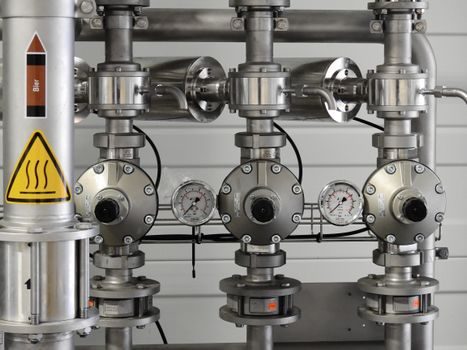
For commodity pneumatics, the 2026 sourcing map is dominated by Chinese makers in the standard cylinder, push-to-connect fitting, and PU/PA tubing categories [S6]. Price bands for ISO 6432 Ø 25–100 mm cylinders in 2026 cluster in the USD 18–55 range at FOB Ningbo for 100-piece lots, against USD 55–140 from EU tier-1 equivalents; PU tubing (8 mm OD) at 100 m coils runs USD 4–9 FOB versus USD 14–25 from European stockists, and lead time from a stocked China maker to a US Midwest consolidator is typically 28–38 days sea + 7–14 days inland, against 4–10 days for EU ex-stock on the same commodity codes.
The trade-off the spec writer must manage: for safety-class or ATEX/IECEx-rated items (factory-lubricant, mining, pharmaceutical solvent), the EU/Japan/US tier-1 supply chain still wins on certification depth and documentation turnaround. For non-classified commodity pneumatics, the China supply has a clear landed-cost edge and a documentation pack that, while not as deep as tier-1, now covers CE, REACH and basic RoHS for most line items [S6]. The 2026 decision matrix most buyers end up applying: standard cylinders and pneumatic tubing from China for non-safety duty; stainless or specialty-coated cylinders, certified solenoid valves, and any intrinsically safe pneumatic actuator from EU/JP/US tier-1; FRL assemblies split per brand preference, with filtration membranes specified to ISO 8573-1 class.
2026 selection criteria compared
For a discrete-fluid-power loop spec written in mid-2026, the decision criteria across the four main pneumatic sub-assemblies line up as follows. Compressed-air treatment (FRL + dryer + condensate drain): decision axes are inlet pressure (typically 7–10 barg), required ISO 8573-1 class, drain type (auto float vs zero-loss), and ambient temperature. A standard machine-shop build usually lands at ISO 8573-1 [7:4:4] with a refrigerated dryer; a battery or pharma line needs [1:4:1] with desiccant and a 0.01 µm coalescing filter. Valve manifolds: decision axes are number of stations (8/16/24 typical), fieldbus (EtherNet/IP, PROFINET, IO-Link), diagnostic depth (none, basic, full per-station), and cycle rating. Cylinders: decision axes are ISO standard (ISO 6432, ISO 15552, ISO 21287), bore/stroke, operating pressure (typically 6–10 bar standard, 2–6 bar for low-pressure tooling), cushion type, and seal material. Fittings and tubing: decision axes are thread type (BSPP, NPT, metric), tube OD (4–16 mm common), pressure rating (PN10–PN16 typical for PU/PA), temperature, and leak-rate spec. As a working quotation, an EU tier-1 ISO 15552 Ø 63 mm × 200 mm double-acting cylinder with magnetic piston and end cushions in mid-2026 lists at roughly USD 220–280 list, with a 30–45% project discount at 50-piece annual volume; a Chinese equivalent on a like-for-like bore, stroke, and cushion spec is closer to USD 75–110 FOB. [S1]
Two criteria that often slip through 2026 spec reviews and shouldn't: cycle-life warranty language (tier-1 makers publish a million-cycle or two-million-cycle figure with a B10 rating; Chinese equivalents typically state a "rated life" without a B10 basis, which is harder to enforce in warranty) and silencer/ exhaust noise compliance. A pneumatic silencer rated at 25–35 dB(A) reduction at 7 barg is the typical office-floor spec, and any valve island that exhausts to atmosphere without one will fail a modern plant-noise audit in most EU jurisdictions. Buyers cross-shopping pneumatic and adjacent fluid-power categories can also cross-reference the 2026 pneumatic valve actuator buying guide for rotary-actuator-side selection logic, which uses many of the same cylinder, fitting, and tubing spec gates but adds torque and mechanism-selection criteria.
Limits, failure modes, and what the 2026 spec should refuse

Common 2026 pneumatic-spec failure modes are highly repeatable. First, mismatched air quality: a cylinder spec'd to 10 bar working pressure but fed from an unfiltered, –10 °C pressure-dewpoint supply will accumulate condensate in the bore, scoring the barrel within 12–18 months. Second, undersized tubing: 8 mm OD PU on a 1 m run at 6 bar with peak flow above ~450 Nl/min will choke the cycle time; spec 10 mm OD or 12 mm OD for that duty band, or step up the supply tube. Third, unspecified silencer/ exhaust back-pressure: a pneumatic silencer with too high a Cv drop will slow the cylinder's retract stroke by 20–40% in a way that doesn't show up in static bench tests but cripples cycle time on a running machine. [S2]
A practical 2026 refusal list for purchase specs: do not accept "rated pressure" without a stated safety factor (factor 4 on the burst versus working pressure is the conservative EU baseline for pneumatic tubing); do not accept cycle-life claims without a B10 or million-cycle, defined-duty rating; do not accept a fitting brand that does not publish a leak-rate spec; and do not accept an FRL spec that omits the ISO 8573-1 class downstream of the regulator. Each of these refusals pushes the spec toward 2026 best practice and away from 2019-vintage templates that are still common in long-running ERP BOMs.
Trackable signals through the rest of 2026: watch Q3 EU compressed-air regulation consultations (which should sharpen the CFM-leak accounting language covered in Fluid Power Journal's July 1 piece [S2]); watch the September–November 2026 industrial-fair cycle (EMO, PACK EXPO, FabTech) for new manifold diagnostics releases; and watch the lithium-iron-phosphate and NMC battery capacity adds in China and the US, which are the single largest demand pull on dry-room air treatment in 2026. Together these signals will determine whether the pneumatic systems market in 2027 continues to grow on the 5.8% pneumatic-conveying CAGR track [S5] or accelerates as the EV, semiconductor, and solar build-outs pull bulk-material and cleanroom-air specs into the same plant at once.