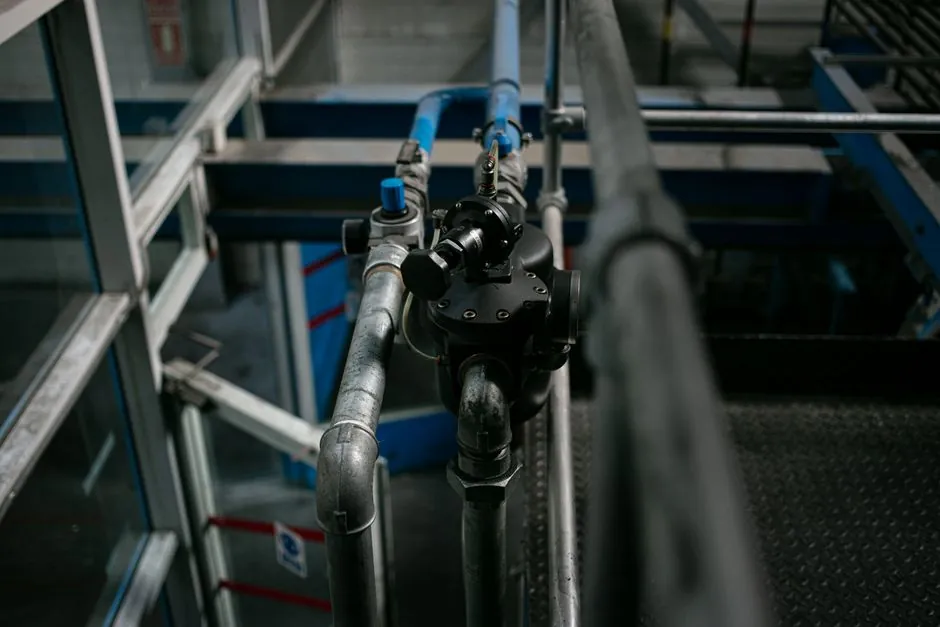
Solenoid valves for desalination should be selected by service, pressure, temperature, fluid compatibility, closure time and fail-safe position, not by port size alone.
Define the desalination service before selecting the valve
SWRO feedwater is normally pressurized to about 70–80 bar, equivalent to 1,000–1,160 psi, before membrane separation; equipment in that circuit must therefore be rated for substantially more than the low-pressure service conditions found in many generic water-valve catalogs [S4].
Identify whether the valve handles raw seawater, chemically dosed feedwater, antiscalant, cleaning chemicals, permeate or concentrated brine. These streams have different chloride concentrations, oxidation potential, temperature and chemical exposure, so a valve approved for “water” is not automatically suitable for desalination [S2][S3].
Record the design pressure, maximum operating pressure, minimum differential pressure, normal flow, line size, allowable pressure drop, fluid temperature, chloride level, chemical dosing, required response time and required de-energized position. A 2/2-way valve performs on/off shutoff, while a 3/2-way valve switches one inlet between two outlets or divides flow according to the selected duty [S1][S5].
Compare direct-acting and pilot-operated designs
Direct-acting valves use the electromagnetic force to overcome spring force and fluid-pressure forces, making them appropriate when the orifice, pressure and flow demand remain within the coil and actuator capacity [S5].
Pilot-operated valves use process pressure to close the main diaphragm or piston seat, while a smaller pilot solenoid controls the pilot circuit. They are preferred for larger orifices and higher switching pressures, although they require a minimum differential pressure for satisfactory operation [S5].
Externally piloted designs use a separate pilot medium rather than the main line fluid. This adds a control-medium requirement and should be selected only where the process architecture justifies it [S5].
Match body, trim and seal materials to the stream
SWRO valves require advanced, high-alloy metallurgy to resist pitting, crevice corrosion, and stress corrosion cracking in high-pressure, chloride-rich seawater environments [S4]. This requirement concerns high-pressure process isolation, so every solenoid valve body, pilot path, spring, stem and seat exposed to seawater must be checked against the same corrosion design basis.
Common water-system body materials include stainless steel, brass and PVC.
Seal selection is a separate compatibility decision. The solenoid coil must have insulation class, duty cycle, ingress rating and environmental enclosure rating suitable for the plant location.
Resistance to pitting, crevice corrosion and stress-corrosion cracking should be verified for the complete trim. A corrosion-resistant body alone does not protect against a susceptible spring, shaft, seat or gasket [S4].
Use ports and flow capacity as calculated limits
For on/off duties, a 2/2-way valve has one inlet and one outlet and closes when the spring, assisted by fluid pressure, holds the seal against the seat [S1][S5]. A 3/2-way valve has three connections and two seats; in the de-energized condition one path is closed and one remains open, with the arrangement reversed by energization [S1][S5].
Size the valve from required flow and allowable pressure drop, not from the nominal pipe diameter. The published operating range for solenoid valves is approximately 10–1,000 ms opening and closing times, but actuator selection must confirm the actual response at working temperature, pressure and minimum differential pressure [S7].
A 3/2-way valve can be used for switching or diverting applications [S5].
Specify fail-safe behavior and electrical duty
Normally closed valves are selected when de-energization must stop flow, while normally open valves are selected where flow must continue following a power loss.
Check supply voltage, frequency, coil wattage, inrush current, duty cycle and insulation class against the control specification.
For hazardous-area installations, the complete solenoid assembly, including coil, enclosure, cable entry and certification, must match the area classification and applicable IEC 60079 series requirements. The selection should also distinguish an air solenoid valve, which uses compressed air as its actuating medium, from a liquid-service solenoid valve that directly controls the process fluid.
Address water hammer, fouling and maintenance access
Solenoid valves can open and close in roughly 10–1,000 ms, and improper use can create pressure transients and water hammer [S7]. Check the closing characteristic against the pipeline’s surge sensitivity, valve velocity, fluid compressibility and required response time before accepting the fastest available actuator.
Slow-close or controlled-close behavior may be preferable where abrupt shutdown can damage membranes, piping or pumps. On very low flow, verify that the valve can still close against differential pressure; on high flow, verify that pressure drop remains within the allowable line loss.
For maintenance, consider manual override, removable coils, accessible pilot tubing and diaphragm or piston replacement without removing the complete valve from service. Seawater service also requires a defined flushing and clean-in-place strategy, because chlorinated deposits and residues can impair seat movement and pilot operation.
Limit solenoid valves to appropriate isolation duties
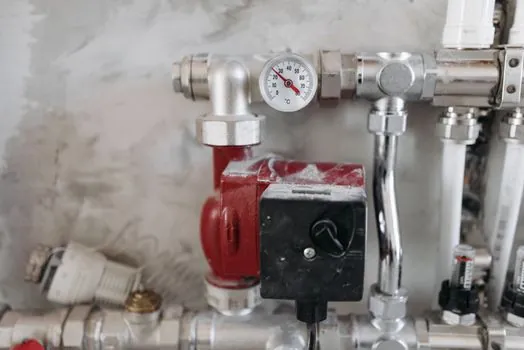
Seawater reverse osmosis also uses plug and triple-offset butterfly valves for high-capacity isolation, with Super Duplex, 254 SMO or titanium selected for severe chloride service [S4]. Solenoid valves should not be treated as automatic substitutes for those large isolation valves.
A solenoid valve is best for relatively small instrument branches, sample or drain points, chemical dosing, flushing, pump or membrane control and other electrically controlled on/off duties. It is a poor choice where very large flow, very high pressure, throttling, prolonged throttling or continuous throttling is required. For throttling, use a control valve instead of forcing a proportional solenoid into an unsuitable service.
Do not select a mainstream brass or PVC water valve for a high-pressure SWRO loop simply because it is listed for potable water. Confirm pressure, temperature, chloride compatibility, material certificate, seal grade, coil rating, response time and failure position against the process datasheet.
Build the procurement specification and shortlist
A complete purchase specification should state the valve tag, service fluid, port configuration, normally open or closed behavior, flow range, design and operating pressure, minimum differential pressure, process and design temperature, allowable pressure drop, body and trim material, seal material, connection type, voltage, coil duty, ingress rating, hazardous-area classification, response time, manual override, flushing requirements and required documentation [S1][S3].
The shortlist logic is straightforward: specify direct-acting 2/2-way construction for small, low-differential-pressure isolation; specify pilot-operated 2/2-way construction where the main line requires higher flow or pressure; specify 3/2-way construction for switching or diverting duties; and specify proportional control only where the process requires variable flow.
For adjacent isolation-system selection, compare the duty of a gate valve for seawater desalination with solenoid valves before fixing the plant architecture, since the required pressure, size and actuation function may fall outside the solenoid valve envelope.