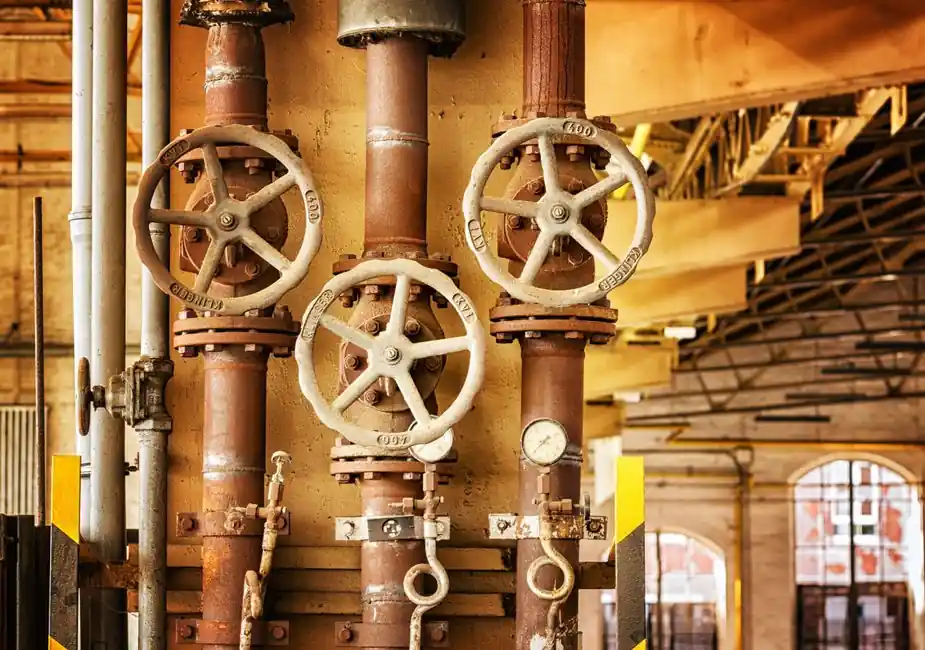
A needle valve total cost of ownership analysis is dominated by four line items that sit on top of the quoted unit price: body and trim material, pressure class and certification, end-connection type, and the logistics/quality overhead tied to sourcing geography [S1][S2][S5].
For instrument-class needle valves, standard ratings start at 3,000 psi (207 bar) in 1/4" to 1/2" sizes and 6,000 psi (414 bar) for high-pressure instrument versions, with special designs available up to 10,000 psi (690 bar) and 20,000 psi (1380 bar) for wellhead and subsea service [S3]. The pressure class alone shifts material usage, machining time, and test cost before logistics enters the picture.
Material Selection as the Primary Cost Driver
Stainless steel grades 316 and 316L are the default body materials for industrial needle valve builds, with 316L preferred when weldability and reduced carbide precipitation matter, while carbon steel is selected for non-corrosive, high-pressure service and brass is reserved for water, air, and low-cost utility duties [S1][S3].
Specialised alloys such as Hastelloy C-276, Monel 400, and Inconel 625 command the highest per-kilogram body cost but are mandatory for sour H2S, hydrogen, and aggressive chemical service where NACE MR0175 compliance, hardness-controlled SS316L, or graphite packing (instead of PTFE, which can absorb hydrogen and embrittle) is required [S3]. Selecting the cheapest body that chemically survives the fluid is a false economy: a single unscheduled instrument-line replacement in a hydrocracker typically costs more in labour and lost production than the entire material premium for the right alloy.
Pressure Class, Certification, and Documentation
Pressure rating is the second-largest cost driver because it scales wall thickness, stem diameter, and seat machining tolerance; carbon steel needle valves commonly reach 690 bar (10,000 psi), while SS316L instrument versions are routinely quoted at 414 bar (6,000 psi) with 690 bar specials on request [S1][S3].
Certification scope multiplies that base cost: EN 10204 3.1 material test certificates (heat traceable), API 598 hydrostatic shell and seat test reports, dimensional inspection reports, and a full Manufacturing Data Record (MDR) data book are all standard procurement options on serious instrument needle valve orders, with third-party inspection by SGS, Bureau Veritas, TÜV, or DNV available on request [S3]. Sour-service builds add NACE MR0175 hardness control, fire-safe certification, IBR paperwork, and cryogenic-impact testing when applicable, and each item is a discrete line item on the supplier quote.
End Connections, Manifold Integration, and Installation Cost
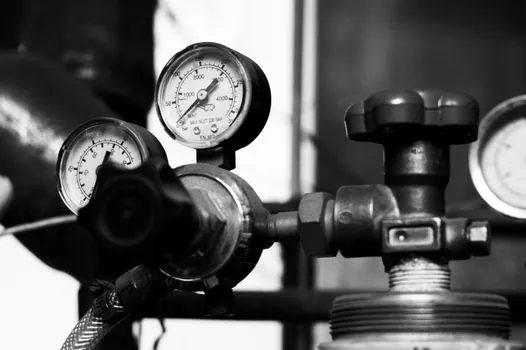
End-connection choice (threaded NPT, BSP, compression fittings, or flanged) directly drives both unit price and installation labour, because mis-matched connections force adapters that add leak paths and pressure drops in instrument tubing [S5].
Straight-pattern needle valves install in-line with no direction change, while angle-pattern versions combine isolation with a 90° turn, eliminating one tube bend and reducing fitting count in congested instrument panels, which is a real installation-labour saving on dense DCS racks [S3]. A 5-valve manifold built around two needle isolation valves, two equalisation valves, and one bleed/drain needle valve allows zeroing and removal of a differential pressure transmitter without process shutdown, and the value of that capability is the avoided production loss during calibration, not the manifold's purchase price [S3].
Geographic Sourcing and the Hidden-Cost Stack
Total cost of ownership for industrial needle valve sourcing extends well past the FOB line and is commonly decomposed into purchase price, freight and customs, inventory carrying cost, incoming quality management, engineering iteration time, and opportunity cost from stockouts [S2].
Offshore sourcing introduces lead-time variability from port congestion, customs clearance delays, and time-zone-driven 24-hour response lags on technical questions, each of which forces buyers to hold safety stock and accept longer design-iteration cycles, with the option cost of a delayed product launch often exceeding the apparent unit-price saving [S2]. Domestic vertical-integration manufacturing, by contrast, removes ocean-freight transit time and supports the Build American, Buy American (BABA) preferences, NSF, FDA 21 CFR, and ITAR-registered compliance paths that some federal, food, and defence projects mandate by specification [S2].
Application-Specific Cost Discipline
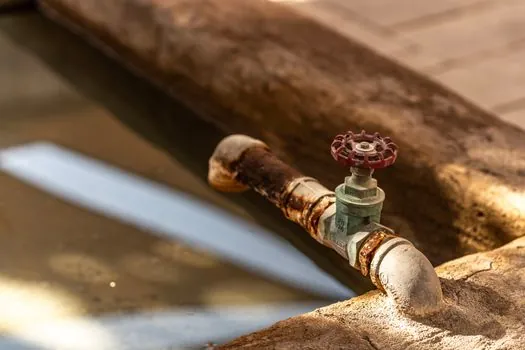
For instrument air and water duty under 3,000 psi, a brass or SS316 needle valve with PTFE packing and NPT ends is the cost-minimum TCO choice, with no business case for exotic alloys or NACE paperwork [S1][S3].
For sour gas (H2S), hydrogen, or subsea wellhead service, the minimum TCO point shifts upward: SS316L or Alloy 20 body, Inconel stem, graphite packing, NACE MR0175 certification, and 3.1 certificates become mandatory, and the only defensible total-cost comparison is against a hypothetical unscheduled shutdown rather than against the brass baseline [S3]. Comparing lifecycle cost across the three material tiers is a useful filter: brass/carbon steel utility builds have the lowest unit price but the highest leak and replacement rate in aggressive service; SS316/316L is the cost-optimum for most process and instrumentation duty; Hastelloy C-276, Monel 400, and Inconel 625 are non-negotiable in sour, hydrogen, or subsea service regardless of purchase price.
Total Cost of Ownership Drivers Ranked
Ranked by typical impact on lifecycle cost for a 1/2" instrument needle valve: (1) body and trim material (brass < SS316 < SS316L NACE < Hastelloy/Monel/Inconel), (2) pressure class (3,000 psi standard < 6,000 psi high-pressure < 10,000-20,000 psi special), (3) certification package (commercial < 3.1 cert < 3.1 plus API 598 < full NACE, fire-safe, IBR, cryogenic), (4) end-connection type (NPT/BSP standard < compression or twin-ferrule < flanged), (5) sourcing geography with its associated freight, customs, inventory, and engineering-iteration overhead [S1][S2][S3][S5].
The unit FOB price is item five on that list, not item one; engineering teams that evaluate needle valve quotes on unit price alone systematically over-spec in utility service and under-spec in critical service, with both errors showing up later as unplanned maintenance, not as purchase-order anomalies [S2][S3]. As covered in the Diaphragm Valve TCO Breakdown, the same 70-80% lifecycle-cost pattern holds across small-bore fluid-control components, where material and certification choices dominate the installed cost equation over the original line item.
Trackable signals for Q4 2026 procurement cycles: (a) published updates to ASME B16.34 valve specification clauses affecting needle valve pressure-temperature ratings, and (b) any published lead-time normalisation for offshore 3.1-certified SS316L instrument needle valves, since both data points directly move the TCO line items ranked above [S3].
The underlying component specifications are covered under total station, and balancing valve.