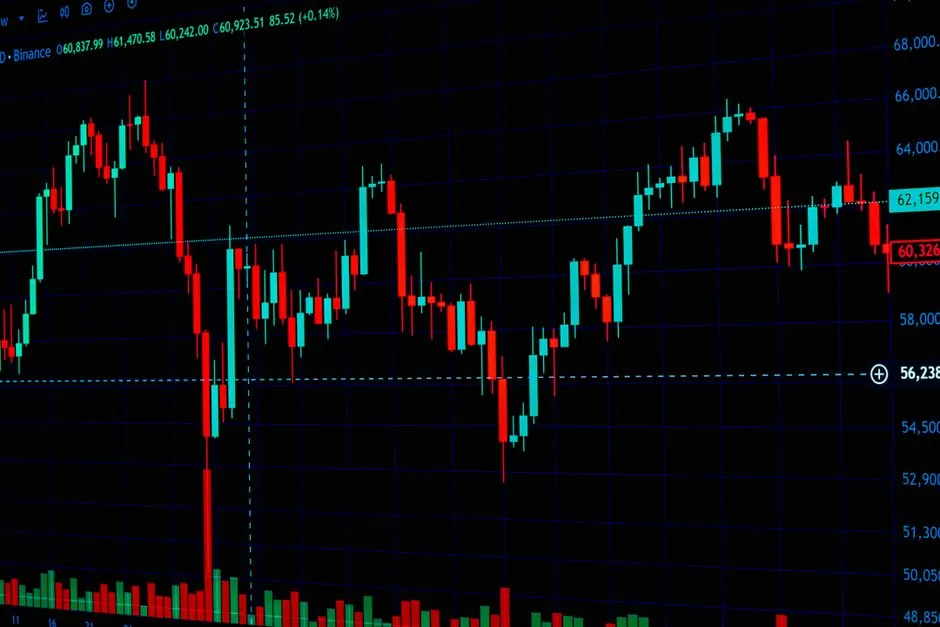
Refined nickel sulfate demand is projected to grow from USD 17.86 billion in 2025 to USD 39.42 billion by 2030, a 17.1% CAGR over that window and an 18.0% CAGR through 2032, with battery-grade material at 85.9% of 2025 volumes [S1][S2]. The market expansion is structurally tied to NCM 811 and NCA cathode chemistries, which carry roughly 80% nickel by mole fraction and require about 40-50 kg of nickel sulfate per passenger EV battery pack [S5].
Asia Pacific, led by China, accounted for the dominant share of refining capacity and precursor production in 2025, valued at USD 12.48 billion against USD 3.21 billion for Europe and USD 1.45 billion for North America [S1][S2]. Electric vehicle batteries represented 79.9% of 2025 application share, with electroplating holding a stable but secondary position at 24.3% of revenues and growing at roughly 6.2% CAGR [S1][S2][S5]. The same NCM/NCA precursor pull is reshaping cobalt and lithium derivatives, and the parallel dynamics for cobalt sulfate sourcing from China and lithium hydroxide demand through 2030 follow the same cathode-driven logic.
2025-2030 Volume Trajectory: USD 17.86 Billion to USD 39.42 Billion
Refined nickel sulfate market value is forecast to climb from USD 17.86 billion (2025) to USD 20.45 billion (2026), USD 24.11 billion (2027), USD 29.66 billion (2028), USD 34.07 billion (2029), and USD 39.42 billion (2030), then accelerate again to USD 47.15 billion (2031) and USD 56.89 billion (2032) [S1][S2]. Year-on-year growth rates over the 2025-2030 window range from 11.16% to 23.00%, with the highest single-year jump (23.00%) projected for 2028 as new Indonesian HPAL capacity ramps.
Alternative forecast houses present a wider envelope. Absolute Reports sizes the broader nickel sulfate market at USD 10.22 billion in 2025, expanding to USD 19.41 billion by 2031 at 11.3% CAGR [S3]. MarkWide Research values the market at USD 8.7 billion in 2026 scaling to USD 28.74 billion by 2035 at 14.20% CAGR [S8], while Morgan Reed Insights pegs 2026 at USD 8.9 billion and 2035 at USD 30.34 billion at 14.60% CAGR [S6]. Archive Market Research, using a higher 2025 base of USD 19.7 billion, projects 9% CAGR to USD 39.25 billion by 2033 [S4]. The divergence reflects different inclusions (refined-only vs. total hydrate grades) rather than disagreement on the directional thesis.
Cathode Chemistry Mix: NCM 811 and NCA Set the Nickel Intensity Floor
NCM 811 cathode chemistry contains approximately 80% nickel by mole fraction, requiring substantially more nickel sulfate per kWh than older NMC 532 or NMC 622 formulations [S5]. This is the single biggest structural lever behind the 18.0% CAGR projection: each kWh shift from NMC 622 to NMC 811 pulls roughly 30-40% more nickel sulfate through the precursor train.
Global EV sales surpassed 17 million units in 2025, with major OEMs (GM, VW, Ford, Toyota) committing to electrification targets covering 40-100% of sales volumes by the early 2030s [S5]. One forecast puts global EV sales above 35 million units annually by 2030, directly amplifying nickel sulfate demand for cathode precursor manufacturing [S10]. The pull-through effect is captured in cell capacity announcements: CATL, LG Energy Solution, Panasonic, and Samsung SDI have collectively announced more than 2,000 GWh of new cell production capacity through 2030 [S5], a figure that, at typical NCM 811 loading, would consume on the order of 1.6-2.0 million tonnes of nickel sulfate annually once fully ramped.
Regional Capacity Split: Asia Pacific Dominance, Indonesia HPAL Build-Out
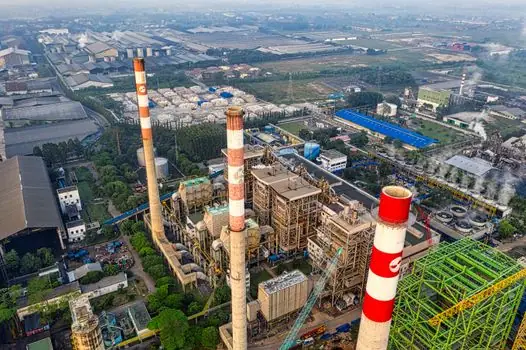
Asia Pacific accounted for a dominant share of refining capacity and precursor production in 2025, with regional market value at USD 12.48 billion versus USD 3.21 billion (Europe), USD 1.45 billion (North America), and USD 0.72 billion (Rest of World) [S1][S2]. Dataintelo's broader nickel sulfate cut places Asia Pacific at 58.7% of 2025 revenue [S5]. The capacity build is concentrated in Chinese refining hubs and Indonesian upstream: High-Pressure Acid Leaching (HPAL) technology is being deployed at scale to process laterite ores, particularly in Indonesia, where regulatory frameworks have restricted new nickel pig iron smelters and mandated renewable energy use to prioritise battery-grade outputs [S1][S2].
The U.S. adjusted tariffs on nickel sulfate and related chemical precursors under a reciprocal trade framework effective late 2025, reshaping cross-border economics for refined product supply [S1]. North American buyers responded by accelerating strategic alliances between domestic miners, chemical processors, and end users, plus integration of secondary streams such as recycled nickel sulfate recovered through battery recycling and industrial effluent treatment [S9]. European demand (USD 3.21 billion in 2025) is supported by EU decarbonization mandates and EV subsidies [S1][S2][S6]. The same Asia-anchored feedstock story shows up in lithium carbonate demand 2026-2030, where LFP pull reshapes the regional capacity map in parallel.
Application Split: Battery 79.9% vs. Electroplating 24.3% of 2025 Revenues
Electric vehicle batteries represented 79.9% of refined nickel sulfate application share in 2025, with battery-grade nickel sulfate accounting for 85.9% of market share by type [S1][S2]. The broader nickel sulfate cut (including technical and plating grades) shows batteries at 54.8% of 2025 revenue, with electroplating at 24.3% and growing at approximately 6.2% CAGR [S5].
Electroplating demand is stable rather than explosive: it covers PCB production through ENIG (Electroless Nickel Immersion Gold) surface finishing, aerospace parts such as turbine blades and landing gear, and consumer goods including jewelry and decorative hardware [S5]. Hexahydrate (NiSO4·6H2O) is the dominant product form, holding 62.4% of 2025 share by volume [S5]. For procurement teams specifying nickel alloy feedstock or downstream industrial valve and pressure transmitter components used in nickel sulfate crystalliser service, the 2026-2030 envelope is one of rising nickel-sulfate input cost pressure rather than supply scarcity, given the HPAL pipeline.
Feedstock Pathways: HPAL vs. Class 1 Nickel vs. Recycled Streams
HPAL is now the dominant pathway for new laterite-to-battery-grade conversion, particularly in Indonesia, where ore bodies are lateritic and not amenable to conventional sulfide flotation [S1][S2]. The shift is reinforced by ESG considerations: HPAL waste management (deep-sea tailings placement vs. dry-stacking) and renewable-energy mandates are now embedded in Indonesian permitting, and end-users are prioritising ethical sourcing alongside low-cost feedstock [S1][S2].
Secondary streams (recycled nickel sulfate from end-of-life batteries and industrial effluent) are scaling but remain a minority share. Strategic alliances between domestic miners, chemical processors, and end users accelerated after the late-2025 U.S. tariff adjustment, facilitating integrated production hubs and supply-portfolio diversification that incorporates recycled nickel sulfate recovered through battery recycling and industrial effluent treatment [S9]. For buyers evaluating the supply base, the decision matrix is roughly: HPAL Indonesia (lowest unit cost, ESG and permitting risk), Class 1 sulfide nickel (Norilsk, BHP, Western Australia; higher cost, lower ESG risk), and recycled streams (premium pricing today, falling curve through 2030 as collection networks mature). Nornickel (Norilsk Nickel) led the competitive landscape in 2025 according to one cut [S5], though that ranking is sensitive to whether Chinese refiners and Indonesian HPAL joint ventures are aggregated into the count.
Decision Criteria: Battery-Grade Specification, Logistics, and Tariff Exposure
For procurement and process engineers, the 2026-2030 nickel sulfate outlook reduces to four decision criteria. Battery-grade purity (typical specs: Ni ≥ 22% as Ni, Co ≤ 0.05%, Cu ≤ 0.001%, Fe ≤ 0.001%, Zn ≤ 0.001%, with tight control of sulfate and chloride residuals) is non-negotiable for NCM/NCA precursor synthesis. Logistics and tariff exposure matter because the late-2025 U.S. reciprocal tariff framework reshaped cross-border economics: North American buyers are accelerating localised sourcing and recycled-stream integration [S1][S9]. ESG documentation, particularly the Indonesian HPAL tailings-management approach and renewable-energy share at refinery, is increasingly required by European cell makers under their supply-chain due-diligence rules [S1][S2]. Finally, volume security through 2030 favours suppliers with offtake-aligned HPAL capacity in Indonesia or integrated Chinese refining hubs, given the 2,000+ GWh of announced cell-capacity additions [S5].
Trackable signals through the next 12 months: (1) commissioning cadence of Indonesian HPAL trains, where each 50,000-tonne-Ni train shifts the global battery-grade supply curve materially; (2) U.S. tariff scope adjustments on nickel sulfate and downstream precursor intermediates, which will re-rank North American supply economics; and (3) CATL, LG Energy Solution, Panasonic, and Samsung SDI capex revisions against the 2,000 GWh announced envelope, which will tighten or relax the 40-50 kg per passenger EV battery demand pull.