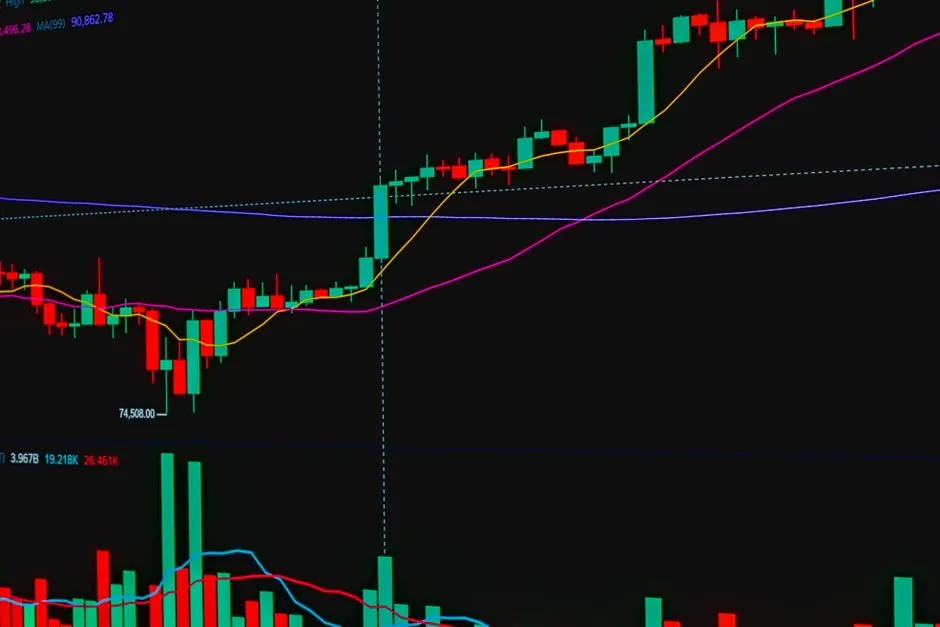
Global lithium hydroxide demand is on track to nearly 7x over the 2026-2035 forecast window, expanding from 302.60 LCE kilotons in 2026 to 2,105.40 LCE kilotons by 2035 at a 24.80% CAGR, per Market Research Future's August 2026 update [S1]. Battery-grade material is the dominant grade, advancing at a 26.80% CAGR through 2035 [S1].
Within 2026-2030, the same trajectory implies lithium hydroxide volume roughly tripling, from 302.60 LCE kilotons in 2026 toward the mid-hundreds by 2030, driven by nickel-rich NCM 811/622 cathodes that require anhydrous LiOH of at least 99.8% purity [S2]. Asia-Pacific, with roughly 42.50% of 2025 global consumption, posts the fastest regional growth at a 28.90% CAGR through 2035 [S1].
Battery-Grade vs Technical-Grade: Purity Thresholds and End-Use Split
Battery-grade lithium hydroxide commanded 66.70% of 2025 application volume and is the principal growth engine, expanding at 26.80% CAGR through 2035 [S1]. High-purity LiOH (battery grade within the high-purity segment) represented 65.8% of total high-purity market volume in 2025, with the high-purity segment overall valued at USD 6.6 billion in 2025 and projected to reach USD 19.1 billion by 2034 at a 12.5% CAGR [S5].
Technical-grade lithium hydroxide is segmented by LiOH content into two tiers, 56.5% and greater than 56.5%, with end-uses concentrated in petrochemical, glass and ceramic, and specialty lubricant applications [S4]. Anhydrous LiOH in particular must clear the 99.8% purity gate for high-nickel cathodes, while LFP and NMC 622 chemistries accept slightly relaxed specifications, creating a tiered purity market that cathode makers map against cell energy-density targets [S2][S5].
Application Breakdown: EV Batteries, Energy Storage, and Electronics
Lithium-ion battery applications absorbed 66.70% of 2025 volume globally, with EV cathode materials the single largest sub-segment [S1]. The Electronics end-user sector accounts for 26.4% of global anhydrous LiOH demand, serving lithium-ion batteries in laptops, smartphones, and tablets [S3][S9].
Grid-scale energy storage is the second growth pillar, with stationary deployments in Germany, California, Australia, and China adding incremental tonnage beyond transport [S5]. Truck electrification (medium and heavy-duty commercial vehicles) is an emerging sub-segment growing 18% to 22% annually, though it still represents less than 8% of total automotive anhydrous LiOH demand as of 2026 due to battery cost and range constraints [S9].
Regional Concentration: Asia-Pacific Lead, Europe Reshoring, North America Policy Pull
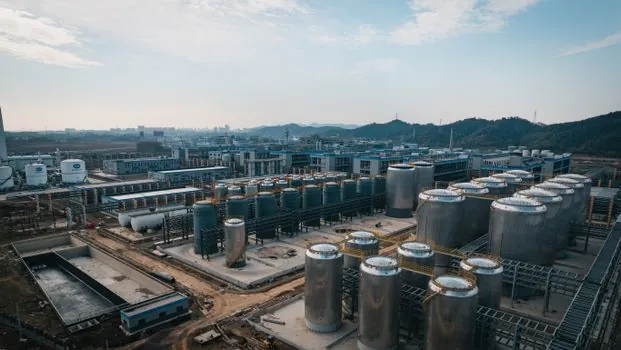
Asia-Pacific held 42.50% of 2025 global lithium hydroxide consumption and grows at 28.90% CAGR through 2035, the highest regional rate, anchored by China's integrated cathode supply chain and South Korea's gigafactory build-out [S1]. China's domestic production accounts for over 80% of global lithium hydroxide output [S3].
Europe ranks second at roughly 23.10% share, propelled by the EU Battery Regulation mandating domestic energy storage materials sourcing [S1]. North America follows, with policy-driven reshoring creating new capacity corridors across Nevada, North Carolina, and Quebec, and with the U.S. Inflation Reduction Act allocating over USD 7 billion in advanced manufacturing credits for battery-grade lithium and cathode materials through 2032 [S1]. South Korea's three cell makers, Samsung SDI, LG Energy Solution, and SK On, have collectively contracted over 200,000 tonnes of annual battery-grade lithium supply through 2030 [S1].
Supply-Side Disruption: Direct Lithium Extraction and Capacity Build-Out
Direct lithium extraction (DLE) is replacing evaporation ponds, cutting production timelines from 18 months to under 90 days and lifting recovery rates above 90%, a structural shift that re-prices the supply curve [S1]. Argentina, Chile, and Australia collectively pledged more than USD 3.2 billion in DLE pilot programs across 2023-2024 [S1].
EV registrations surpassed 15 million units globally in 2023, a 35% year-on-year jump, and CATL, LG Energy Solution, and BYD have collectively announced capacity expansions targeting an additional 400 GWh of lithium-ion cells by 2027 [S2]. Government-backed programs are expected to drive a 12% CAGR in lithium hydroxide consumption through 2032, with supply diversification away from a few concentrated geographic sources continuing through 2030 [S10].
Competitive Landscape: Top Producers by Share and Tier-1 Purity Suppliers

For the dedicated anhydrous LiOH segment, key participants include Leverton, Ganfeng Lithium, Noah Chemicals, Glentham Life Sciences, Livent, Shanghai China Lithium Industrial, and Shanghai Oujin Industrial [S2].
Albemarle Corporation and Ganfeng Lithium Co., Ltd. lead the high-purity segment on the strength of integrated upstream-to-purification capabilities, while South Korean and Japanese cell makers source premium-tier 99.95% grade material for solid-state battery pilot lines run by Panasonic and Toyota [S1][S5]. For a deeper sourcing-cost read on Chinese material, the Lithium Hydroxide Sourcing From China: 2026 Spec, Price, and Hedging Map breaks down spec gates, price benchmarks, and hedging mechanics for buyers locking in 2026-2028 offtake.
Cathode-Chemistry Pull-Through: NMC, LFP, and Solid-State Trajectory
High-nickel cathodes (NCM 811 and NCM 622) dominate the 400 GWh expansion pipeline through 2027 because they deliver superior energy density, but they require anhydrous LiOH of at least 99.8% purity to hit electrochemical targets [S2]. Micro powder LiOH, used in high-performance cells, is forecast to outpace coarse particle LiOH in demand growth as the industry migrates to higher-energy chemistries [S3].
Solid-state battery commercialization is flagged as a distinct opportunity within the 2026-2035 horizon, with Japan-focused pilots requiring 99.95% grade material from Panasonic and Toyota lines [S1]. High-voltage cathodes operating at 5.0V and beyond raise the purity bar further, reinforcing LiOH's strategic role versus lithium carbonate substitutes in voltage-limited chemistries [S5].
Comparison: Sourcing Options Across Decision Criteria for 2026-2030 Offtake
Buyers evaluating 2026-2030 offtake can line up the principal sourcing options against four decision criteria. Integrated Chinese majors (Ganfeng, Tianqi, Yahua) score high on volume scalability and cost but carry concentration risk tied to China's over 80% production share [S3]. North American converters (Albemarle, Livent) offer IRA-compliant domestic content and tighter logistics for U.S. and Canadian cell plants, but at a premium to Asian FOB [S1][S5]. South American DLE-linked supply (Argentina, Chile) is the fastest-growing volume corridor, with sub-90-day extraction cycles and over 90% recovery, though project execution risk remains elevated through 2027 [S1]. Japanese toll-refined 99.95% material targets solid-state pilot lines, commanding the highest price tier and tightest lot-size acceptance [S1].
Risks, Constraints, and Failure Modes Through 2030
Supply-side risk concentrates in lithium-bearing ore processing capacity, which remains limited relative to gigafactory demand, and in the 99.8%+ purification bottleneck that constrains how quickly DLE output can be upgraded to battery-grade [S2]. Substitutes, principally lithium carbonate, remain viable for LFP and lower-voltage chemistries, capping LiOH pricing power in those sub-segments [S3][S5].
Regulatory tightening in major producing countries, including stricter environmental rules, is reshaping the cost curve and pushing producers toward closed-loop and lower-water-intensity routes [S3]. M&A activity in the lithium hydroxide segment remains elevated, with recent deals aimed at locking in raw-material access and downstream conversion capacity, and tracker signals to watch into 2027 include 400 GWh cell-line commissioning milestones, DLE project FID announcements in Argentina, and any revision to the EU Battery Regulation's domestic-sourcing thresholds [S2][S3]. For adjacent supply-chain read on related industrial inputs, see the Graphite Electrode Demand 2026-2030: UHP and EAF Lead Volume Expansion coverage.
Spec-level background on the components involved: pressure transmitter, flow meter, and industrial valve.