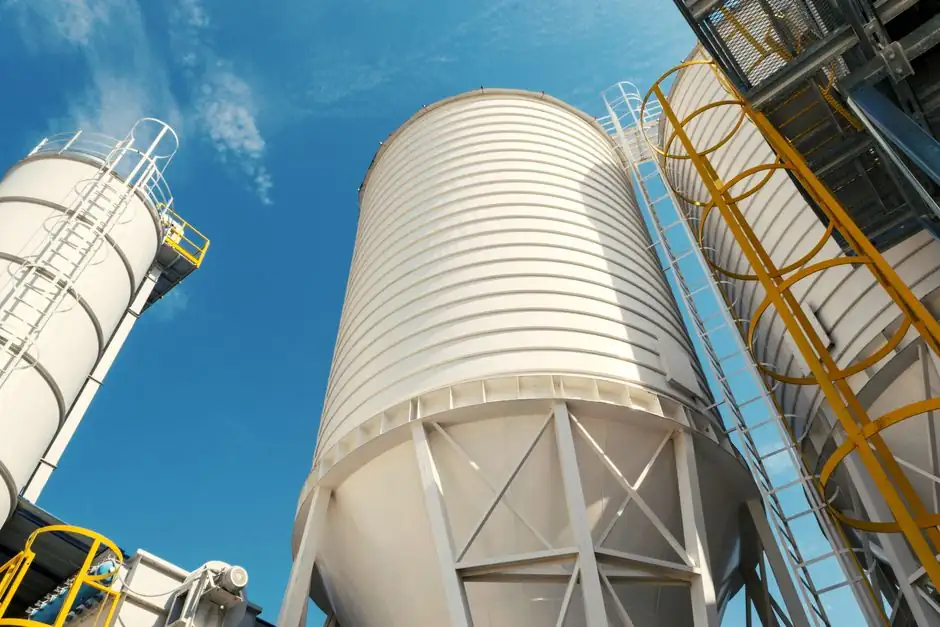
Chinese refiners anchor the 2026 lithium hydroxide supply map, with battery-grade LiOH·H₂O (CAS 1310-66-3) priced around $1.30/kg on Chinese spot as of 9 July 2026 and anhydrous LiOH (CAS 1310-65-2, MW 23.948) at ≥56.5% assay serving as the dominant NMC cathode cell-feed grade [S4].
Five producers consistently surface on 2026 battery-grade RFQ shortlists: Albemarle Corporation (US/Chile/Australia), Ganfeng Lithium (China), SQM (Chile), Yahua Group (China, Sichuan), and Livent (US/Argentina), with Sichuan-based Yahua tracing back to 1952 and operating more than 70 subsidiaries across Sichuan, Inner Mongolia, Shanxi, Yunnan, and Jilin [S4][S6][S8][S9]. The Asia Pacific region remains the dominant force, accounting for the largest revenue share in 2025, anchored by battery cell hubs in China, Japan, and South Korea [S2].
Producer concentration 2026: capacity, geography, and contract anchors
Albemarle maintains market leadership through integrated operations spanning Silver Peak (Nevada), Salar de Atacama (Chile), and Kemerton (Australia), with long-term contracts to Tesla, CATL, and LG Energy Solution and US Inflation Reduction Act incentives reinforcing its North American position [S8][S9]. Ganfeng positions itself as a high-end anhydrous and micro-powder supplier aligned with lithium battery materials and new-energy customers, allowing it to compete beyond commodity pricing [S5]. Yahua Group, founded in 1952 and headquartered in Ya'an, Sichuan, operates with more than 6,000 employees and is one of the earliest chemical companies in China, supplying military, civil, and new-energy lithium compounds [S6]. Livent and SQM round out the top tier through grade specialization (technical and battery-grade, including anhydrous forms) and global distribution networks [S5][S8].
Regional capacity tells the same story: Asia Pacific micro-powder anhydrous LiOH output is anchored by China at an estimated 65% of regional production capacity, against a global market valued at USD 516.48 million in 2025 (USD 293.3 million in Asia Pacific, USD 98.5 million in Europe, USD 83.5 million in North America, USD 41.1 million in Rest of World) [S5]. Battery grade dominated purity-level demand at 61.6% of 2025 micro-powder volume, and lubricating grease end-use held the highest end-use share at 53.9% in 2025 [S5]. The broader lithium hydroxide market was valued at USD 3.9 billion in 2025 and is projected to reach USD 22.6 billion by 2034 at a 21.4% CAGR, with anhydrous LiOH for lithium-ion batteries alone forecast to grow from USD 4.71 billion in 2025 to USD 13.87 billion by 2033 at a 14.05% CAGR [S2][S3].
Spec map: monohydrate vs anhydrous, CAS, assay, and form
Two CAS numbers govern the 2026 RFQ: 1310-66-3 for monohydrate (LiOH·H₂O, BioUltra ≥99.0% T, fine white monoclinic crystals) and 1310-65-2 for anhydrous LiOH (MW 23.948, density ~1.51 g/cm³, mp 471 °C, decomposition ~925 °C, pH ≈ 14 at 1 mol/L, gas-phase ΔfH° −55.999 kcal/mol, S°gas 50.351 cal/mol·K) [S4]. The 0.999 (99.9% purity) grade is the dominant anhydrous segment by revenue share, driven by NMC and NCA cathode precursor co-precipitation where nickel-rich chemistries demand tighter impurity ceilings [S3][S7]. Even trace metal contaminants (iron, nickel, copper) and non-metallic impurities (sulfur, chlorine) compromise energy density, power output, cycle life, and safety, accelerating electrolyte degradation and self-discharge [S3].
Commercial battery-grade monohydrate traded at ~$1.30/kg for ≥99% LiOH·H₂O on Chinese spot as of 9 July 2026, MOQ 1 kg, while spot listed-pellet LiOH (CAS 1310-65-2) from Chinese trading desks ranged $23.50-25/kg at MOQ 3,000 kg and LiOH·H₂O from Shandong Jinqi Chemical listed $15-20/kg at MOQ 10 kg [S1][S4]. The 1 mol/L solution pH ≈ 14 and 12.8 g/100 g H₂O solubility at 20 °C are the baseline handling constants engineers see on every CoA [S4].
Comparison: top-5 producers against 4 RFQ criteria
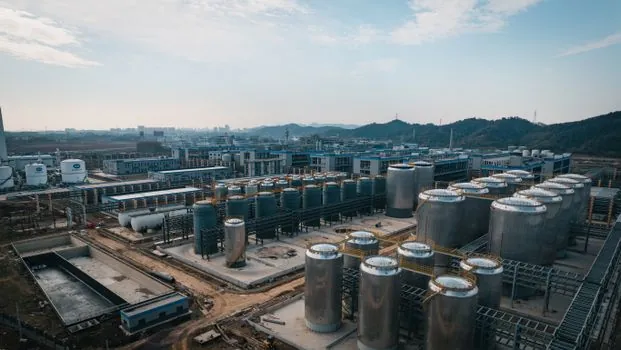
A 2026 battery-grade RFQ shortlist filters on four axes, and the top five producers differentiate cleanly: [S4]
<strong>Albemarle</strong> scores on integrated upstream (US/Chile/Australia mining), IRA-supported North American supply, and anchor contracts with Tesla, CATL, LG Energy Solution; weaker on price competitiveness versus Chinese refiners [S8][S9]. <strong>Ganfeng</strong> leads on high-end anhydrous and micro-powder capability, with documented jet-milling and inert-atmosphere drying for ultra-fine (<5 μm) particle distributions used in complex lithium soap thickeners for aerospace greases [S5]. <strong>Yahua Group</strong> competes on scale and vertical reach (6,000+ employees, 70+ subsidiaries, multi-province footprint since 1952) and on military/civil dual-grade supply, but its RFQ responsiveness in Western markets trails Albemarle and Livent [S6]. <strong>SQM</strong> and <strong>Livent</strong> differentiate on technical and battery-grade anhydrous specialization and global logistics reach, with SQM's Salar de Atacama feedstock giving it a long-run cost edge on carbonate-hydroxide conversion [S5][S8].
Selection gates: who LiOH is FOR, and who it is NOT for
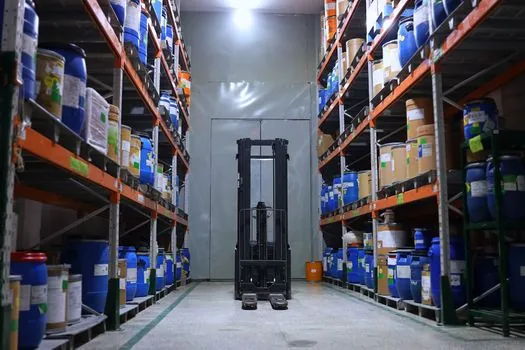
Battery-grade LiOH·H₂O (≥56.5% assay) is FOR NMC/NCA cathode precursor co-precipitation lines; BioUltra ≥99.0% T is FOR high-purity electrolyte salts and laboratory reagents; anhydrous LiOH is FOR closed-loop CO₂ scrubbing in submarines, spacecraft, and rebreathers, where the reaction CO₂ + 2 LiOH → Li₂CO₃ + H₂O is the load-bearing step [S4]. The same strong-alkali pH ≈ 14 at 1 mol/L makes LiOH NOT for LFP-only cathode lines that can substitute cheaper Li₂CO₃ with no stoichiometric penalty, and NOT for any process sensitive to strong-alkali pH without stainless or PTFE wetting [S4]. Industrial-grade LiOH is classified highly corrosive, can burn eyes, skin, and upper respiratory tract, absorbs CO₂ and H₂O from air, and must ship in sealed dry packaging under hazard class 8 corrosive; non-hermetic drums are a hard RFQ exclusion regardless of assay [S4].
Supply-chain risks and 2026 sourcing constraints
Volatility in lithium carbonate and spodumene feedstock prices compresses producer margins and creates supply uncertainty, while permitting timelines for new mining and refining, water-usage concerns in brine extraction regions, and geopolitical risk in major producing countries all constrain 2026 supply growth [S2]. On the demand side, alternative battery chemistries (LFP, sodium-ion, solid-state) are a watch item but have not displaced nickel-rich NMC/NCA pull-through at the cell-feed grade [S2]. The US Inflation Reduction Act incentives and OEM long-term contracts continue to favor Albemarle's North American position, while Chinese refiners (Ganfeng, Yahua) absorb mid-tier RFQ volume through integrated hubs near Sichuan, Jiangxi, and Inner Mongolia [S5][S6][S8]. For a parallel view on the upstream carbonate conversion band that drives LiOH line utilisation, see Lithium Carbonate Demand 2026-2030: LFP Pull, Asia Anchor, Price Whiplash; for a full RFQ spec-gate and contract-lever walkthrough, see Lithium Hydroxide Procurement: Spec Gates, Contract Levers, 2026 Sourcing Map.
Spec-for-spec documentation: CoA, NIST traceability, handling
Five gates filter a 2026 vendor shortlist: (1) assay LiOH·H₂O ≥56.5% battery-grade or LiOH ≥99.0% T BioUltra/analytical; (2) form monohydrate fine white monoclinic crystals vs anhydrous powder, density ~1.51 g/cm³; (3) CAS declared as 1310-66-3 monohydrate or 1310-65-2 anhydrous; (4) sealed dry packaging, CO₂-scavenged, hazard class 8 corrosive; (5) NIST-traceable MW (23.948) and thermodynamic data on the CoA where synthesis QA demands it [S4]. A point process engineers miss: the same molecule, stored without hermetic sealing, absorbs CO₂ and H₂O from air and drifts in assay within days, so vendor drum selection is a spec line, not a logistics line [S4].
Trackable signals for the next sourcing window: (a) whether 0.999-purity anhydrous supply tightens against 14.05% segment CAGR through 2033 [S3]; (b) whether Chinese spot battery-grade monohydrate holds the ~$1.30/kg band or re-tests the 2024-2025 floor as new Sichuan and Inner Mongolia refining capacity ramps [S4][S6].
Spec-level background on the components involved: pressure transmitter, flow meter, and industrial valve.