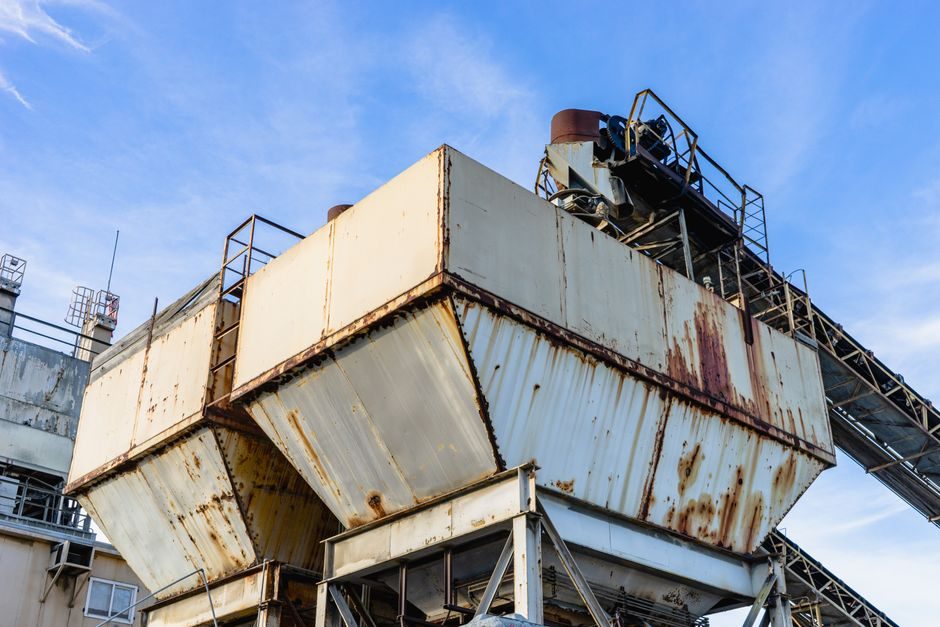
Battery-grade NiSO4·6H2O is produced at industrial scale via two main hydrometallurgical routes — atmospheric or pressure leaching of nickel matte/sulfide concentrate followed by solvent-extraction (SX) purification and evaporative crystallization — with direct-concentrate leaching studied as an energy-lean alternative (2024-09) [S4][S6].
Conventional flowsheets run nickel matte through sulfuric acid leaching at 60–80 °C, selective sulfide precipitation of Cu and Zn, oxidative hydrolysis of Fe(III) at pH 3.5–4.0, and Mg/Ca removal before cobalt is stripped via Cyanex 272 or D2EHPA-based SX [S4]. Battery-grade specifications call for ≥22.0% Ni in the hexahydrate, with cobalt held below 0.0010% (10 ppm) and key divalent impurities such as Cu, Fe, Zn typically capped in the low single-digit ppm range to satisfy precursor pCAM producers [S8][S9].
Feedstock Pathways: From Matte to Mixed Sulfide Precipitate
The dominant commercial route in 2026 starts with nickel sulfide matte (Ni3S2) or a mixed hydroxide precipitate (MHP) feed; matte routes retain sulfur through the smelting step and re-dissolve it in H2SO4, while MHP routes bypass smelting and consume less energy but require stronger iron and manganese rejection [S4].
Pyrometallurgical smelting of nickel sulfide concentrate is energy-intensive, loses by-product PGMs to slag partitioning, and is sensitive to pyrrhotite (Fe1−xS) content in magmatic deposits — a known gangue that increases acid consumption downstream [S6]. A direct hydrometallurgical route from concentrate (chemical leaching + impurity removal + SX + crystallization) has been developed in Australia and patented to eliminate the matte intermediate and improve cobalt recovery to ~99% in bench studies [S4].
Plant-scale benchmark figures published in the 2024 hydrometallurgy design study put a greenfield battery-grade nickel sulfate line at approximately 240 million € with 170 000 t/yr NiSO4 and 7 400 t/yr CoSO4 co-product capacity — useful as a sizing reference for feasibility comparisons [S4].
Leaching, Purification and Impurity Removal Sequence
Sulfuric acid leaching at 60–80 °C and pH 1.0–2.0 dissolves Ni, Co, Cu, Fe and Zn; copper and zinc are removed by selective sulfide precipitation with H2S or NaHS, while iron is oxidized with air/H2O2 and precipitated as goethite or jarosite above pH 3.0 [S4][S6].
Cobalt is the most expensive impurity to separate because its chemistry mirrors nickel's; Cyanex 272 (D2EHPA in kerosene) is the workhorse extractant, operating with a pH-swing of roughly 0.5–1.0 between Co and Ni isotherms and achieving effluent Co:Ni ratios on the order of 1000:1 when configured in a 3–4 stage mixer-settler train [S4]. Residual Ca and Mg are removed by fluoride or carbonate polishing, and the purified Ni-bearing strip liquor is sent to vacuum evaporative crystallization at 60–80 °C, where NiSO4·6H2O crystals form in the characteristic blue-green monoclinic habit [S3][S8].
Sumitomo Metal Mining's EP2832700A1 patent family (priority 2013-01, granted 2014-10) discloses a purification sequence targeting impurity removal from nickel-loaded solutions to yield high-purity NiSO4 for lithium-ion cathode precursors — a process envelope widely licensed in Asian pCAM hubs [S5].
Battery-Grade vs Technical-Grade Specifications

Battery-grade NiSO4·6H2O must deliver a minimum 22.0% Ni with cobalt below 0.0010% (10 ppm), magnesium below 0.0020% (20 ppm), calcium below 0.0010% (10 ppm) and sodium below 0.0100% (100 ppm) per published 2025 hydrometallurgy reviews and supplier datasheets [S8][S9].
Technical-grade material — typically the hexahydrate sold in 25 kg or 50 kg HDPE bags — tolerates higher Fe, Cu and organic carbon and is directed to electroplating, catalysts and pigment manufacture rather than NCM/NCA precursor synthesis [S3][S8]. Selection logic: when the downstream cathode is nickel-rich (NCM 811 or NCA), every additional 10 ppm of Co or Fe in the sulfate feed translates to a measurable yield loss in co-precipitation; technical grade is a false economy at that point [S3][S8].
Safety, Handling and Regulatory Envelope
Nickel sulfate is classified as a Class 9 environmentally hazardous substance (UN 3077) under U.S. DOT transport rules, and NOAA's CAMEO Chemicals datasheet lists it as a mild oral toxicant, a known dermal sensitizer, and a carcinogen on prolonged exposure — primary hazard is environmental release [S1].
Acute Exposure Guideline-style protective action criteria from CAMEO place PAC-1 at 0.79 mg/m³, PAC-2 at 8.6 mg/m³ and PAC-3 at 51 mg/m³ for nickel(II) sulfate (CAS 7786-81-4) — values used in US EPA emergency planning contexts and worth bench-marking for plant ventilation and stack-monitoring design [S1].
Spill isolation distances under ERG Guide 171 (2024 revision) call for a 50 m (150 ft) liquid and 25 m (75 ft) solid initial precautionary zone, scaling to 800 m (½ mile) in all directions if a rail tank car or ISO tank is involved in fire [S1]. Operators handling liquid NiSO4 (CI) typically follow the MSDS protocol of triple-rinsing HDPE containers, segregating from strong oxidizers, and routing process wastewater through Fe-precipitation/ion-exchange polishing before discharge [S7].
Process Economics and Energy Footprint
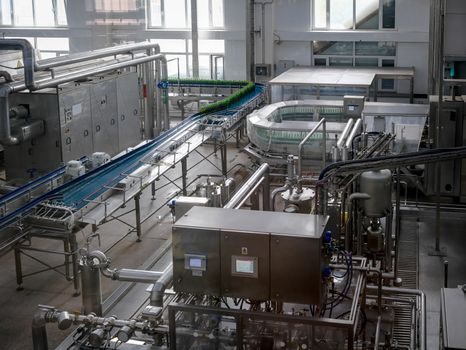
Energy intensity is dominated by two unit operations: pyrometallurgical smelting of sulfide concentrate (typically 18–25 GJ/t Ni in large flash-smelting furnaces) and evaporative crystallization of NiSO4·6H2O (roughly 1.2–1.6 t steam per ton of crystal) [S4][S6].
Direct-concentrate leaching sidesteps smelting entirely; process design studies report capital cost recovery in 7–9 years for a 50 000 t/yr NiSO4 line when cobalt is monetized as CoSO4·7H2O at battery-grade purity [S4]. For context on the downstream chemistry that drives this demand, see this cathode material market 2026 sourcing map and this lithium hydroxide process breakdown — both detail the precursor chain that consumes the sulfate output [S3][S4].
For nickel-bearing process materials that ultimately feed these sulfate plants, the broader nickel alloy feedstock landscape and emerging additive manufacturing material routes are worth tracking as secondary nickel sources tighten or loosen [S3].
Where Each Route Fits — and Where It Doesn't
Use the matte-SX route when feed is a high-grade Ni3S2 matte from a vertically integrated smelter, byproduct Co credits are significant, and PGM recovery is part of the project stack [S4].
Use MHP or mixed sulfide precipitate (MSP) leaching when starting from laterite-derived intermediates or when lower capex is essential and the operator can tolerate higher Fe/Mn rejection load [S4][S6]. The direct-concentrate route is best suited to companies with proprietary concentrate supply, hydrometallurgical IP and tolerance for scale-up risk — Sumitomo-style impurity polishing patents and Australian pilot work are the closest analogues [S4][S5].
For related materials handling and plant-side equipment decisions, the graphite electrode smart manufacturing update is relevant where electric smelting is considered as a future nickel pyrometallurgy option, while instrumentation around the SX and crystallizer stages typically relies on pressure transmitter loops rated for sulfuric acid service [S3][S4].
Trackable signals worth following: (1) whether the 2024 direct-leach pilot plants reach 50 000 t/yr demonstration scale before end-2026, and (2) updates to ERG Guide 171 isolation distances and EPA PAC values for CAS 7786-81-4 — both will reshape capex and safety-engineering envelopes for any new battery-grade nickel sulfate train [S1][S4].