Industrial lithium carbonate (Li₂CO₃, CAS 554-13-2, molecular weight 73.89 g/mol) is refined from two principal feedstocks: alpha-spodumene concentrate (LiAlSi₂O₆, ~6 wt% Li₂O equivalent in the ore body) and continental lithium-bearing brines, with battery-grade product now specified at ≥99.5% Li₂CO₃, ≤10 ppm Fe, ≤20 ppm Na, and SO₄²⁻ typically held below 800 ppm [S2][S5].
The global supply chain is split roughly between South American brine operations (Salar de Atacama, Salar del Hombre Muerto) and Australian hard-rock producers shipping spodumene concentrate, with downstream conversion capacity concentrated in China. Battery-grade carbonate is the cathode-precursor entry point; technical-grade 99.0% product still goes into greases, glass-ceramics and quick-setting cement, with milled technical grade commonly delivered at <40 µm with X(50) ≈ 4 µm [S1].
Brine route: 15-month evaporation pond train before carbonate precipitation
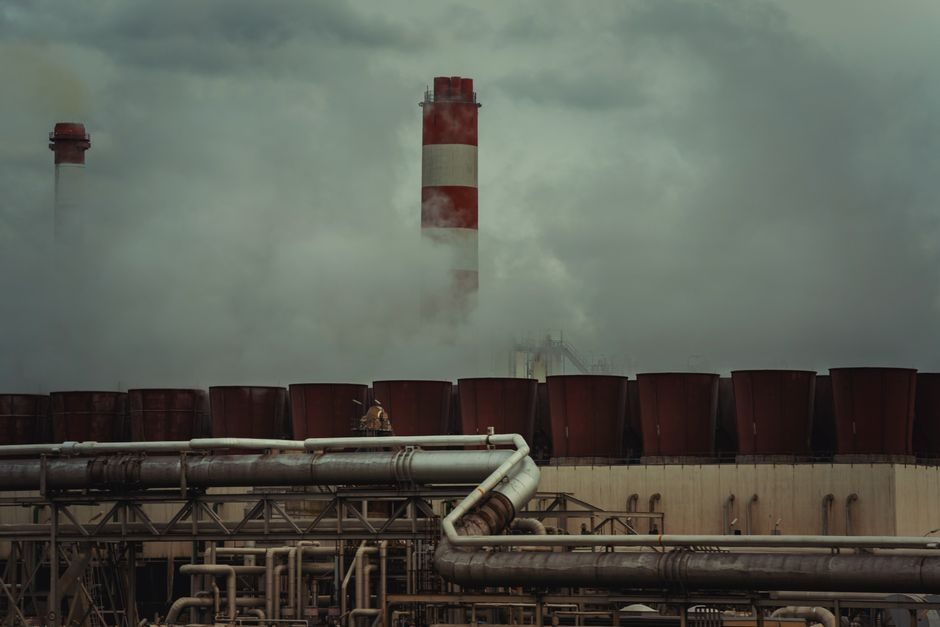
The brine route begins with pumping lithium-bearing salar brine (typically 0.05-0.2 wt% Li) into a sequential cascade of solar evaporation ponds; halite (NaCl) crystallises in the first pan, sylvinite (KCl) in the second, carnallite (KMgCl₃·6H₂O) in the third, and a final LiCl-concentration pan that takes roughly 15 months end-to-end [S3]. The LiCl-rich concentrate (about 30-35% LiCl solution) is then trucked to a chemical plant where reagents such as Na₂CO₃ precipitate Li₂CO₃; the long pond residence is the defining cost-driver and the main vulnerability to weather.
B-grade product from this route is typically quoted at 99.5% Li₂CO₃, Na ≤250 ppm, Ca ≤50 ppm, Mg ≤100 ppm, SO₄²⁻ ≤800 ppm and H₂O ≤0.40% under the YS/T582-2006 standard referenced by Targray's PDS [S2]. Brine operations are land-intensive (multi-square-kilometre pond footprint), water-intensive in arid regions, and slow to ramp, which is why integrated brine producers pair with selective adsorption (Li-Al layered double hydroxide, Li/Al-LDH) or solvent-extraction skids to shorten residence time.
Hard-rock route: decrepitation, acid roast or alkaline leach, then bicarbonate precipitation
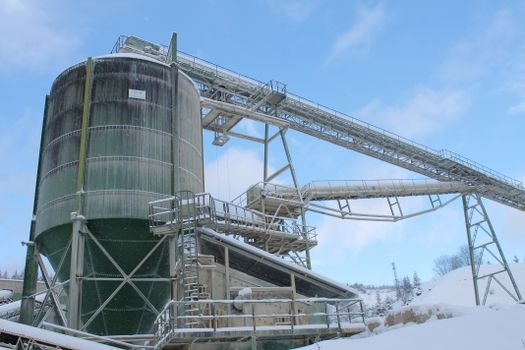
Spodumene concentrate (α-spodumene, monoclinic, density ~3.1 g/cm³) is unusable as mined because Li is locked in the α-phase; the ore is heated to 1050-1100 °C in a rotary kiln to convert it to the β-phase (density ~2.4 g/cm³), a step called decrepitation, which increases the leach-extractable Li fraction from <10% to >90% [S3]. After cooling, the β-spodumene is milled and leached: the legacy acid-roast route uses concentrated H₂SO₄ at 250 °C to yield Li₂SO₄, while the alkaline (Na₂CO₃ / CaO / "LIT-2" type) route runs at high pH to suppress silica dissolution [S4][S6].
The Metso alkaline-leach single-pass process introduced 2026-05 reportedly refines spodumene concentrate to battery-grade Li₂CO₃ in one pass, avoiding the Na₂SO₄ by-product burden that the acid route generates when Li₂SO₄ is reacted with Na₂CO₃; the company cites lower capex, simpler plant design and faster ramp-up as the engineering pay-off [S4]. Downstream, the lithium-rich solution — either Li₂SO₄ or LiCl — is purified with NaOH and Ca(OH)₂ to drop Fe, Mg, Ca, then precipitated with Na₂CO₃ (soda-ash route) or CO₂ to give technical- or battery-grade Li₂CO₃.
Grade ladder, impurity gates and the specifications that buyers actually enforce
Industrial Li₂CO₃ is sold in three commercial rungs: technical grade (TG, ≥99.0%), battery grade (BG, 99.5%), and high-purity/superior grade (99.99-99.999%); a single reagent change in the precipitation train can move a producer from TG to BG economics [S1][S2]. The Albemarle TG specification fixes minimum Li₂CO₃ 99.0% by acidimetric titration, max 0.5% H₂O (200 °C gravimetry), and the milled grade runs <40 µm at 100% [S1].
Targray's BG and high-purity tables enforce Na ≤250/20 ppm, K ≤10 ppm, Fe ≤20/10 ppm, Ca ≤50/10 ppm, SO₄²⁻ ≤800/100 ppm, Cl⁻ ≤50/20 ppm and average granularity 2-6 µm, with BG/HP covered by YS/T582-2006 and Superior Grade by YS/T546-2006 (a Chinese YS/T industry standard) [S2]. The EY industry guide reinforces the same pattern, listing BG at Li₂CO₃ ≥99.5% with Fe₂O₃ ≤10 ppm, K ≤10 ppm, B ≤30 ppm and LOI ≤0.6% [S5]. The particle-size shift from <40 µm (TG) to 2-6 µm (BG) is a downstream cathode-coating requirement, not a mining decision.
Valve, piping and instrumentation hotspots along the refining train
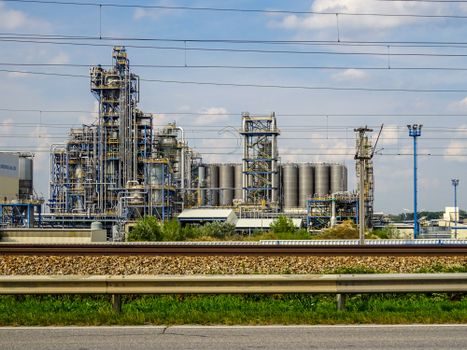
The hard-rock refining train exposes equipment to alternating services: hot abrasive slurries (decrepitated β-spodumene), hot concentrated H₂SO₄ (acid-roast), hot alkaline Li-bearing solution (alkaline-leach), and finally Na₂CO₃ / CO₂ precipitation with mother-liquor recycle. Valmet's 2911_03_06 application report flags the duty split: severe-service knife-gate or pinch valves on the thickener underflow, lined ball valves on acid leach, and metal-seated control valves with cavitation trims on the Li₂SO₄-to-Li₂CO₃ precipitation loop [S6].
On the instrumentation side, density meters and flow meters on the pregnant leach solution, pH and conductivity probes on the impurity-removal cascade, and Coriolis or magnetic flow meters on the Li₂CO₃ slurry mother-liquor return are now standard asks; ANSI/ISA-style smart pressure transmitters with HART or wirelessHART show up on every reagent and steam header per usual lithium-chemical plant practice, and the pH/cell-temperature interlock on the precipitation reactor is the safety-critical loop [S6]. For the carbonation reactor, the industrial valve set skews to alloy-20 or duplex globe bodies with low-noise trims to handle the two-phase CO₂/Li-rich service.
By-products, water balance and the economics that drive the route choice
The acid-roast route generates ~6-8 t of Na₂SO₄ per tonne of Li₂CO₃ — a low-value, market-capped by-product that has been the single biggest incentive to switch to alkaline leaching over the past decade, with the Metso single-pass offering explicitly designed to avoid the Na₂SO₄ burden [S3][S4]. The alkaline route trades Na₂CO₃ consumption for a silica residue (desilication product) and a CaCO₃ cake from the impurity-removal stage, both of which are easier to landfill or backfill than Na₂SO₄.
Water balance differs sharply: brine routes consume 1.5-2.0 million L of brine per tonne of Li₂CO₃ and live or die on evaporation, while hard-rock routes are net-freshwater consumers of ~50-150 m³/t of Li₂CO₃ and need to recycle ≥80% of the process water to remain defensible. Capital intensity runs the opposite way: brine ponds are cheap per tonne but slow, while hard-rock plants cost $8,000-15,000/t-Li₂CO₃ of nameplate capacity and can ramp inside 24-36 months.
Use-case fit: who should specify which grade and which route
Battery-cathode precursor producers (NCM, LFP, LMFP) should specify ≥99.5% Li₂CO₃ with Na ≤50 ppm, SO₄²⁻ ≤100 ppm and granularity 2-6 µm — i.e. Targray's "High Purity Grade" bracket or the EY BG table — and prefer the alkaline-leach route when the by-product disposal story matters [S2][S5]. Technical-grade 99.0% Li₂CO₃ at <40 µm is the correct spec for grease, glass-ceramic and cement additive use, and the Albemarle 401125 data sheet anchors that grade with a 99.0% Li₂CO₃ minimum, 0.5% max H₂O, density 2.11 g/cm³ and water solubility 8.4 g/L at 20 °C [S1].
Procurement and process engineers sizing new plants should treat brine as the lowest-opex, highest-land-and-water-intensity option, and spodumene-alkaline-leach as the lowest-by-product, fastest-ramp alternative now that Metso's 2026-05 single-pass offering is commercial [S4]. For dry- and arid-region projects, hard-rock alkaline-leach is increasingly the default; for saline-flat-rich geographies, brine remains the right call.
Process-encyclopedia links for adjacent specification work
For broader context on mineral-beneficiation flow diagrams, see the reference entry on V-process lines used in casting process chains, and the additive-manufacturing material map for material-purity hierarchy at the multifunction process calibrator reference covers the loop-test discipline applied to the Li₂CO₆ precipitation reactor's pH/cell-temperature interlock. Process-encyclopedia cross-references for adjacent material flows: additive manufacturing material and v-process line. [S1]
Track, for further spec work: the Albemarle 401125 TDS revision date (last issued 2018-02-15, retrievable from www.albemarle-lithium.com) and the YS/T582-2006 / YS/T546-2006 Chinese YS/T industry standards governing the BG and Superior Grade spec tables [S1][S2]. When a spodumene-alkaline-leach plant is being evaluated, the engineer should request the Na₂SO₄ disposal-cost line item separately from the Li₂CO₃ capex line item, because the by-product balance is what tips the route decision more than the headline nameplate cost [S4].
For related coverage, see Cast Aluminum Alloy Price & Cost Map: Alloy, Process, MOQ and Sourcing Logic.