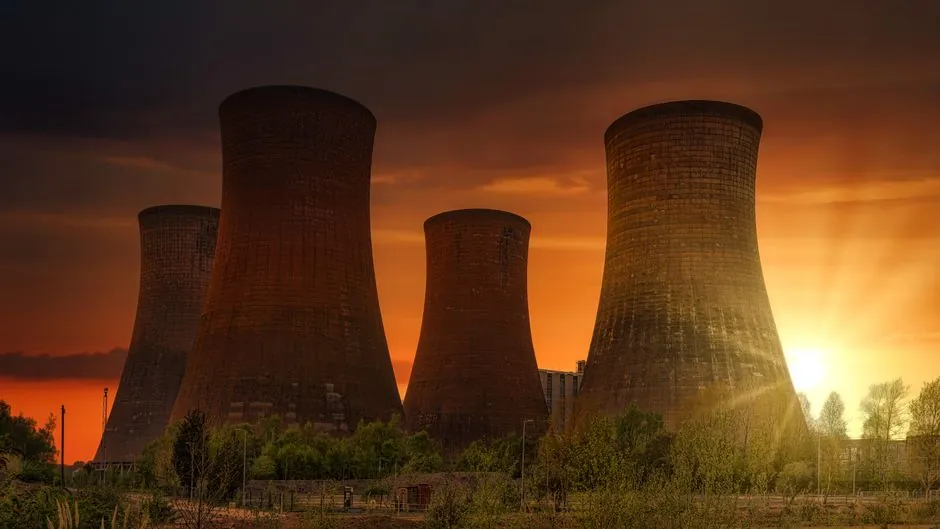
U.S. hyperscalers are signing 20-year nuclear power purchase agreements in the $80-115/MWh band, while new combined-cycle gas PPAs clear at $70-120/MWh, so the headline price gap is small, but the reliability gap is not [S2][S3].
Meta's June 2025 deal with Constellation Energy keeps the 1.1 GW Clinton Clean Energy Center open through a 20-year PPA, and Microsoft matched the structure to restart Three Mile Island Unit 1 by 2028; Amazon signed a nearly 2 GW PPA with Talen Energy's Susquehanna plant in the same window [S4]. Behind those signings is a hard physics reality: nuclear ran at a 93% capacity factor in 2023, 2-4 times the reliability of coal, wind, and solar, and 59.7% higher than natural gas [S2].
Price Bands: What PPAs Are Actually Clearing At
Behind-the-meter and physical nuclear PPAs for existing U.S. fleet assets are pricing in the $80-115/MWh range for 20-year terms, driven by avoided re-licensing and life-extension costs that data center tenants absorb in exchange for firm capacity [S2][S6]. New combined-cycle gas turbine PPAs in PJM and ERCOT are landing between $70-120/MWh depending on heat rate, fuel hedging, and carbon risk premium, with most 2025 deals clustered in the $85-100/MWh band [S3]. On a pure $/MWh basis the two are interchangeable within 10-15%, which is why hyperscalers are not choosing nuclear for cheap electrons, they are choosing it for capacity-factor economics and 24/7 carbon-free matching [S4][S5].
For a 100 MW data center load running 8,760 hours per year, the effective energy cost difference between an $85/MWh gas PPA at 60% capacity factor and a $95/MWh nuclear PPA at 93% capacity factor narrows once you value the firm-MW component separately, because each delivered MWh from a gas peaker carries a higher reliability premium when it has to be backed by storage or spinning reserve [S2].
Capacity Factor, Land Use, and Why 24/7 Carbon-Free Changes the Math
Nuclear's 93% capacity factor against gas's 59.7% is the single biggest economic lever, because data center operators pursuing 24/7 carbon-free matching otherwise have to overbuild renewable PPAs by a factor of 2-3 to cover nighttime and low-wind hours [S2]. The IEA puts natural gas at 26% of data center energy supply today versus nuclear at 15%, with both losing share to renewables and behind-the-meter generation as hyperscalers chase round-the-clock clean matching [S5].
Land-use efficiency is a secondary but hard number: nuclear needs 0.3 m² per MWh, 50 times less than coal and 42-63 times less than ground-mounted solar PV, which matters for greenfield campus siting where buffer zones and exclusion radii already constrain footprint [S2]. For an engineer running site selection, the takeaway is that nuclear's 24/7 profile removes the need for 2-4 hour battery buffers or hydrogen peakers that gas-with-renewables hybrids still require.
Decision Criteria: When Nuclear Wins, When Gas Wins
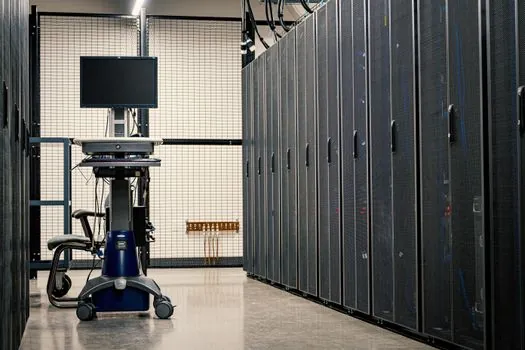
Use nuclear when the load is at least 100 MW, the contract term is 15+ years, the operator has a 24/7 carbon-free mandate, and interconnection queue wait is over 3 years; in that profile, the avoided cost of storage plus the carbon-free premium make the $80-115/MWh band competitive [S3][S4]. Use new gas when the load is under 50 MW, the timeline to power-on is under 24 months, the site lacks a nearby licensed reactor within transmission distance, or the operator can monetize RECs and carbon offsets separately rather than requiring 24/7 matching [S3][S7].
Gas still wins decisively on three axes: time-to-power (24-36 months for a new CCGT versus 7-10 years for Vogtle Units 3-4, which ran $17 billion over budget and 7 years late), modularity (50-300 MW increments versus 1+ GW nuclear units), and siting flexibility (no NRC Part 50/52 licensing, no exclusion radius, no used-fuel policy debate) [S4]. The DOE estimates a standardized, repeatedly manufactured SMR design could drop lifetime cost by around 70% to $60/MWh, but no U.S. SMR has yet reached commercial operation, so the gas-PPA pathway remains the only dispatchable option that can power a data center before 2028 [S4].
Contract Structure: Why the PPA Form Matters More Than the $/MWh
A 20-year fixed-price physical PPA with an existing nuclear plant transfers re-licensing risk, decommissioning liability, and used-fuel storage obligation to the off-taker, which is why hyperscalers are willing to pay the $80-115/MWh band rather than wait for SMRs at $60/MWh [S6]. Behind-the-meter generation, where the data center is physically co-located with the plant, sidesteps FERC interconnection queues that now stretch beyond 5 years in some jurisdictions and avoids the 23% annual demand growth surcharge that grid-served loads increasingly face [S3].
Virtual PPAs (financial swaps settled on a hub index) are the common form for renewable PPAs because they decouple physical delivery from contract economics, but they do not solve the 24/7 carbon-free problem, which is why nuclear deals are almost universally physical PPAs at the busbar [S7]. For an engineer structuring a contract, the difference is: a financial PPA pays the difference between strike and spot, leaving the MWh delivery problem to someone else; a physical PPA delivers the MWh and obligates the buyer to take or pay for capacity, which is the whole point when the load is firm 24/7.
Constraints, Failure Modes, and Open Questions

The Vogtle precedent is the load-bearing risk in any new-build nuclear PPA: 7 years late and $17 billion over budget, which bankrupted Westinghouse and chilled reactor orders for two decades [S4]. Hyperscalers are routing around this by contracting only existing, already-licensed plants and life-extension reactivation, not new builds, which is why Meta, Microsoft, and Amazon deals all target operating or restart units rather than SMRs under development [S4][S6]. The political layer adds another risk: the Inflation Reduction Act earmarked $850 million in direct nuclear funding and billions in loan guarantees, but the tech-neutral clean energy credit programs that nuclear relies on were still being finalized as of late 2024, and the incoming administration's stance on IRA tax credits remains a live variable [S2].
The unsold question is SMR economics: NuScale's revised larger design received NRC approval, and the DOE's $60/MWh target assumes serial factory production, but the Carbon Free Power Project in Utah was terminated in 2023 after cost escalation, so the first commercial SMR in the U.S. is still not under construction [S4]. Until that gap closes, the practical answer for a data center operator needing firm power before 2030 is a gas PPA with carbon offsets, or a nuclear PPA on an existing asset if one is within transmission distance and willing to negotiate a 20-year term.
For a deeper look at the broader industrial and semiconductor pull behind the U.S. power-demand surge driving these PPA decisions, see the analog chip market recovery analysis for adjacent capacity-demand signals. The next trackable milestones are SMR commercial-operation announcements from NuScale, X-energy, or TerraPower before 2028, and any FERC ruling on whether behind-the-meter nuclear co-location requires a public-utility status change.
Component reference pages worth checking: data logger, powder new material, and gas analyzer.