Para-aramid captured an estimated 68% of North American aramid fiber demand in 2026 and over 76% globally, with security and protection applications generating more than 36% of global revenue [S1][S2]. The North American market is sized at US$1.5 billion in 2026, on track to US$2.1 billion by 2033 at a 5.3% CAGR, while global market value sits between USD 4.52 billion and USD 4.88 billion depending on the source [S1][S2][S9].
Two end-use clusters absorb the bulk of that volume: ballistic and thermal protective clothing for defense, law enforcement, oil and gas, electrical utilities, and metallurgy, plus aramid yarn (typically para-aramid such as Kevlar) used as the strength member inside optical fiber cables. The frictional materials and tire reinforcement segments add a third large pull for para-aramid in automotive brake pads, clutches, and high-speed tire plies [S3][S4][S7].
Para-Aramid vs Meta-Aramid vs Copolyamide: How the Three Types Split
Para-aramid (PPTA-type) delivers the highest tensile modulus and is the default choice for ballistic panels, cut-resistant gloves, and optical-cable tensile members; meta-aramid (MPIA-type) trades some tensile strength for better thermal and arc-flash resistance, so it dominates in protective clothing for industrial welders, foundry workers, and utility line crews, and in hot-gas filtration bags above 180–200 °C [S2][S3][S4].
Copolyamide and other "misc." aramids are smaller-volume specialty grades, typically chosen where a manufacturer needs a property between the two main types (lower crystallinity for dye uptake, or a specific dielectric behaviour for cable insulation) [S1]. As a rule: if the spec reads "ballistic," "cut level A4–A9," or "cable strength member," it is para-aramid; if the spec reads "arc rating ATPV," "filtration 200 °C+," or "flame resistant underwear," it is meta-aramid [S3][S4].
Protective Apparel: Ballistic, Cut, and Arc-Flash Pull on Para and Meta
Security and protection was the single largest application segment in 2025 at more than 36% of global revenue and is projected to hold that position through the forecast window [S2]. On the ground, that breaks into three sub-categories that engineers actually specify: soft ballistic vests (NIJ 0101.06 levels II–IIIa) for law enforcement, hard ballistic panels and helmets for military, and cut- and heat-resistant industrial PPE for oil and gas, metals, and electrical work [S1][S3].
NIJ compliance is the gating standard in the U.S., and Persistence Market Research explicitly ties North American para-aramid growth to "regulatory push for ballistic-grade personal protection equipment under National Institute of Justice (NIJ) standards" [S1]. For industrial arc-flash PPE, the relevant spec family is NFPA 70E / ASTM F1506 for the garment, with an ATPV (arc thermal performance value) rating in cal/cm² that buyers actually compare; for cut resistance, ANSI/ISEA 105 cut levels A1–A9 set the bench test (ASTM F2992). I do not have a 2026-vintage NFPA or ANSI revision date in the source set, so I will not invent one.
Optical-Fiber Cables: Aramid Yarn as the Non-Metallic Strength Member
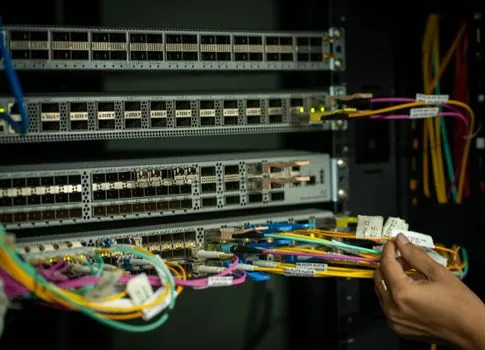
The fastest-growing end-use segment in the North American report is telecommunications, explicitly tied to the US$65 billion U.S. Infrastructure Investment and Jobs Act broadband buildout, which is accelerating fiber-to-the-home and middle-mile fiber deployment nationwide [S1]. Inside each cable, aramid yarn (typically para-aramid, marketed under trade names like Kevlar) is wrapped as the tensile strength member that lets a thin, non-metallic cable be pulled through conduit over long distances without stretching the glass.
Two practical numbers specifiers care about: the linear density of the yarn (commonly 1580, 2140, or 3220 dtex for cable grades) and the cable's short-term allowable tensile load, which on a typical indoor FTTH drop is in the 100–200 N range. Outside-plant loose-tube cables go higher, often 600–2700 N, which is why the aramid content per metre scales sharply with span length. The same source flags the U.S. leading North America with an 83% regional share, so the cable demand is concentrated in a single country [S1].
Tires, Friction, and the New BEV Battery-Enclosure Pocket
Rubber and tire reinforcement has long been the second pillar of aramid demand, used as a belt ply in high-speed and heavy-duty tires to reduce rolling resistance, improve dimensional stability, and handle higher speeds without growth [S4][S7]. Coherent Market Insights names tires, airbags, and hoses as the principal automotive pulls in 2026, all driven by the strength-to-weight ratio versus steel or nylon [S7]. Frictional materials (brake pads, clutch linings, gaskets) are the other established para-aramid sink; ResearchAndMarkets ties this to the ongoing phase-out of asbestos and the high-end automotive friction segment specifically [S3].
The newer pocket flagged in the research is aramid-reinforced composites for battery enclosures on battery-electric vehicles, where the U.S. Department of Energy and Inflation Reduction Act incentives are pushing composite integration across a forecast 3.5 million+ annual U.S. BEV units by 2030 [S1]. That is a thin, premium application today, but it is the kind of pull that tightens para-aramid supply faster than the headline 5.3% regional CAGR suggests, because enclosure programs consume kilograms of fabric per vehicle, not grams [S1].
Supply Concentration, Pricing Pressure, and Known Constraints
Two structural facts shape the 2026 aramid market more than any single demand driver. First, supply is concentrated: para-aramid capacity globally is dominated by a small number of integrated producers, and Persistence Market Research frames the regional outlook around defense procurement and automotive OEM contracts rather than fragmented merchant demand [S1]. Second, the material is not biodegradable, and R&D is capital-intensive, both of which ResearchAndMarkets lists as explicit restraints on the market [S3].
For buyers, that translates into three trackable signals: para-aramid lead times for ballistic-grade staple, optical-cable yarn pricing in long-term contracts, and the ratio of para to meta in any PPE tender (a higher meta share usually means the spec is arc/thermal-led, not cut/ballistic-led) [S2][S3]. I would also watch the U.S. broadband spending cadence under the Infrastructure Investment and Jobs Act: if the 2026–2027 drawdown underruns, optical-cable para-aramid offtake softens, and the headline telecom growth rate in [S1] will be revised down. Until any of those move, the 2026 picture is: para-aramid tight, meta-aramid steady, and protective apparel plus fiber-optic cable as the two fulcrums the rest of the market swings on.
For component-level specifications, see construction machinery and equipment, and lamps and light fittings.
Background reading: Cement Sector Signals: Demand-Side Brand Innovation, Eastern Europe M&A, and Multifunct....