
Total cost of ownership (TCO) for nickel alloy components must include purchase, fabrication, installation, maintenance, downtime, and end-of-life scrap, not the LME nickel price on a single day [S1][S3].
The global nickel alloy market is valued at USD 17.84 billion in 2026 and is projected to reach USD 26.36 billion by 2034 at a 5.00% CAGR [S2]. The aerospace nickel alloy subsegment was estimated at USD 5.8 billion in 2024 with a 4.6% CAGR through 2031 to USD 8.3 billion [S7].
What the TCO Equation Actually Contains
Argonne's TCO framework decomposes lifecycle cost into purchase, financing, operating expense, maintenance, taxes, and end-of-life recovery, a structure that maps cleanly onto industrial alloy components when fuel/financing lines are swapped for fabrication and downtime [S1].
For nickel alloy 600 (Inconel 600, minimum 72% Ni, 14-17% Cr, 6-10% Fe), the dominant TCO line items are raw material, hot/cold working, weld procedure qualification, in-service inspection intervals, and scrap recovery at end of life [S3]. A procurement strategy that focuses on lowest price per kilogram while ignoring these downstream lines systematically overstates the savings of substitutes, and understates the value of higher-Ni grades in corrosive or high-temperature service [S3][S6].
Why Nickel Content Moves Price Non-Linearly
Nickel content in common alloys ranges from 8% in 304 stainless, 10-14% in 316 stainless, around 56% in Hastelloy C22, to over 60% in Hastelloy C276, which means a doubling of LME nickel price roughly doubles the alloy surcharge on C276 while barely moving 304 [S4].
On 2022-03-04, LME nickel traded near $20,000/t; by 2022-03-08 it had spiked past $100,000/t, forcing the LME to suspend trading for a week, then settled at $31,000/t by 2022-03-21 [S4]. Volatility of that magnitude is the single largest risk to a nickel alloy TCO model, and it falls hardest on grades with the highest Ni fraction [S4]. Procurement contracts that lock alloy surcharge for 12-24 months or that include a nickel-price cap clause are the standard hedge; spot buying for high-Ni grades is a 2022-style mistake that the market has not forgotten.
Cost-Driver Comparison: 304 SS vs 316 SS vs Inconel 600 vs Hastelloy C276
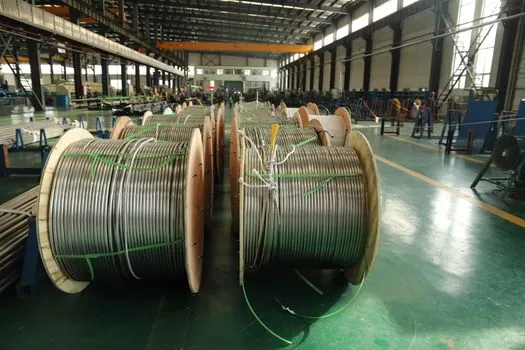
On four decision criteria drawn from the research, the alloy choice is a classic TCO trade: [S6]
1) Upfront material cost per kg: 304 SS is the cheapest reference, 316 SS adds a Ni surcharge, Inconel 600 (72% Ni min) sits well above both, and Hastelloy C276 (>60% Ni) is the most expensive per kg [S3][S4].
2) Corrosion/oxidation resistance at temperature: 304 SS is baseline, 316 SS adds chloride resistance, Inconel 600 holds oxidation resistance at high temperature with a self-healing Cr oxide layer, and Hastelloy C276 covers the widest pH/ chloride envelope [S3][S4].
3) Volatility exposure to LME nickel: low for 304 SS, moderate for 316 SS, high for Inconel 600, highest for Hastelloy C276, because the surcharge scales with Ni fraction [S4].
4) Expected service life multiplier in matched service: 304 SS is the shortest, 316 SS typically 1.5-2x, Inconel 600 several-fold, and Hastelloy C276 the longest, with exact multipliers service-specific and not stated in the research [S3][S4][S8].
The implication: a 2x higher kg price that delivers a 4x service life is a TCO win, while a 2x higher kg price that delivers a 1.2x service life is a TCO loss, and the alloy-surchare volatility makes the second case the more common failure mode [S3][S4][S6].
Where the Hidden Lifecycle Cost Lives
Real lifecycle cost hides in three places procurement usually misses: scheduled inspection and NDE on safety-related components, unplanned downtime when a marginal alloy fails between turnarounds, and welding/overlay repair using matching filler [S3].
The Nickel Institute's lifecycle cost comparison of alternative alloys for FGD components is the canonical worked example: it ranks candidate alloys on annualized cost, not kg price, which is exactly the TCO discipline process engineers need for flue-gas desulfurization, sour service, and high-temperature reactor service [S5]. For flange and piping assemblies in similar service, a flange TCO analysis reaches the same conclusion from the gasket and bolting side: the fitting is rarely the dominant lifecycle line, the joint integrity over the cycle is. For marine and offshore applications the alloy choice couples to cathodic protection and coating strategies, which is why a copper supply chain view matters when Cu-Ni grades enter the comparison set.
When Nickel Alloy TCO Is the Wrong Frame

Nickel alloy TCO is not the right tool for static, low-temperature, non-corrosive structural components where carbon steel or 304 SS survives the design life; in those cases, the kg-price minimization is the correct decision and TCO analysis adds cost without adding information [S3][S6].
It is also the wrong frame when duty cycle is unknown or when operating temperature and chloride/pH exposure are not bounded, because the service-life multiplier, the largest TCO term, cannot be justified without those inputs [S3][S6]. And it is the wrong frame for one-off prototypes where fabrication learning-curve cost and minimum-order-quantity surcharges dominate the small sample [S2][S3].
Standards and Specification Anchors That Keep the TCO Honest
Three specification anchors keep a TCO model from drifting into marketing copy: UNS designations (N06600 for Inconel 600, N10276 for Hastelloy C276, N06022 for Hastelloy C22) so the alloy is traceable; ASTM/ASME material specifications (ASTM B168 for Inconel 600 plate/sheet, ASTM B575 for the Ni-Cr-Mo family, ASME SB- equivalents for pressure-boundary use); and NACE MR0175 / ISO 15156 for sour-service environments where the wrong grade triggers sulfide stress cracking regardless of how the TCO spreadsheet is balanced [S3][S4].
A useful rule of thumb from the data: when LME nickel moves 50% in a quarter, the alloy surcharge on a 60%-Ni grade moves roughly 30% on the same timeline, while a 10%-Ni grade moves roughly 5%, so any TCO model that assumes a flat alloy surcharge is a planning error [S4]. Cross-checking the selected grade against the nickel alloy reference page, the alloy steel reference for substrate alternatives, and the stainless and corrosion-resistant family anchors the comparison set before the model is run.
What to Track Over the Next Two Quarters

Track the LME nickel three-month price on a weekly cadence, with a 50% band alarm tied to the alloy surcharge on the highest-Ni grade in the bill of materials [S4].
Track mill lead times for Inconel 600 plate and Hastelloy C276 plate from the major producers, since lead time is the second-largest TCO lever after price, and watch for the next Nickel Institute lifecycle cost update covering FGD and sour-service components, which has historically been the cleanest public dataset for TCO benchmarking [S5].
The underlying component specifications are covered under total station.