DirectIndustry's curated catalog lists 12 specialty manufacturers offering 14 O-ring products at -60 °C to 540 °C and 0–25 MPa for elastomer grades, while a broader 135-vendor index catalogs 390 O-ring products across hydraulics, sanitary, and high-temperature service [S1][S2].
The 2026 O-ring supply base is split across four material ecosystems: NBR/FKM rubber for hydraulic and oil service, EPDM for water and steam, silicone and FFKM for chemicals, and ceramic/metal for temperatures and pressures that destroy elastomers.
Chinese production cluster: Xingtai, Xiamen, Qingdao, Ningbo, Tianjin
Made-in-China's nonstandard O-ring category lists Diligence & Fine Machinery (Qingdao) at US$0.60–1.50 with a 50-piece MOQ for black NBR O-rings, and a Tianjin seller at US$0.10–0.20 for 10-piece-MOQ plastic-cored rubber rings — entry pricing that anchors low-end sourcing [S9].
Xlong (Xiamen) advertises static and dynamic O-rings for plumbing, bathware, automotive, and home appliances from a Jimei District facility reachable at +86-592-5171076, while Xingtai Tenghua — a Ministry of Railways appointed manufacturer founded in 2003 — supplies Cummins-style diesel O-rings (45-50 G2 / 3328589) and rail traction-motor ventilation seals alongside its core railway product line [S3][S5].
Hebei First Rubber Medical Technology, Junty Industries, and Anhui Zhongding Sealing Parts round out the cluster, with Anhui Zhongding listing four O-ring product families on DirectIndustry and Junty marketing two lines out of Beijing-area operations [S2].
European specialty tier: KASTAS, DICHTOMATIK, Hunger, James Walker
KASTAS Sealing Technologies (Turkey) fields 16 O-ring lines on DirectIndustry, the largest single European catalog presence in the 2026 index, while DICHTOMATIK SAS (France) and Hunger (Germany) list 12 and 33 product lines respectively — the latter handling rubber-corded emergency O-rings when moulded tolerances are impractical [S1][S2].
James Walker (UK) lists seven O-ring lines including static and hydraulic-cylinder profiles, and Epidor Seals & Rubber Technology (Greece) contributes ten product lines for industrial rubber [S2]. PTFE Competence Center GmbH (Germany) and DICHTOMATIK both push FEP/PFA-encapsulated O-rings, with the catalog noting that encapsulated profiles have limited stretch and compression versus solid elastomer, restricting them to chemical-service duty rather than dynamic reciprocating seals [S1].
Greene Tweed (US/UK) lists four Chemraz and PTFE lines, EagleBurgmann two, and Carrara Global Sealing Solution six — these vendors typically ship against DIN 3771 (geometry) and ISO 3601 (hydraulic O-ring standard) callouts rather than metric-only part numbers [S1][S2].
Extreme-service niche: ceramic and metal-jacketed O-rings
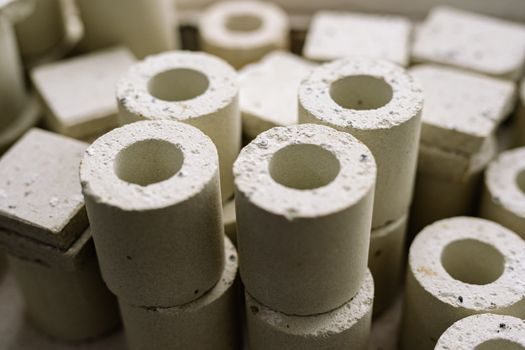
Metal Textiles Europe and Ring-Joint gasket suppliers list 540 °C textile O-ring gaskets and ring-joint profiles (R, RX, BX types) rated to -196 °C to 1000 °C and 70 MPa max pressure, intended for refinery and cryogenic flange service [S1].
CIMAKA International GmbH (Germany) and Pingxiang Chemshun Ceramics (China) supply silicon-nitride ceramic seal rings for fluid equipment where metal O-rings would gall; Sinoma Advanced Nitride Ceramics lists a single product line on DirectIndustry for the same application [S1][S2]. These overlap with the metal gasket and ring-joint ecosystem, but the material set is genuinely different — ceramic O-rings are brittle and require hardened mating surfaces.
Selection criteria: compound, standard, size range, service envelope
Standard elastomer O-rings cover -60 °C to 200 °C and 0–25 MPa across diameters of 1.7 mm to 1,140 mm in the DirectIndustry specialty catalog, with NBR 70 Shore black typical for sanitary service and FKM specified when acid or chemical resistance is required [S1].
For dynamic hydraulic service where the O-ring must act as both seal and back-up, the PRR profile (DICHTOMATIK) replaces the classic O-ring plus back-up ring stack and is rated -45 °C to 200 °C with twist-resistant geometry [S1]. EPDM-based PB9034-style plumbing O-rings (3/4 inch, 1.5 mm thickness) carry 0.0308 kg net weight per piece and EAN-coded retail packaging for plumbing distribution.
Comparison: three supplier tiers on four buying criteria
Chinese mass suppliers (Diligence, Tianjin rubber, Junty) win on cost — NBR parts at $0.10–1.50 — and on flexible MOQs of 10–50 pieces, but rarely publish DIN 3771 / ISO 3601 dimension callouts and rarely offer FFKM or perfluoroelastomer grades [S9].
European specialty makers (KASTAS, Hunger, James Walker, DICHTOMATIK) price 3–10× higher per piece but ship to DIN 3771 / ISO 3601 geometry, supply FKM, FFKM, EPDM, and encapsulated FEP/PFA, and carry audit documentation for oil-and-gas, pharma, and food-grade service [S1][S2]. The trade-off is real: an O-ring on a NORSOK-approved subsea valve will not come from a $0.20/piece Tianjin supplier.
Ceramic and metal-jacketed suppliers (CIMAKA, Sinoma, Metal Textiles Europe) operate in a different envelope entirely — 540 °C textile gaskets, -196 °C to 1000 °C ring-joint profiles, 70 MPa pressure rating — and replace the elastomer O-ring concept rather than compete with it [S1]. Specifying a ceramic O-ring where an NBR 70 Shore would survive wastes both cost and clearance.
Indian and small-batch tier: Kesaria, Ami Polymer, ARTIC SEALS
Kesaria Rubber (India) supplies custom rubber, TPE, and PTFE sealing components to plumbing, automotive, electrical, oil & gas, and medical-equipment customers, competing in the same space as Chinese OEM-tier suppliers but with a stated R&D emphasis on global standards compliance [S7].
Ami Polymer Pvt. Ltd (India) lists two O-ring product lines on DirectIndustry, and ARTIC SEALS (India) lists twelve — the second-largest catalog presence after Hunger in the 2026 index, suggesting a sizable Indian domestic and export market that frequently competes with Chinese pricing [S2].
What a 2026 buyer should verify before signing a PO

First, confirm the compound grade with a material data sheet — NBR vs FKM vs EPDM vs FFKM vs silicone is not interchangeable, and a sanitary FKM spec'd where NBR is fitted will swell and fail in mineral oil. [S9]
Second, confirm the dimensional standard (DIN 3771 / ISO 3601 for static and hydraulic O-rings) and the hardness (typically 70 Shore A for general industrial, 90 Shore for high-pressure static), and request a cure-date batch code — elastomers shelf-life is real at 5–10 years depending on compound.
Third, match the supplier to the audit regime: Chinese mass suppliers for cost-driven aftermarket and consumer plumbing; European specialty makers for DIN/ISO-geometry OEM and oil-and-gas; ceramic/metal suppliers for temperatures and pressures that elastomers cannot survive. This three-tier map aligns with the same logic used for retaining ring and mechanical seal sourcing, where standard parts go to high-volume catalog vendors and engineered service goes to specialty houses.
Trackable signals for the next 90 days: monitor DirectIndustry's 135-vendor O-ring index for new entrants with FFKM or perfluoroelastomer lines (none of the Chinese mass suppliers in the 2026 index list FFKM at all), and watch Hunger and KASTAS for expanded encapsulated FEP/PFA product lines as chemical-processing capex resumes.
For related coverage, see How to Choose a Balancing Valve: Duty, Cv Sizing, and Spec Map.