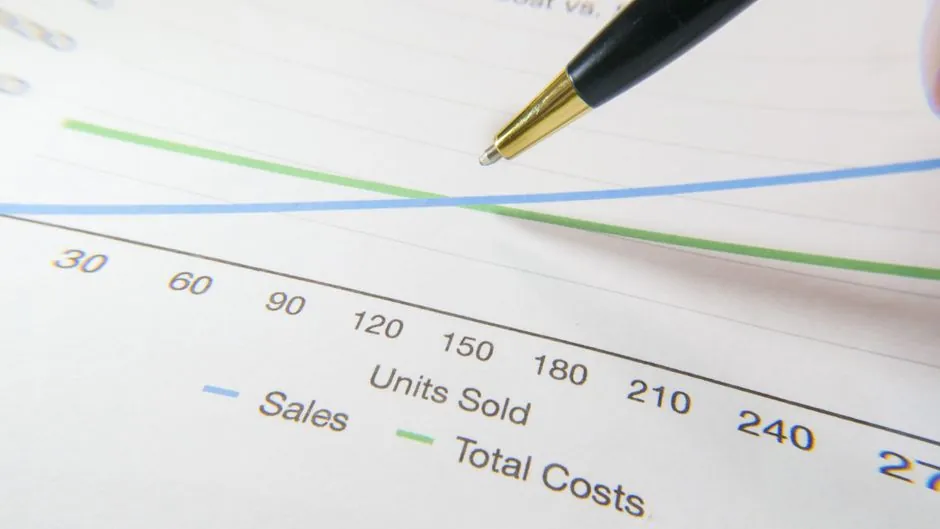
Throughput accounting drives profit through sales minus truly variable costs and operating expense, while OEE measures how effectively an asset uses scheduled time [S1][S2][S4].
OEE combines availability, performance, and quality into an efficiency percentage; throughput accounting evaluates throughput, investment, operating expense, net profit, and return on investment [S1][S4].
What Each Metric Measures
Overall Equipment Effectiveness, or OEE, is a diagnostic metric calculated as availability multiplied by performance multiplied by quality. Availability compares actual run time with planned production time, performance compares actual speed with ideal cycle time, and quality compares good units with total units started [S4].
Throughput accounting is a decision framework based on three primary measures: throughput, or T; inventory investment, or I; and operating expense, or OE. Throughput equals sales revenue minus truly variable costs, while net profit equals T minus OE and return on investment equals net profit divided by I [S1][S2][S8].
A high OEE does not automatically establish business success because throughput may fail to meet takt time.
Which Metric Drives Profit?
Throughput accounting is the stronger financial decision system because its primary output, net profit, is calculated directly from sales, variable cost, and operating expense, without allocating labor and overhead to each unit [S1][S2].
The framework separates three consequences of a decision: increasing T, reducing I, or reducing OE. A decision is financially favorable when it raises T or lowers I or OE without damaging the other measures [S2]. It also rejects production-volume measures that create inventory without generating a sale [S2][S9].
OEE remains valuable for finding equipment losses, but OEE alone does not establish that an additional unit is profitable. It does not show sales revenue, truly variable cost, total operating expense, or cash tied up in inventory. A high OEE can therefore coexist with low profit when the line runs the wrong mix, faces weak demand, or builds excess work-in-process [S4].
Side-by-Side Decision Comparison

On financial outcome, throughput accounting directly calculates net profit as T minus OE, whereas OEE produces an equipment-efficiency percentage and leaves profit unattributed. On asset use, throughput accounting tracks investment I and return on investment, while OEE does not distinguish value-adding production from unnecessary activity. OEE loss analysis distinguishes availability, performance, and quality losses, while throughput accounting can price a bottleneck stop at the throughput it would have earned rather than at a machine-hour rate.
On scope, throughput accounting guides product mix, pricing, inventory, and constraint decisions across the system. OEE is strongest for machine-level and line-level troubleshooting. On implementation, throughput accounting requires disciplined classification of revenue, truly variable costs, operating expense, and inventory, while OEE requires defensible planned time, ideal cycle time, and good-unit definitions. A KPI architecture that connects OEE losses to plant profit is covered in Build a KPI Tree That Connects OEE to Plant Profit.
Where OEE Adds Value
OEE is the better metric when the decision concerns availability, performance, or quality at a defined asset or line. Its three factors expose downtime, changeovers, slow running, micro-stops, and rejected output, making it useful for maintenance, setup reduction, and loss-reduction programs [S4].
The metric must not be treated as a universal target. A process can achieve 90% OEE and still fail to satisfy takt demand, while another process can have lower OEE because the line intentionally stops during a quality hold or scheduled changeover [S4]. The calculation therefore depends on planned production time and an agreed ideal cycle time, not on a universal percentage.
OEE is also insufficient for ranking improvement opportunities by financial value. Its loss categories describe equipment behavior, but the economic impact depends on whether the loss reaches the bottleneck, whether downstream buffers cover it, and whether the lost output represented a real sale [S3][S4].
Pricing Losses Through the Constraint

The Theory of Constraints approach identifies the constraint, exploits it, subordinates the rest of the system to it, raises its capacity, and then repeats the process. A bottleneck can be internal, such as a slow production step, or external, such as a supplier or market limit [S3][S5].
In the supplied example, 45 minutes of filler jams cost USD 135 at the machine-hour rate and USD 4,500 at throughput.
A minute saved on a machine that waits anyway is worth almost nothing. Pricing the constraint rather than every machine separates losses that stop sales from losses that do not [S3].
Limits and Failure Modes
Throughput accounting is not a replacement for statutory financial reporting or inventory valuation. It is a management decision tool, and its classifications require disciplined treatment of direct materials, purchased components, piece-paid subcontract work, labor, rent, depreciation, utilities, maintenance, and insurance [S1].
Its estimates can fail when labor genuinely changes with each unit, when inventory valuation is inconsistent, or when products share costs in ways the model cannot resolve. It is less suitable for decisions requiring full product cost, contractual cost-plus pricing, or regulated cost recovery. Traditional accounting is described as better suited to financial reporting, while throughput accounting is intended for operating choices that affect the whole system [S1][S5].
Throughput-only management can also become brute-force production. Running equipment above its rated speed, skipping maintenance, or adding overtime can raise unit throughput while increasing risk and operating expense. OEE exposes these behaviors through performance, availability, and quality, so the stronger operating system combines constraint economics with equipment effectiveness rather than choosing one number as a substitute for the other [S4].
Decision Rules by Operating Situation

Use throughput accounting first for product mix, bottleneck loading, make-or-buy choices, pricing, inventory reduction, and capital proposals. For example, rank products by throughput per bottleneck hour rather than by fully allocated unit cost. The financial test is whether the decision raises T, lowers I, or lowers OE without worsening the other measures [S2][S6].
Use OEE first for machine reliability, cycle-time losses, quality losses, and comparison of assets operating to the same definition. Set targets from planned time, ideal cycle time, and product requirements rather than adopting an 85% threshold without validation. This is especially useful when the constraint is stable and the team needs to reduce specific equipment losses.
Use both when the plant lacks dependable loss costing. A practical sequence is to calculate OEE by asset, connect each major loss to constraint reach, price the resulting throughput effect, and select the intervention with the largest effect on T, I, or OE. Track net profit and ROI after implementation so equipment activity remains tied to cash generation.
The next review point should reconcile constraint minutes, good output sold, inventory movement, operating expense, and net profit for the same period; if OEE improves without a corresponding change in T, I, or OE, the gain remains an operational indicator rather than demonstrated profit improvement.