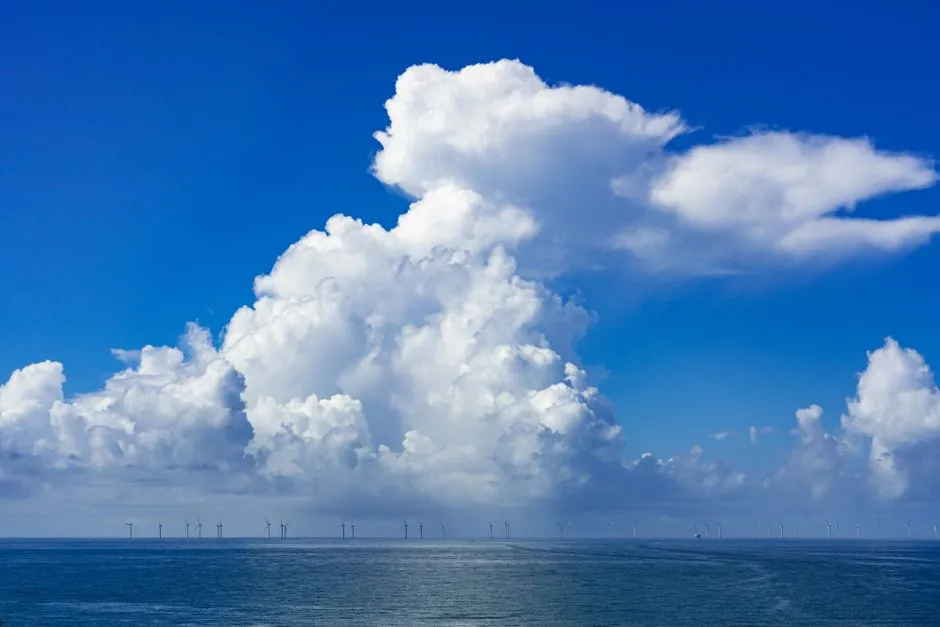
Offshore wind cable demand was valued at USD 4.81 billion in 2025, with market revenue forecast to grow 19.3% through 2026–2034 [S6].
Global array and export cable requirements were estimated at more than 9,600 km and 6,750 km, respectively, between 2020 and 2027 [S2], while 40% of offshore wind projects may not be realised [S1].
Demand volume and export-cable exposure
The cable requirement is split between two distinct systems: array cables connect turbines and the offshore substation, while export cables carry generated power to the onshore grid [S2]. More than 9,600 km of array cables and 6,750 km of export cables were estimated to be needed between 2020 and 2027 [S2].
Supply planning must therefore accommodate two separate length pools rather than treating offshore wind cable as one homogeneous product. Export circuits also involve longer cable runs, shore-end terminations, installation vessels, and grid interfaces, so a nominal kilometre forecast cannot be converted directly into annual manufacturing slots.
The US technical resource potential for offshore wind exceeds 2,000 GW, with potential annual generation above 7,200 terawatt-hours [S2]. This is a technical resource estimate rather than a committed cable order pipeline, but it explains why suppliers are positioning long-term production capacity around a large addressable market.
Array, export, static, and dynamic cable options
Array cable is suited to repeated turbine-to-turbine collection, while export cable is specified for the main offshore-to-onshore transmission route [S2]. Static export cable is fixed to the seabed, whereas dynamic cable is designed to accommodate movement and is relevant to floating wind installations.
A floating wind contract example required static and dynamic cabling together with associated accessories [S4]. These examples show why route length, installation method, and dynamic-section requirements must be separated during procurement.
Across the principal cable classes, array cables maximise turbine collection volume, export cables carry bulk power over longer distances, static cables suit fixed seabed routes, and dynamic cables address floating-system movement. The trade-off is that dynamic applications require additional design and accessory scope rather than simply substituting a conventional export cable.
Supplier constraints behind the 2026 order cycle
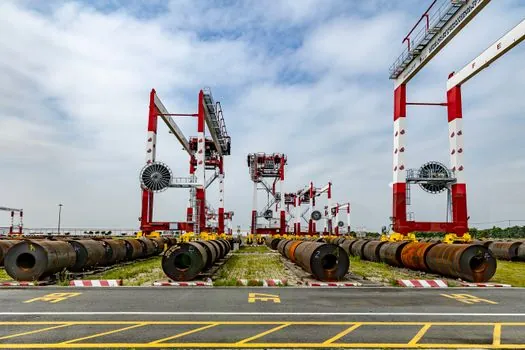
Three factors contributed to poor offshore wind market conditions in 2025, yet the first quarter of 2026 was expected to be busy across several countries [S1]. For cable manufacturers, project timing creates a sharp planning problem: production tooling must be prepared before awards convert into firm procurement, while uncertain project completion can leave capacity idle.
The scale of historical demand demonstrates why discipline matters. That project combined long-distance cable production with turnkey design, manufacturing, and installation, illustrating the capital and execution intensity behind an export-cable award [S2].
Array-cable tenders can therefore support significant volume, but export-cable awards carry greater integration and installation complexity. Manufacturers need separate capacity plans for conductor production, armouring, final laying, accessories, and offshore handling.
Cost reduction through cable design and materials
Advances in cable technology could help developers reduce costs over the following decade, with material changes also identified as a route to savings [S3]. The commercial value of these improvements depends on where they occur: reduced conductor weight, improved installation losses, or higher reliability can change both manufacturing cost and lifecycle exposure.
The sourcing decision must still be evaluated against conductor size, voltage class, mechanical loading, seabed installation, and the complete accessory package rather than material price alone.
Export-cable buyers should request a quantified breakdown of installed and operating losses, cable weight, handling requirements, and repair-joint strategy. The key question is not whether a material is novel, but whether it reduces the delivered cost per reliable transmitted unit while preserving installation and repairability.
Market forecast against project execution risk

The offshore wind cable market was valued at USD 4.81 billion in 2025, and total revenue was forecast to grow at 19.3% through the 2026–2034 period [S6]. This growth rate describes the forecast market trajectory, not a guaranteed annual growth rate for every cable manufacturer or product category.
Project risk remained material because analysts warned that 40% of offshore wind projects may not be realised [S1]. A manufacturer should therefore match factory expansion to contracted and permitted demand rather than the full forecast, while preserving the ability to redeploy tooling toward grid interconnector and oil-and-gas subsea cable work.
The relevant comparison is between committed project supply, forecast project supply, and speculative market supply. Committed orders provide the strongest workload visibility; forecast projects support medium-term planning; market-wide projections create capacity signals but cannot validate a factory expansion on their own [S1][S2][S6].
Buyers and suppliers need separate qualification gates
Offshore wind cable procurement applies to developers with defined grid routes, turbine array layouts, and installation schedules. The oil-and-gas supply chain is also a potential source of cable-manufacturing capacity, but cross-sector entry requires demonstrated submarine-cable qualification and an export strategy rather than a general assumption that oil-and-gas experience transfers without qualification [S2].
Developers should separate four qualification gates: electrical performance, mechanical and seabed installation suitability, repairability, and delivery schedule. The 130 km circuit example shows the geographic scale that route planning must address [S5], while the Viking Link award demonstrates that installation and land-cable interfaces can expand a package beyond submarine cable manufacture alone [S2].
Suppliers should also verify cable-route distance, water depth, burial conditions, installation vessel availability, and accessory lead times before accepting a delivery date. The accessible transmission path runs from turbine and substation collection through the export route to the onshore grid [S2].
Track orders, installation slots, and committed routes
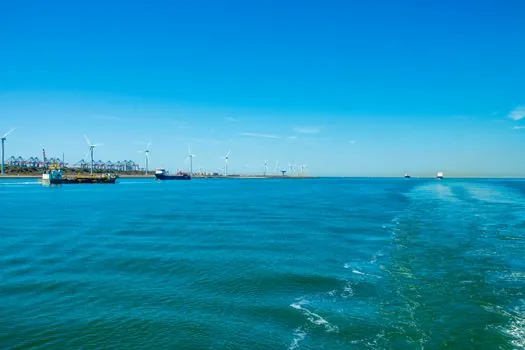
Three indicators will determine whether the 19.3% offshore wind cable market forecast translates into manufacturable supply: firm export-cable awards, availability of cable-laying vessels, and confirmation that proposed projects have progressed to committed development [S1][S6].
For 2026 procurement, buyers should prioritise verified route engineering, complete accessory scope, realistic vessel scheduling, and factory capacity backed by project awards. The defensible market signal is not a headline forecast alone, but the conversion of measured kilometres and offshore circuits into contracts that suppliers can manufacture and install.