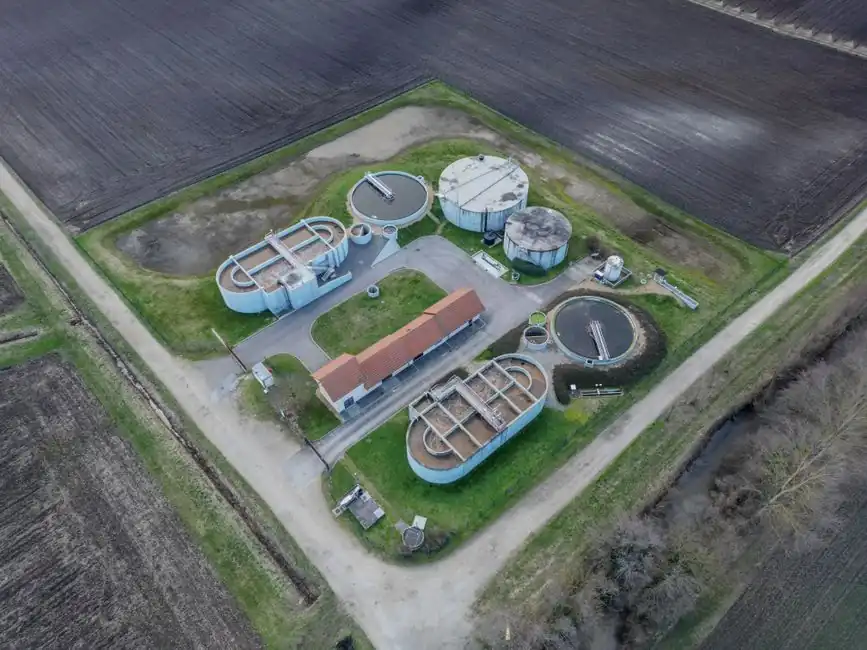
An online water quality analyzer for a municipal or industrial wastewater treatment plant (WWTP) is a multi-parameter wet-side instrument package, not a single product, and the RFQ line must lock the parameter list, range, accuracy, output protocol, mounting, and service environment before pricing is meaningful [S3][S5].
Buyers who write the RFQ around brand names instead of measurable engineering parameters typically receive 3-4 non-comparable quotes and lose 2-3 weeks in clarification cycles, because vendors interpret unspecified ranges, sample conditioning, and cleaning differently [S5].
Core Parameters to List on Every RFQ Line
Online analyzers sold for WWTP duty cover at least 8 distinct parameters: pH, ORP, dissolved oxygen (DO), conductivity/TDS, turbidity (NTU), total suspended solids (TSS, mg/L), residual chlorine (free and total), ammonia nitrogen (NH3-N), nitrate nitrogen (NO3-N), nitrite nitrogen (NO2-N), chemical oxygen demand (COD), and total phosphorus; each parameter is typically a separate measurement loop with its own sensor, reagent cartridge, or optical head [S3][S5].
For each line item, the RFQ must state the measurement range with units, accuracy as ±% of reading or ±absolute value, response time T90, operating temperature range (commonly 0-50 °C for probes), and the sample matrix (raw influent, mixed liquor, clarified effluent, UF filtrate, or final discharge) because the same parameter requires different sensor bodies and cleaning strategies in each stream [S3].
For guidance on framing a complete analog-and-digital signal specification alongside a similar process instrument, the walk-through in Coriolis flowmeter RFQ spec practice shows the same line-by-line discipline applied to a different but adjacent measurement loop.
Sensor Technology Choices and What They Cost You
TSS and turbidity are commonly confused on RFQs even though they are not the same measurement: TSS expresses particle mass concentration in mg/L (laboratory filter-and-weigh method), while turbidity expresses optical cloudiness in NTU (90° scattered light, ISO 7027 principle) [S4].
For mixed-liquor and return-activated-sludge lines, specify a backscatter TSS sensor with a typical range of 0-2000 mg/L (or 0-5000 mg/L for thickened sludge), resolution 0.1 mg/L, and accuracy around ±5% of reading; for clarified effluent and final discharge, specify a 90° scattered-light turbidity sensor with selectable ranges of 0-20.00, 0-200.0, or 0-1000.0 NTU, resolution 0.01 NTU, and accuracy around ±5% [S4].
Common RFQ mistake: writing "turbidity" when the permit limit is expressed in mg/L TSS, or specifying a turbidity sensor for MLSS control. These mismatches surface only during commissioning and force a sensor repurchase, not a calibration tweak [S4].
The general online analyzer class is catalogued under the broader online water analyzer family, which spans pH/ORP, DO, conductivity, nutrient, and residual-chlorine variants that share RS485/MODBUS communication practice.
Output Protocols, Power, and Cabinet Integration
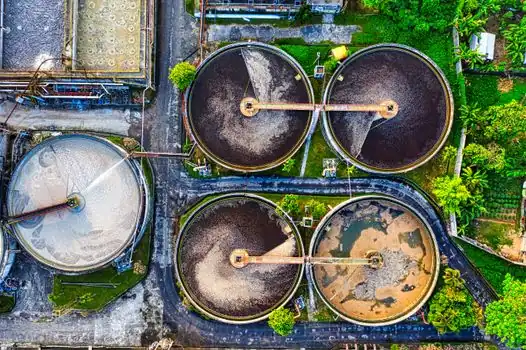
Modern online analyzers ship with RS485 and RS232 serial ports and MODBUS RTU protocol as a baseline, which allows direct polling by SCADA, PLC, or a dedicated data acquisition server; some units also offer 4-20 mA analog, HART, or PROFIBUS-PA as options [S3].
State the RFQ requirement as "RS485 MODBUS RTU standard, 4-20 mA optional per loop" and call out the MODBUS register map to be supplied with delivery; without the register map, integration typically adds 3-5 engineering days per parameter [S3].
Power: most field analyzers accept 24 VDC or 100-240 VAC; cabinet-mounted multi-parameter units commonly take 220 VAC ±10%, 50/60 Hz.
Advanced functions to require in the spec: remote calibration, remote cleaning trigger, automatic dilution for high-concentration samples, dual-stream switching, and built-in self-diagnostic alarms; units lacking these force on-site engineer visits every 2-4 weeks for routine maintenance [S3].
Comparison of Main Parameter Technologies on Decision Criteria
For the most common WWTP parameters, the practical selection bands line up as follows. pH uses a glass-reference electrode, range 0-14 pH, accuracy ±0.02 pH, with no reagent cost. DO uses an optical luminescent membrane (no electrolyte) for 0-20 mg/L, ±0.1 mg/L, 12-month cap; the older galvanic DO is cheaper but needs electrolyte refill every 2-3 months. Conductivity uses a 4-electrode cell for 0-2000 mS/cm with automatic range switching. Residual chlorine uses a 3-electrode amperometric cell, range 0-5 mg/L (or 0-20 mg/L with dilution), reagent buffer required, replacement membrane every 3-6 months [S3].
Ammonia uses an ion-selective electrode, range 0-1000 mg/L NH3-N, ±5% or ±0.5 mg/L, with KOH dosing reagent. Nitrate uses UV absorption, range 0-100 mg/L NO3-N, no reagent, ±3% [S3]. COD and total phosphorus use wet-chemistry digestion plus photometric detection, range 0-1000 mg/L and 0-20 mg/L respectively, with monthly reagent replenishment. TSS and turbidity are reagent-free optical probes, the lowest consumable cost on the skid.
For multi-parameter cabinets that bundle several of these loops into one housing, total lifecycle cost is dominated by reagent and membrane replacement rather than sensor cost; on a 5-year horizon, optical DO, UV nitrate, and optical TSS/turbidity run 2-3× cheaper to maintain than amperometric chlorine, ISE ammonia, or wet-chemistry COD.
Standards, Permits, and Calibration Anchors
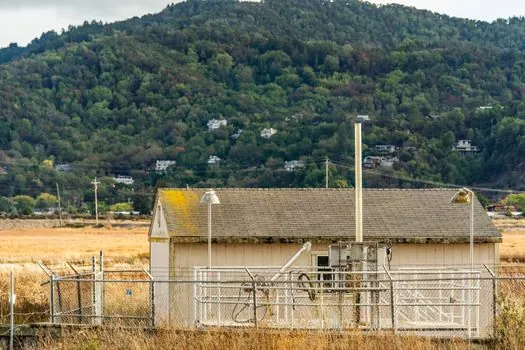
Anchor every spec line to a recognized method. Turbidity: ISO 7027 or USEPA 180.1. TSS: APHA 2540 D (Standard Methods). pH: USEPA 150.2 or ISO 10523. DO: ISO 17289 or USEPA 360.1. Residual chlorine: USEPA 330.5 (DPD colorimetric) or amperometric equivalent. Ammonia: USEPA 350.1 (colorimetric) or ion-selective equivalent. COD: USEPA 410.4 or ISO 15705. Conductivity: ISO 7888. Without the method anchor, two bidders will quote against different reference chemistries and the prices will not align. [S4]
Calibration requirement: the RFQ should require a matrix-matched 2-point or 3-point calibration certificate traceable to NIST or NPL, with slope and zero documented at delivery; drift acceptance is typically ±5% per month for optical sensors and ±2% per month for wet-chemistry analyzers after stabilization.
Operating Environment, IP Rating, and Cabinet Specification
For outdoor or wet-well installation, the analyzer cabinet should be rated at least IP65, with submergence-resistant probes at IP68; stainless steel 316L wetted parts are standard for WWTP service where H2S and chloride exposure are routine. [S3]
State ambient temperature range (commonly -10 to 50 °C for field analyzers, 5-40 °C for reagent cabinet interiors with air conditioning or heat exchanger), humidity up to 95% non-condensing, and altitude if the plant is above 1000 m, because reagent pumps derate at altitude.
Sample inlet pressure: most WWTP streams are atmospheric, but if the analyzer is fed from a pressurized line, state 0.5-4 bar inlet with a pressure regulator; otherwise vendors will assume atmospheric and add a regulator in the quote.
Service, Warranty, and What Triggers Requote
[S3]
For a quick read on how a missing spec field in a process-instrument RFQ cascades into a requote cycle, the pressure-switch map at pressure switch accuracy spec map 2026 walks through the same "unspecified accuracy band = requote" failure mode for an adjacent instrument class.
Common RFQ mistakes that trigger requote: omitting sample matrix, omitting output protocol, omitting cleaning interval, omitting reagent shelf life, and writing "equivalent" against a brand instead of a parameter band. Each missing line typically adds one clarification round.
Decision Framework: Build a Skid vs. Discrete Loop Instruments
[S4]
For a municipal WWTP with influent, aeration-tank, and effluent monitoring, the typical spec is a cabinet skid at each location bundling pH, DO, TSS, NH3-N, and turbidity, with 4-20 mA or MODBUS feed to the plant SCADA; for an industrial discharge outfall, a simpler 2-3 parameter panel is usually enough.
Trackable signal for the next RFQ cycle: confirm whether residual-chlorine loops are still requested as amperometric (membrane replacement every 3-6 months) or as the newer colorimetric DPD-free designs (reagent only, no membrane); the cost-of-ownership gap is roughly 40% over 5 years in favor of the colorimetric route where reagent supply is reliable.
For the relevant spec sheets and selection criteria, see power quality analyzer, and concrete batching plant.