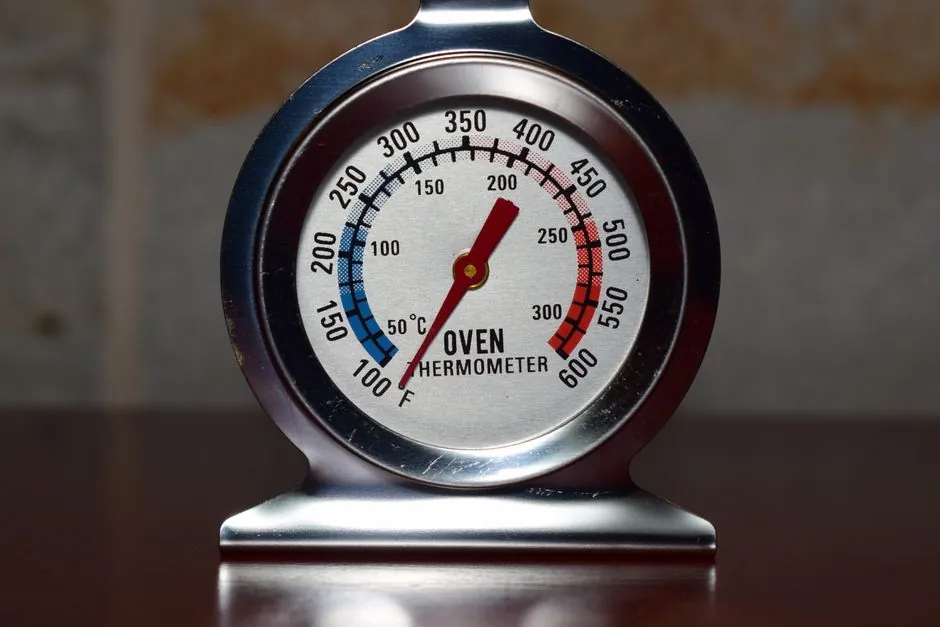
A cold-room RFQ for a single temperature monitoring point fails most often on four fields: sensing element type, probe structure, accuracy at the operating point, and placement evidence. Spec each of those with a value and unit, and the quote round drops from weeks to days, because vendors can map the line to a stocked SKU instead of staging a custom build [S1][S3].
For a 2-8°C pharmaceutical or vaccine cold room, the binding operating window is narrow, and a 0.5°C drift at the set point is the difference between a passing audit and a rejected batch. The same RFQ template also covers -18°C freezers and 0-10°C fresh-produce rooms, but the target temperature, hysteresis band, and alarm thresholds change with the band [S2]. Sizing the temperature sensor to the room's actual thermal map, not to the wall the operator stands at, is the single highest-leverage move in the spec.
Sensing Element and Accuracy
PT100 and PT1000 RTDs are the default in regulated cold storage because of their linear, traceable resistance curve and interchangeability between vendors. PT1000 carries roughly 10x the nominal resistance of PT100, which means lead-resistance error per metre of cable is lower, useful on long runs from a roof-mounted probe to a basement controller [S3][S5].
NTC thermistors offer faster response and a lower unit price, but their R-T curve is non-linear, so the controller input has to match the specific nominal resistance (10 kΩ at 25°C is the most common cold-room value) and B-constant. A wrong B-constant is the most common hidden requote cause on cheap NTC quotes [S5]. Accuracy in the cold-room envelope should be written as ±0.2°C at 0°C for a PT-based probe, the figure used as the baseline in published wireless cold-storage specs [S3].
Probe Structure Matched to the Monitoring Point
Air-sensing probes need the sensing tip to extend beyond the boundary layer at the duct wall, otherwise the reading is the wall temperature, not the room air. The same logic applies inside a cold room: a probe zip-tied to a metal beam will track the beam, not the air, unless it is insulated from the mounting surface [S3][S5].
For core product temperature, a penetration probe with a 3-6 mm stainless tip is the standard choice. For surface-mounted evaporator-coil or door-frame monitoring, a clip-on or surface-contact probe with a matched curvature is required. A point probe in a large or stratified room gives a misleading reading; an averaging sensor, multiple elements along one cable, is the right answer for cold rooms wider than about 6 m or with high ceilings [S5].
Placement, Mapping, and the Number of Points
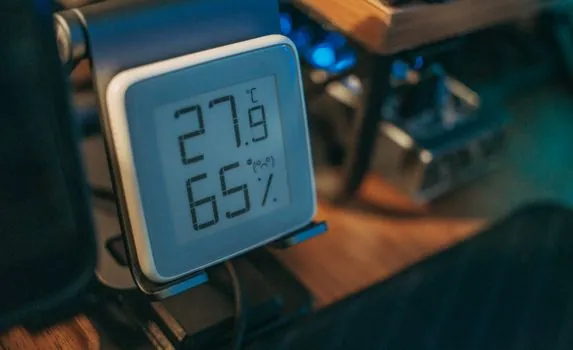
The right number and location of sensors is not a vendor question, it is set by a temperature-mapping study run with 10 or more data loggers through a loaded test, an empty test, a door-opening test, and a power-failure test. The data from the loaded test is the one used to pick the permanent hot and cold points, because the empty-test and door-opening-test scenarios distort the air pattern [S4].
A small cold room mapped in published examples shows the hottest point can run 7.7°C while the coldest is 2.6°C inside a nominal 2-8°C envelope, a 5.1°C spread that any single centre-of-room sensor will miss. Best practice is one sensor at the mapped hot point and one at the mapped cold point, with the control loop and the alarm loop referencing different probes so a single probe failure does not silence the alarm [S4].
Wiring, Wireless, and Integration
Wired 4-wire PT100 is the safest choice for a control loop because it cancels lead resistance, but it pulls a 4-core shielded cable through the cold room envelope. Wireless sensors cut install time on retrofit sites and remove the cable-penetration issue, at the cost of a radio range that drops sharply when the sensor is mounted directly on metal. An ambient range extender, a small plastic standoff, restores the radio budget to spec and is the documented workaround [S3].
On the integration side, write the RFQ with the output protocol named: PT100/PT1000 resistive, 4-20 mA loop-powered, HART, Modbus RTU over RS-485, or wireless with the gateway model. Mixing a wireless sensor onto a Foundation Fieldbus or PROFIBUS PA segment is not a supported configuration, because those are digital fieldbuses that carry their own physical layer; HART, by contrast, is FSK overlaid on a 4-20 mA loop, so a HART output can replace a 4-20 mA device on the same wiring. Get this line wrong and the vendor has to requote the transmitter head [S5].
Environmental Ratings, Cable Entry, and Documentation
A cold-room sensor has to survive condensation, wash-down cycles, and door-opening temperature swings, so the RFQ should call out a minimum IP65 housing for ambient air probes, IP67 for floor-level or wash-down zones, and a cable gland sized for the actual cable OD, not a generic M16. The cable jacket should be rated for the cold-room operating temperature, typically PVC at 0-10°C and silicone or TPE for -25°C and below, because PVC embrittles below about -15°C [S1][S2].
For regulated loads, also require a calibration certificate traceable to a national standards body, a data sheet with the R-T table or B-constant, and a HACCP-aligned data-logging output, time-stamped, tamper-resistant, and exportable as CSV or PDF for audit. Vendors that supply FDA 21 CFR Part 11 and EU GDP compatible loggers are the safer pick for vaccine and insulin rooms, where the documentation chain is part of the spec, not an add-on [S1].
RFQ Line-by-Line Template
A clean RFQ line for one monitoring point reads: 1) room class (chiller 0-10°C / freezer -18°C and below / pharma 2-8°C), 2) sensing element (PT100 Class A or PT1000, 4-wire), 3) accuracy ±0.2°C at 0°C, 4) probe structure (air-sensing stainless 316L sheath 6 mm OD x 50 mm, with Ambient Range Extender if wireless), 5) cable (silicone-jacketed, length per layout), 6) output (4-20 mA + HART, or wireless LoRaWAN with gateway model), 7) housing IP65 minimum, 8) calibration certificate traceable, 9) mounting location referenced to the mapping report point ID, 10) alarm thresholds and hysteresis band. Omit any of 2, 3, 6, or 9 and the quote will come back with assumptions you have to challenge, which is where the requote cycle starts [S1][S3][S4].
The relevant cold chamber machine spec and the condition monitoring system architecture should be cross-referenced, because a cold-room sensor is often the front end of a larger monitoring stack that also tracks door-state, defrost cycles, and compressor current, and the same RFQ may need to expand into a multi-point package once the first point is proven. For the broader process-control spec set, the same discipline, sensing element named, accuracy at the operating point, and protocol pinned, applies to adjacent instrument lines such as the industrial pump manufacturing cost and display selection, where the cost-driving fields are easy to leave blank.
Trackable signals for the next 60-90 days: cold-room operators that publish mapping-study templates with raw logger data, and the next revision of wireless cold-storage sensor SKUs with published radio-range curves on metal substrates. Both will tighten the RFQ envelope further.