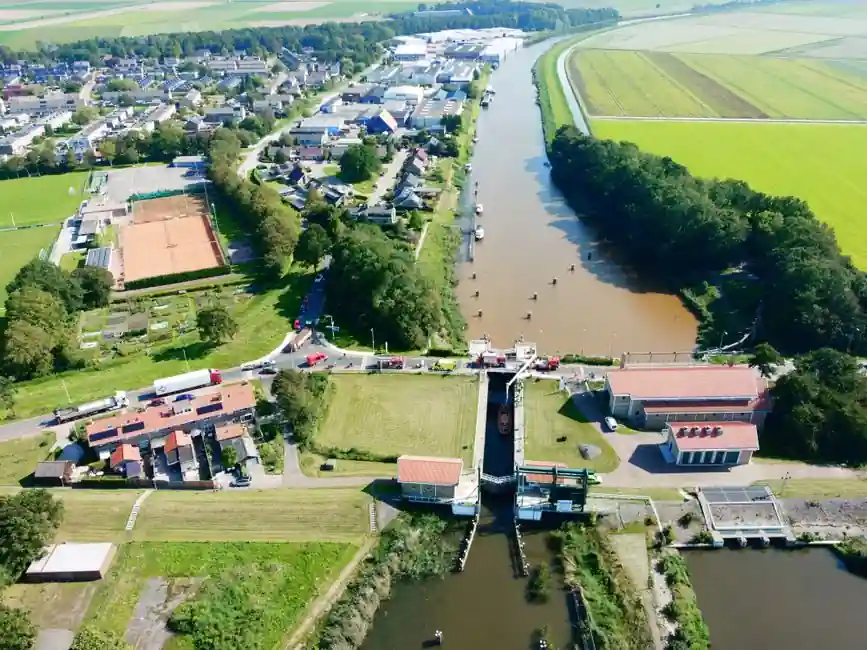
Open channel flowmeters do not measure flow directly: they combine a liquid-level reading with a hydraulic equation tied to a specific channel geometry (Parshall flume, V-notch weir, rectangular weir, or a user-defined velocity-area section) and output a flow rate [S5]. Selection is therefore a two-step problem, pick the primary device, then match the level-sensing technology to the fluid and site.
For 2026 spec paths the dominant hardware split is between air-coupled ultrasonic/radar level meters that read a pre-installed flume or weir, and Doppler velocity-area probes that combine an acoustic velocity sensor with a built-in pressure level transducer and run the area calculation internally [S1][S2][S8]. A third niche pattern, the bubbler or pressure transducer, remains common on large municipal influent channels where foam defeats acoustic sensors.
Primary Detection Element: Flume or Weir Geometry
The primary device fixes the discharge equation, so it controls both accuracy and head loss. Standardized geometries used in 2026 commercial offerings include Parshall flumes with throat widths from 1 inch to 10 feet, V-notch weirs with included angles of 30, 45, 60, 90, and 120 degrees, and rectangular weirs [S5]. Construction materials on catalog units are typically fiberglass, 304/316 stainless steel, or concrete, selected against flow range, head-loss budget, and solids loading [S5].
If the channel already exists and cannot be modified, a velocity-area meter is the only practical answer, because it accepts user-entered cross-section models (circular, rectangular, trapezoidal, triangular) and computes Q = V × S in firmware [S1][S2]. If a new structure is being poured, a Parshall flume plus a non-contact level meter is the lower-risk combination, with documented accuracies of 2 to 5 percent of actual flow when the approach channel is clean and the flume is installed level [S5].
Level Sensing Technologies Compared
Three level-sensing families are in current production. Air-coupled ultrasonic sensors are the most common because they read through air with no wetted parts and tolerate corrosive or coating fluids well [S3][S5]. Planar microwave radar at 24 GHz is a newer option that ignores temperature stratification, foam, and steam, which makes it attractive for raw sewage and for sites with high humidity where ultrasonic accuracy drifts [S8].
Submerged pressure transducers (often called bubblers) are the fallback for turbulent or foamy channels where acoustic sensors cannot hold a lock, at the cost of a wetted purge line that needs freeze protection in cold climates [S5]. The relevant 2026 spec numbers for ultrasonic and Doppler/pressure combinations are: flow-velocity range 0.02 to 5 m/s at ±1 percent FS resolution, level range 0 to 10 m at ±0.5 percent FS with 1 mm resolution, and a working temperature window of -20 to 60 degrees C [S1][S2].
Doppler Velocity-Area Meters for Sewage and Industrial Effluent
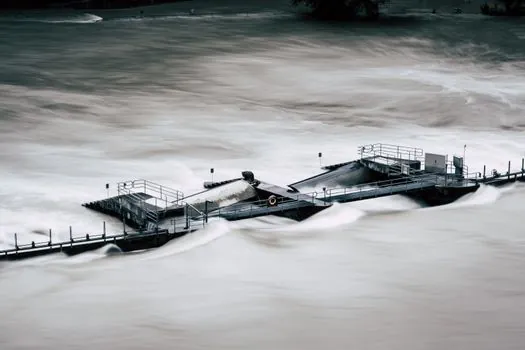
Doppler velocity-area meters are the workhorse for raw sewage, drainage networks, and irrigation canals where suspended solids or bubbles already exist in the fluid. The probe transmits an oblique ultrasonic beam, measures the Doppler shift Δf in the backscatter, and pairs that velocity with a pressure-sensor level reading to compute Q = V × S [S1][S2]. Because they read the actual velocity, they do not require a constructed flume and are typically installed in the existing channel after a straight approach run of 5 to 10 hydraulic radii [S1][S2].
Spec sheet numbers for current Doppler units are consistent across vendors: flow-velocity accuracy ±1 percent FS, flow-rate accuracy ±3 percent of reading (the wider band comes from section-shape uncertainty), DC 9 to 28 V supply at less than 25 mA, RS-485 / Modbus RTU output, IP68 housing in ABS at 182 × 70 × 30 mm, and 10 m standard cable that can be extended to site length [S1][S2]. Current 4 to 20 mA analog output is standard, with several models also offering a relay for sampling pumps or alarms [S1][S2][S7]. For a deeper comparison of the three families, see the field guide on open channel flowmeter selection by level, velocity, and radar method.
Where Doppler Fails and Ultrasonic Wins (and Vice Versa)
Doppler velocity-area meters need a minimum density of scatterers: clean potable water, clear stormwater at low flow, or de-aerated process effluent returns almost no backscatter and stalls the velocity reading [S1][S2]. In those cases, an air-coupled ultrasonic or radar unit mounted above a Parshall flume, rectangular weir, or V-notch weir is the correct choice, because it only measures level and lets the standardized flume equation do the work [S3][S5][S8].
Conversely, ultrasonic level meters need a clean, calm water surface and a stable foam-free approach: aerated tank effluent, digesters with floating scum, or channels with high turbulence all produce false echoes or dropped readings [S5]. Radar at 24 GHz is the documented workaround for foam and steam, with the additional benefit of being unaffected by air-temperature gradients that bias ultrasonic time-of-flight [S8]. For digesters and clarifier effluents the standard answer is therefore radar over Parshall or Palmer-Bowlus, while for raw sewage the Doppler velocity-area probe remains the lowest-cost option [S5][S8].
Sizing Procedure and Accuracy Budget
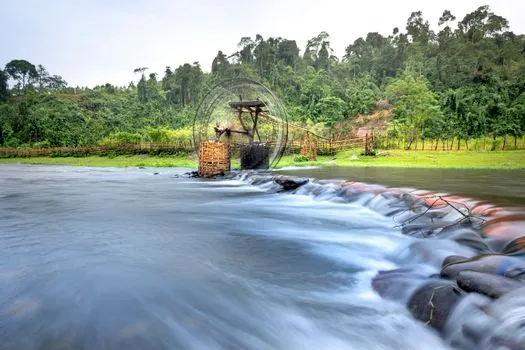
For new builds the sizing flow is Q_max at peak dry-weather flow plus a wet-weather peaking factor (typically 3 to 5× average dry-weather flow for combined sewers). Convert that to the design head at the flume inlet, then pick a Parshall throat width, V-notch angle, or rectangular weir crest length so that the design head sits between 30 and 80 percent of the sensor's maximum range, leaving headroom for peaks and drift [S3][S5]. Standard 2026 ultrasonic open-channel offerings are sold in 10 nominal ranges, 20, 50, 150, 400, 900, 1500, 3000, 5000, 8000, and 10000 t/h, with a level 1.0 accuracy class on the display instrument [S3].
For existing channels without flumes, the practical workflow is: (1) measure the approach straight length in hydraulic radii; (2) confirm the fluid carries enough particles or bubbles for Doppler backscatter; (3) pick a probe whose stated flow range 0.001 to 99,999,999 m³/h and level range 0 to 10 m cover the expected Q_max; (4) budget 1 percent FS on velocity plus ±3 percent on derived flow as the realistic accuracy floor for uncalibrated velocity-area installations [S1][S2]. For guidance on other inline measurement skids that share a 4 to 20 mA plus Modbus I/O philosophy, see the open channel flowmeter selection comparison piece and the arc welding machine selection guide for an unrelated 4-20 mA+Modbus example.
Power, I/O, and Field Installation Constraints
Field power is the most common deal-breaker. Doppler velocity-area probes running at less than 25 mA on DC 9 to 28 V are designed to be solar- or battery-powered at remote sites, with IP68 housings tolerant of full submergence [S1][S2]. Mains-powered ultrasonic flowmeters typically need 220 V AC at 50 Hz and a clean, dry enclosure, which limits them to plant-room and headworks installation [S6].
Output and integration are largely standardized: 4 to 20 mA analog plus RS-485 Modbus RTU covers most SCADA tie-ins, while higher-end units add data logging, a 128 × 64 backlit LCD, and 2-year onboard storage for compliance audits [S4][S6][S9]. Cabling on the Doppler probes is 10 m standard and extendable, which is usually adequate for canal-side mounting with a 2 m L-bracket on the channel wall [S1][S2].
Who Should NOT Pick a Mainstream Parshall Plus Ultrasonic
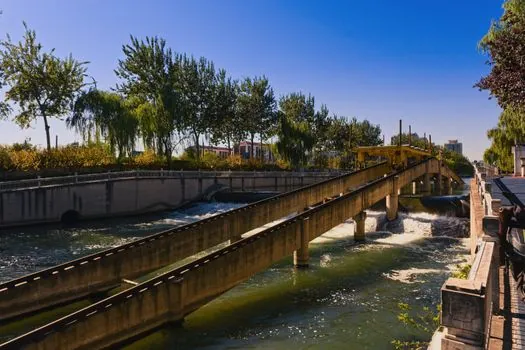
Pick against the mainstream flume-plus-ultrasonic stack when any of the following are true: the channel carries heavy debris that will collect on the flume floor and bias the level reading; the site is a remote irrigation canal with no mains power, which rules out 220 V AC ultrasonic displays; the fluid is clean potable water with no scatterers, which rules out Doppler; or the discharge is into a receiving water with a strict Total Maximum Daily Load, where the ±3 percent accuracy of a velocity-area meter is not auditable enough and a calibrated Parshall flume with NIST-traceable level calibration is required [S1][S2][S5]. In those cases the realistic options are radar over Parshall for remote sites, or a Palmer-Bowlus flume in the man-entry line for large-diameter sewer work [S5][S8].
Trackable signals for the next planning window: (1) wider adoption of 24 GHz planar radar as a drop-in replacement for ultrasonic on foam-laden influents, driven by published 2025 product launches [S8]; (2) tighter SCADA integration as Modbus RTU plus 4-20 mA becomes the default on budget Chinese OEM Doppler probes, narrowing the spec gap to European brands [S1][S2][S7].
Detailed specification references: open channel flowmeter, linear guide, and crossed roller guide.