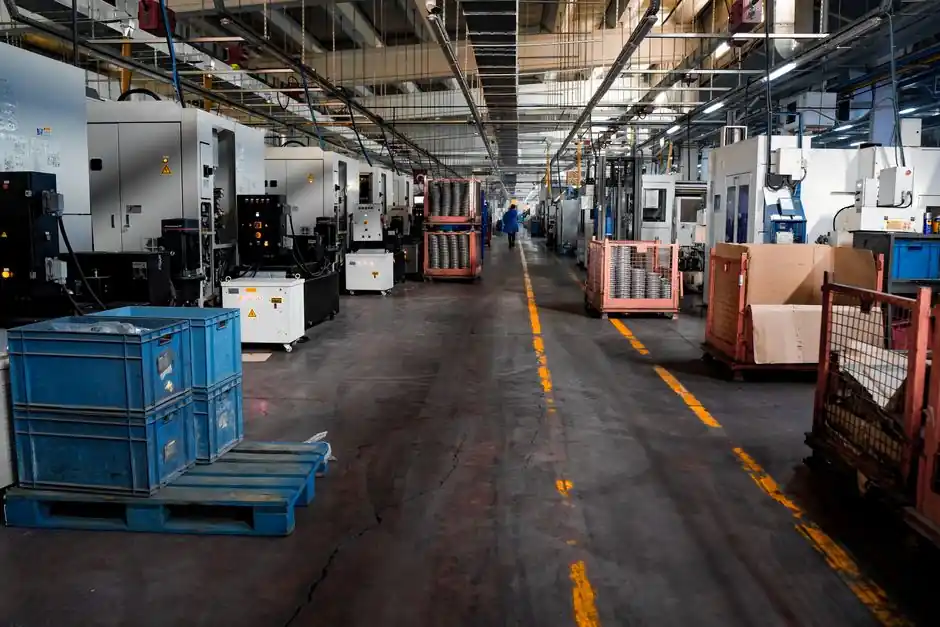
DTRLG-class orifice plate flowmeters from Chinese OEMs cover DN10–DN3000 with a 42 MPa pressure rating and fluid temperature up to 650°C, using materials from carbon steel 20G through 316L, 15CrMo, 12Cr1MoV, titanium, and Hastelloy [S3][S4]. Common plate types include standard, annular, segmental, eccentric, and high-pressure lens designs, with corner, flange, D-D/2, and annular-chamber pressure tappings [S3][S4].
Specifying an orifice plate is rarely a brand decision; it is a fluid-and-piping decision. The combination of bore, plate type, tapping layout, and straight-run is what governs usable accuracy on a real line, which is why the same vendor catalogue can be applied to boiler blowdown, custody-transfer steam, and DN3000 dirty-gas service with completely different plate geometry.
Spec Bands That Decide a Shortlist
DTRLG-class orifice plate flowmeters from DuoTeRui (China) carry DN10–DN3000 bores, flange-clamped, flanged, or welded connections, and four tapping options (corner taps in flange or annular chamber, flange taps, D-D/2 taps), with straight-run requirements of minimum 10D upstream and 5D downstream for standard plates [S3][S4]. A minimum 1:3 turndown ratio applies to standard orifice plates, and long-term accuracy is conditional on annual removal for mandatory re-verification [S3][S4]. The working envelope is 42 MPa and up to 650°C, which lines up with the same vendor's steel plate and forging stock for high-T/P headers [S3][S4].
KIO's KF600 series orifice plate flowmeters cover the more conventional water/air/steam/oil/gas/hot-water service range and are positioned by the manufacturer as a 1995-origin flow-instrument line paired with solenoid-valve manufacture, indicating a process-control rather than custody-transfer target [S7]. DwyerOmega's Series PE (PVC) and TE (PTFE) orifice plate flowmeters cover 1/2–24 in line sizes with standard corner-tap configuration, built-in 1/4 in female NPT metering taps, and one-piece corrosion-free construction aimed at aggressive gas and liquid service [S5].
Where an Orifice Plate Fits and Where It Does Not
An orifice plate is the right answer when the service is single-phase (clean gas, steam, or liquid), the budget is constrained, the run is long enough to provide 10D upstream / 5D downstream, and the operator is willing to accept the 1:3 turndown and the verification cycle [S3][S4]. It is the wrong answer on dirty, multiphase, or low-velocity flow, where erosion and signal noise wreck the discharge coefficient, and on short straight-runs where a balanced flow meter at 2D upstream / 1D downstream with 1:10–1:40 turndown is a better fit [S3].
The thermal-mass side of the catalogue should not be confused with DP-orifice service. Sierra's 780S thermal mass flow meters with dual-plate flow conditioning are specified for gas volumetric flow from 0.0 to 7000 SCFM with analog current, analog voltage, and switch outputs, and they sit in the air-flow and combustion-air segment rather than the steam-custody or large-bore liquid segment [S1]. For process control adjacent to the construction machinery and equipment class, both product lines are commonly stocked at the same instrumentation distributor, but the engineering basis (thermal dispersion vs differential pressure) is not interchangeable [S1].
Criteria Comparison: Plate Geometry Options

Within the same orifice-plate family, geometry drives both performance and cost. Standard, annular, segmental, eccentric, and high-pressure lens plates are all listed as common types in the DTRLG catalogue, and each maps to a different flow regime [S3][S4]. For boiler-blowdown service, the Madden OM2503A orifice meter uses 17 precision-drilled stainless-steel hole sizes to give the operator repeatable continuous-blowdown flow control, a segmental/eccentric-adjacent approach aimed at two-phase dirty water rather than clean steam [S2].
A practical comparison for spec-in work: standard orifice plate is the lowest-cost and most-mature option but carries the highest permanent pressure loss and the 1:3 turndown limit [S3][S4]; nozzle flowmeter holds 42 MPa and 650°C like the orifice plate but drops straight-run to 7D/3D and raises turndown to 1:10 [S3]; Venturi cuts permanent pressure loss to roughly one-fifth to one-third of an orifice plate and reaches Class 0.5 factory accuracy, but at higher fabrication cost [S3]; balanced flow meter with multi-hole symmetric design reaches 1:10 standard and up to 1:30–1:40 turndown, with straight-run as low as 2D/1D standard or 5D/2D for custody transfer [S3]. For service adjacent to a plate heat exchanger on a steam network, the pressure-loss penalty of a standard orifice plate is a real operating cost, not a footnote.
Vendor Map by Region and Material Specialty
China is the dominant manufacturing base for plate bodies in 20G carbon steel, 304, 316L, 15CrMo, 12Cr1MoV, titanium, and Hastelloy, with DuoTeRui (DTRLG) covering DN10–DN3000 at 42 MPa / 650°C and KIO covering more conventional utility-service flow on the KF600 series [S3][S4][S7]. India is represented by plate-focused shops such as Arrotop, which markets concentric orifice plates with material and coating customization for specific process conditions, in line with standard process-industry customization patterns [S10].
North American and European supply is concentrated in instruments-with-plate configurations and material-specialty bodies. DwyerOmega Series PE/TE covers 1/2–24 in PVC and PTFE one-piece orifice plate flowmeters for corrosive gas and liquid service, and Sierra's 780S is a thermal-mass device with a dual-plate flow-conditioning element, not a true DP orifice meter in the ISO 5167 sense [S1][S5]. For nuclear and sour-service work, a lamps and light fittings and other non-flow lines share little with orifice plate selection, but the procurement patterns of certification-driven sites do not: NACE MR0175-qualified material traceability and ASME B16.5 / B16.47 flange ratings are the usual gating documents for that segment, while standard ISO 5167 geometry governs the bore and tapping layout for most process service.
Sourcing Standards, Tapping Rules, and Procurement Cautions
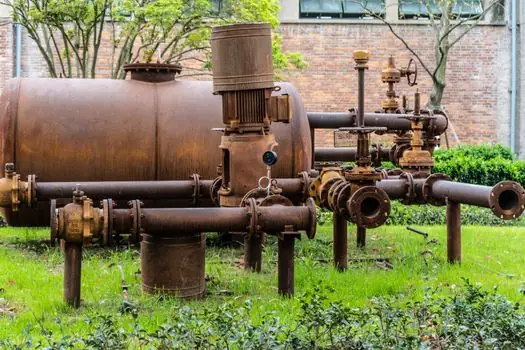
Orifice plate geometry and tapping layout (corner, D, D/2, flange) are governed by ISO 5167, which defines bore calculation, discharge coefficient, and installation straight-run for concentric, eccentric, and segmental plates; tap location drives achievable accuracy more than plate brand. For boiler-blowdown two-phase service, the OM2503A uses 17 drilled hole sizes to set fixed flow points, which is a controlled-flow rather than continuous-measurement application and is outside ISO 5167 custody scope [S2].
Procurement watch-outs on Chinese plate supply: lead times on 316L, titanium, and Hastelloy bodies in DN600+ sizes routinely stretch beyond the standard carbon-steel plate, and 42 MPa / 650°C builds require mill-certified forgings rather than plate-stock cut-and-machined bodies [S3][S4]. For thermal-mass and lighting equipment and electric lamps cross-reference buyers, note that the two product families share distributor catalogues but do not share engineering basis; cross-substitution between thermal-mass and DP-orifice on the same line will change both accuracy class and pressure loss.
Selection Gate: A 4-Criterion Quick Filter
A working shortlist can be built on four numbers: (1) line size and required turndown (≥1:10 points to nozzle or balanced, 1:3 only points to standard orifice), (2) available straight-run (10D/5D rules out standard orifice in retrofit piping and pushes toward balanced flow meter at 2D/1D), (3) fluid temperature and pressure (above ~400°C or 10 MPa, restrict to forged 15CrMo / 12Cr1MoV / 316L / Hastelloy with full ISO 5167 tapping documentation), and (4) accuracy and re-verification tolerance (Class 0.5 factory-calibrated Venturi or balanced vs annual-removal standard orifice plate) [S3][S4].
For aerospace-adjacent service or small-bore clean gas, the standard concentric orifice plate is still the cheapest answer; the related Orifice Plate Flowmeter for Aerospace: Spec Map, Limits, and Use-Case Gates page covers the small-bore end of that envelope. For utility-scale steam and large-bore dirty gas, move off standard orifice plate into nozzle, Venturi, or balanced flow meter, and source the plate body from a vendor that can document ISO 5167 bore, tapping, and straight-run, with mill cert on the forging. Track two signals over the next procurement cycle: (a) how quickly Chinese OEMs formalize NACE MR0175 sour-service documentation on 316L and Hastelloy plates, and (b) whether ISO 5167 revisions tighten the straight-run allowances for standard orifice plates below the current 10D/5D baseline.