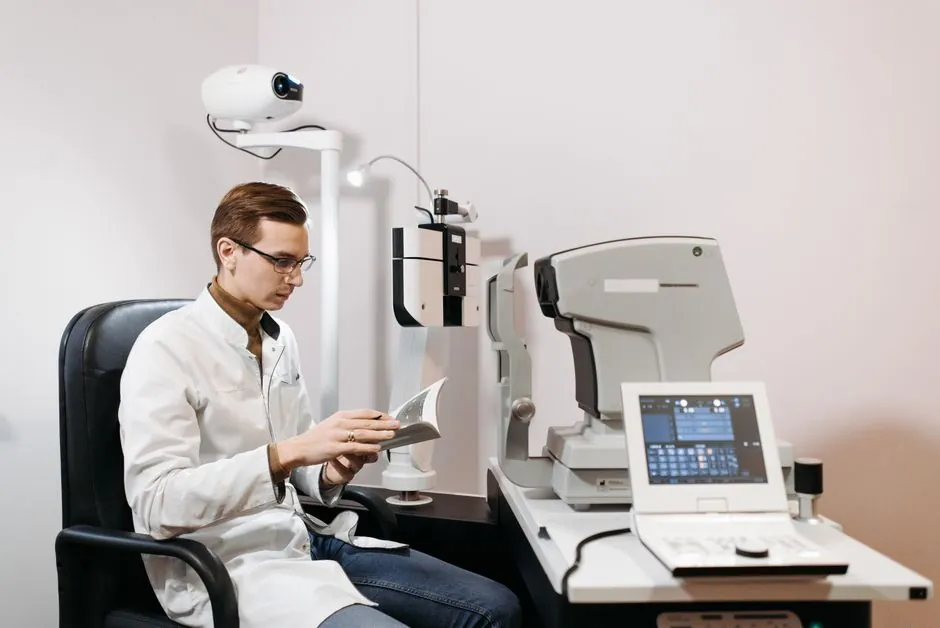
Medical optical glass selection runs on four families, borosilicate, fused silica, quartz, and soda-lime, paired against sterilization chemistry, spectral band, and FDA 21 CFR 820 / EU MDR 2017/745 documentation load [S5].
Optics for medical imaging, endoscopy, ophthalmology, diagnostics, and in-vitro lab ware each pull from a different corner of that menu, and the wrong choice shows up as autoclave cracking, UV darkening, or failed biocompatibility audits [S2][S5].
Decision Frame: Sterilization, Spectrum, and Biocompatibility
Autoclave cycles at 121–134 °C, EtO gas, gamma irradiation, and hydrogen peroxide plasma each stress glass differently, so thermal expansion, hydrolytic resistance, and radiation darkening set the first cut of the candidate list [S5].
For diagnostic and ophthalmic optics the spectral band matters as much as the substrate: UV-grade fused silica is the default for 200–400 nm work, while visible and near-IR diagnostic windows usually stay on borosilicate for cost reasons [S5]. Optical glass used as a transmissive element in a medical device inherits a regulatory chain that runs through 21 CFR 820 (Quality System Regulation) for U.S. market access, ISO 13485 for QMS, and ISO 10993-1 for biological evaluation of materials [S1][S5]. Manufacturers shipping into the U.S. must also register establishments, list devices, and for ophthalmic frames and spectacle lenses hold a 21 CFR 801.410 impact-resistance certificate per lot [S1].
Material Family Comparison: Borosilicate vs Fused Silica vs Quartz vs Soda-Lime
Four families cover the bulk of medical optics: borosilicate (workhorse), fused silica (UV and thermal-shock), quartz (high-temp and optical), and soda-lime (single-use disposables) [S5].
On the four criteria that drive most spec decisions, borosilicate (e.g. SCHOTT BOROFLOAT 33, CORNING EAGLE 2000) sits in the middle of cost, thermal-shock resistance, and chemical durability, and is the most common medical-grade glass for general lab ware, diagnostic instruments, and pharmaceutical processing [S5]. Fused silica (CORNING HPFS 7980 in industrial and UV grades) carries the lowest coefficient of thermal expansion, the highest UV transmission, and the highest purity, so it is preferred for laser-based surgical devices, UV sterilization optics, and high-energy applications [S5]. Quartz (GE 124, Heraeus TSC-3) overlaps fused silica on purity but is selected when higher working and melting temperatures are required, and soda-lime is held back for disposable syringes, pipettes, and slide ware where single-use economics beat autoclave survivability [S5].
Substrate Selection by Application
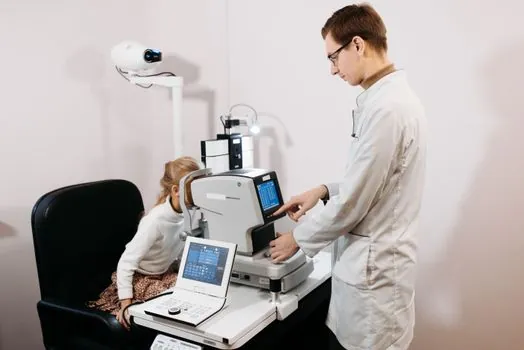
Endoscopes lean on glass optical fibers for illumination and image bundles, where SCHOTT cites strength, stability, flexibility, and controlled numerical aperture as the key reasons glass wins over polymer alternatives in medical and dental scopes [S4].
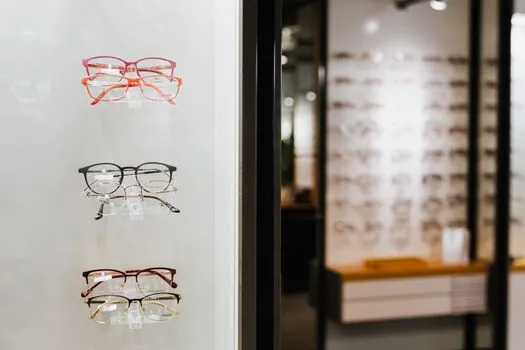
Microscope objective lenses, optical windows, beamsplitters, Fresnel lenses, and aspheric elements for healthcare devices are commonly built on borosilicate or fused silica substrates, with the choice driven by the working wavelength and the NA budget of the optical design [S7]. For ophthalmic and spectacle-lens products, the regulatory floor is 21 CFR 801.410 impact resistance, paired with 21 CFR 820 QMS and establishment registration / device listing under product codes HQG, HQY, HQZ, and HOI for prescription lenses, sunglasses, frames, and magnifiers respectively [S1]. Designers integrating an optical glass window into a Class II imaging accessory still have to clear 21 CFR 820 design controls even if the substrate is catalog stock.
Fabrication and Process Limits
Swift Glass and similar fabricators note that hardness, thermal expansion, and chemical compatibility must be matched to cutting, lapping, and coating processes, with borosilicate and fused silica accepting a broader range of post-processing than soda-lime [S5]. Glass optical fibers in particular require controlled drawing, coating, and jacketing to keep attenuation stable across the visible and near-IR bands used in medical endoscopes and dental handpieces [S4]. For inspection of finished optics, an optical comparator is a common shop-floor tool for verifying edge geometry, bevel angles, and center thickness on polished medical windows, where a 0.05 mm error on a 2 mm-thick coverslip can shift focus in a diagnostic stack.
Limits, Failure Modes, and Misuse
Three failure modes dominate field returns: thermal-shock fracture during autoclave, UV or gamma darkening in radiation-sterilized optics, and chemical attack from repeated bleach or quaternary-ammonium wipes [S5].
Quartz and fused silica resist the first two, but their cost rules them out of high-volume disposables; soda-lime survives neither repeated autoclaving nor most radiation sterilization, so it is correctly restricted to single-use items where the device is not designed to be reprocessed [S5]. Glass optical fibers also have minimum bend-radius and numerical-aperture limits, and the jacketing polymer, not the glass, usually sets the biocompatibility boundary under ISO 10993-1 testing [S4]. For high-temperature, high-purity envelopes around sensors and lamps, designers often cross-reference fused quartz data sheets, but they should treat the biocompatibility claim as belonging to the assembled device, not the bare substrate.
Regulatory and Documentation Load
U.S. medical-device optics fall under 21 CFR 820 QMS regardless of whether the glass is catalog stock or custom, and spectacle-type devices additionally need 21 CFR 801.410 impact certification per shipment [S1].
EU MDR 2017/745 Class I, IIa, IIb, and III rules layer on top of that, with Class I non-sterile, non-measuring spectacle frames generally the lowest-burden category and implantable or life-supporting optics at the top [S3]. Glass-fibre bundles in endoscopes are typically classified as accessories to a higher-risk device, so they inherit the parent device's classification and conformity-assessment route [S3][S4]. ISO 13485 certification of the glass fabricator, while not a regulatory requirement in every market, is a common way to defray audit burden for OEMs that would otherwise re-audit incoming material suppliers [S5].
Trackable Signals and Next Nodes
Two signals to watch: FDA guidance updates touching 21 CFR 801.410 sampling (currently anchored to ANSI/ASQC Z1.4 1993 and ISO 2859-1 1999 with an AQL of 6.5 at General Inspection Level II), and any EU MDR 2017/745 Common Specifications published for optical or ophthalmic devices that would tighten the dossier for Class IIa and above [S1][S3].
On the engineering side, watch the spread of UV-grade fused silica into mid-volume diagnostic platforms, and any vendor move to drop lead-bearing or arsenic-bearing glass families from medical catalogs as REACH and RoHS substance lists continue to tighten; both shifts would redraw the cost-versus-spectrum trade-off the current menu sits on [S5].
See also our earlier report, Stretch Film Selection for Apparel Distribution: Spec Map and Pallet-Type Routing.