
For mold and die surface engineering, sputtering targets most commonly specified are chromium (Cr), titanium (Ti), titanium-aluminum (TiAl), and chromium-aluminum (CrAl), with purity grades ranging 99.9% (3N) to 99.999%+ (5N+) depending on the coating's role on the tool surface [S1].
Target selection for a mold and die coating line is governed by four hard variables: the chemistry of the wear or release film you intend to deposit, the purity grade, the planar versus rotatable geometry, and whether the target is built by powder metallurgy or vacuum melting routes [S2][S5][S6].
Coating Chemistry and Target Material Family
Alloy targets such as TiAl and CrAl are typically multi-component, combining two or more metals to deliver specialised mechanical stiffness, corrosion resistance, or specific electromagnetic properties after sputtering [S3]. Indium tin oxide (ITO) and other oxide ceramic targets are normally not specified for tool coatings, they sit in flat-panel display and TFT production rather than forming or cutting service [S3].
For tool shops running hot-work aluminum-extrusion dies and high-pressure die casting dies, TiAlN deposited from TiAl rotatable targets is the most common choice because the Al-rich nitride layer forms a protective Al2O3 tribofilm above roughly 700 degrees C in air.
Purity Grades and What They Buy You
Purity bands for sputter targets run from 2N (99%) for general coatings through 5N+ (99.999%+) for semiconductor-grade films; metal targets for tooling typically sit at 3N to 4N because the coating's mechanical, not electronic, performance dominates [S1][S3].
Even trace contamination in a Cr or TiAl target can drive nodule formation, arcing events, and localized film defects that translate into a rough die surface, which is a frequent root cause of premature release failures and polish rework on mold base inserts.
For high-end packaging tooling and mirror-finish plastic molds, 4N-grade targets are a common cap because particle generation inside the deposition chamber directly drives surface Ra on the finished mold and die cavity.
Planar vs Rotatable Target Geometry

Planar targets are simpler, cheaper, and slot into most small-to-mid PVD chambers, but they suffer uneven erosion grooves and typically achieve only 20-30% material utilization before the target must be replaced [S1].
Rotatable cylindrical targets distribute erosion across the rotating surface, raise utilization substantially, and run longer between changeouts, which is why high-volume tool coaters and contract job shops standardize on rotatable TiAl and CrAl targets for production runs [S1].
Target backing plate selection is part of the geometry decision: most targets are bonded to OFHC copper backing plates for thermal management, with indium bonding, elastomeric bonding, and silver-filled paste sealing listed as standard options in OEM catalogues [S4].
Powder Metallurgy vs Cast and Melted Routes
Powder metallurgy is the standard route for compound and alloy targets (TiAl, CrAl, oxides, silicides, carbides, nitrides, fluorides), with the published spec for a working sputter target being purity at or above 99.9%, high density with minimal porosity, and uniform grain size and orientation [S2][S5].
The PM sequence runs powder preparation, binder mixing, cold isostatic pressing (CIP) in a die or mold, debinding, controlled-atmosphere sintering, and finally machining to final dimensions, with QC checks including X-ray diffraction (XRD), scanning electron microscopy (SEM), and composition analysis [S2].
Pure metal targets such as aluminum, copper, titanium, and nickel are typically made from cast ingot melted and solidified to full density, with vacuum melting and electron beam melting used to keep impurity pickup low [S3][S6]. For a sand casting mold tooling line, this matters less than for a die casting die cavity, where droplet ejection and nodule density on the target face directly write into the coating's surface finish.
Selection Decision Map for Tool and Die Coating
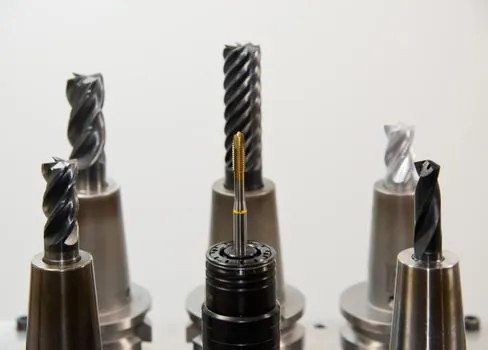
Match the target to the dominant failure mode on the tool: Cr or CrN for adhesive wear and corrosion, TiAlN or CrAlN for high-temperature oxidation, TiN for general-purpose wear, and CrC or CrCN for chemical resistance in plastic molding with aggressive resins [S1][S3][S10].
Use the table below as a starting spec, then bias it with the tool's operating temperature, the substrate material (P20, H13, D2, or carbide), and the chamber footprint available for a rotatable versus planar target [S1][S4].
Target family: Cr planar, typical purity 3N, deposition chemistry: CrN / CrC / metallic Cr, die fit: cold-work and plastic mold, geometry note: planar is cost-efficient for small batches. Target family: TiAl rotatable, typical purity 3N-4N, deposition chemistry: TiAlN (reactively with N2), die fit: hot-work dies, extrusion tooling, geometry note: rotatable preferred for high-volume. Target family: CrAl rotatable, typical purity 3N, deposition chemistry: CrAlN (reactive), die fit: high-temp tooling, plastic molds with glass-filled resin, geometry note: rotatable for production. Target family: Ti planar or rotatable, typical purity 3N-4N, deposition chemistry: TiN, TiC, TiCN (reactive), die fit: general-purpose cutting and forming, geometry note: both forms available [S1][S3][S4][S10].
Limits, Failure Modes, and Sourcing Signals
The hard limits on any sputter target choice for a mold and die coating line are: chamber compatibility for target dimensions and bonding style, reactive-gas partial pressure control for nitride and oxide coatings, and the maximum current density the target can carry without cracking [S1][S4].
Trackable signals for 2026 sourcing: indium-bonding service availability for fragile target materials such as ITO, OFHC copper backing plate stock from OEM vendors, and the lead time on rotatable TiAl and CrAl tubes versus planar tiles, which historically runs 4-12 weeks depending on grade and size [S4].
Next node to watch: low-defect-density Cr and CrAl target grades targeting 6N purity for cutting-tool insert coating, where a single particle event can scrap a coated insert, and the migration of rotatable CrAl targets into mid-size contract tool-coating shops that today still run planar TiAl [S4][S5].