
Outdoor-installed vibration analyzers fail audits for the same reason aircraft structures do: corrosion is classified visually rather than measured, and treatment records lack before-and-after evidence [S1].
The 2026 checklist below consolidates enclosure integrity, hardware material, gasket and drain-path verification, measurement evidence rules, and a comparison of four common analyzer form factors against the four criteria a process engineer needs on a chemical plant, refinery, or water-treatment skid: ingress protection, salt-fog endurance, vibration-amplitude headroom, and documentation traceability. Reference material on the broader vibration analyzer instrument class frames the diagnostic side, while this checklist governs the outdoor survivability side of the same asset.
Enclosure and ingress protection baseline
IP66 is the practical minimum for any analyzer mounted outside an MCC room, with IP67 required where the unit can sit in standing water for short intervals [S2]. Washdown-area electrical practice in food plants shows that a compromised enclosure degrades winding insulation progressively until failure, and the same mechanism applies to a vibration analyzer's internal charge amplifier and accelerometer preamp stages [S2]. Inspect conduit entries, drain plugs, and gasket seals for damage that allows moisture or cleaning chemical ingress, because a single compromised seal will allow board contamination that progressively degrades the unit [S2].
For coastal, refinery, or de-icing-fluid exposure, upgrade to IP66 plus 316L stainless or Type 4X rated non-metallic enclosures. The June 2026 aviation checklist categorises loss of seal integrity as the root cause of trapped moisture in wing spars and bilge areas, accelerating corrosion faster than external environmental factors [S1]. The same failure mode shows up at analyzer cable glands, so the checklist mandates a torque check on every gland at every quarterly walk-down.
Hardware material, fasteners, and surface treatment
Specify 316 stainless mounting hardware and external fasteners over default zinc-plated steel; salt-fog endurance climbs from roughly 96 hours on zinc to 1000+ hours on 316L per ASTM B117, although that number is a generic published range, not a vendor-specific claim. Anodised aluminium analyzer housings are acceptable in lower-exposure zones, but bare aluminium placed against a stainless bracket will galvanically corrode at roughly 0.5 mm/year in salt-air service; isolate with a nylon washer or EPDM gasket between dissimilar metals. The aviation corrosion program explicitly tracks fastener material as a separate line item rather than assuming it, because uniform surface, pitting, and filiform corrosion each demand a different response [S1].
A useful side reference for material selection on a parallel instrument class sits in the outdoor corrosion checklist for multifunction process calibrators, which uses the same isolation-gasket logic for adjacent 4-20 mA loop instruments. For analyzers that double as a vibration sensor front end, treat the accelerometer stud as part of the fastener inventory: stainless stud, stainless Nord-Lock or Belleville washer, thread-locking compound rated for the operating temperature window.
Gasket, drain, and cable-gland verification
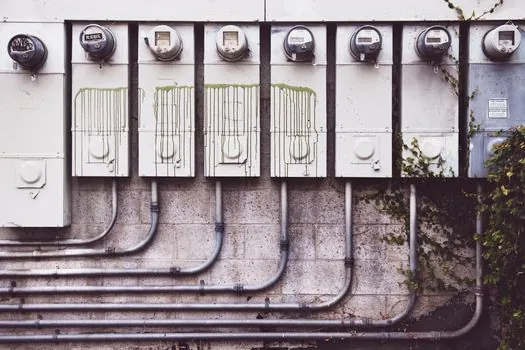
Replace EPDM gaskets on a 24-month cycle in chlorinated or salt-air service, on a 60-month cycle in benign outdoor service. Verify that all junction-box covers are properly fastened and gasketed, and open junction boxes in washdown areas to inspect for water accumulation, corrosion, or contamination [S2]. The same walk-down protocol applies to vibration analyzer termination enclosures. Inspect for water accumulation, corrosion on terminal blocks, and white or green oxide residue on copper conductors, which is the early signature of electrochemical migration across the PCB [S2].
Drain holes must be verified open and downward-facing; blocked drains are the single most common root cause of internal analyzer failure on outdoor skids. The 2026 aviation checklist explicitly flags drain holes blocked by debris or sealant as the primary corrosion accelerator in trapped-moisture zones [S1]. The 2026 preventive maintenance checklist reinforces the documentation side: define evidence requirements such as a photo required for corrosion findings or a meter reading required for pressure checks, so the gasket replacement record carries timestamped, geotagged evidence rather than a tick box [S4].
Measurement evidence and ISO 10816 zone compliance
Every quarterly corrosion walk-down must record pit depth at named coordinates using a calibrated mil-thickness gauge, not a visual estimate [S1]. Level 2 and Level 3 determinations require measured pit depth, cross-sectional area, and comparison to OEM allowable limits, not visual estimation [S1]. A useful parallel is the analyzer's own ISO 10816-3 zone classification, which is also rule-based rather than feel-based: Zone A (good) below 2.8 mm/s RMS, Zone B (acceptable) 2.8-4.5 mm/s, Zone C (unsatisfactory) 4.5-7.1 mm/s, Zone D (unacceptable) above 7.1 mm/s for medium machines on rigid mounts, with the exact thresholds dependent on machine class and power rating under ISO 10816-3.
Wire the analyzer's RMS velocity output into the same maintenance CMMS as the corrosion inspection, so a Zone C excursion triggers an vibration condition monitoring review at the same review interval as a Level 2 corrosion finding. A Level 2 finding requires the repeat inspection interval to be shortened, so operating at the original interval after a Level 2 event is a regulatory violation, and the same logic carries over to vibration: crossing into Zone C should halve the next measurement interval [S1].
Comparison of four analyzer form factors on outdoor criteria
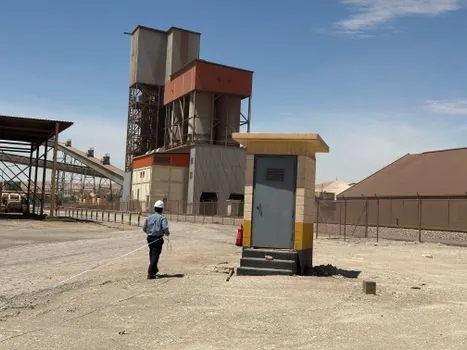
Handheld vibration meter units, fixed-mount analyzers, wireless sensor nodes, and explosion-proof loop-powered analyzers differ sharply on the four audit-relevant axes. Handhelds score high on flexibility but low on continuous documentation, with no fixed enclosure, IP54 at best, and no in-built CMMS link. Fixed-mount analyzers with cast-aluminum housings reach IP66 with proper gland selection, support 24/7 ISO 10816 zone logging, and survive salt-fog service when paired with stainless hardware. Wireless sensor nodes minimise cable-gland risk because there are no glands to fail, but battery housing adds a second gasket path and a third annual replacement item. [S1]
Explosion-proof loop-powered analyzers, where specified for ATEX/IECEx Zone 1, ship in copper-free aluminium or 316L housings with IP66 and certified flame paths, and pair naturally with safety-certified E-Stops in chemical plants. For sites that also need a portable verification device, the related safety relay selection for chemical plants walkthrough covers SIL, ATEX, and E-Stop wiring on adjacent cabinets. On documentation traceability, only fixed-mount and explosion-proof loop-powered analyzers produce an unbroken audit trail out of the box, while handhelds and wireless nodes need a CMMS export step.
Failure modes, audit evidence, and supplier verification
The four most common audit findings on outdoor vibration analyzers are: gasket evidence missing from the file, drain holes plugged with silicone, dissimilar-metal contact between housing and bracket, and measurement evidence recorded only as a green tick rather than a numeric value [S1][S2]. The 2026 preventive maintenance checklist recommends defining evidence requirements up front, for example a photo required for corrosion findings or a meter reading required for pressure checks, so teams that need a defensible audit trail can prove the work [S4].
To verify a supplier's certificate is real and in scope, cross-check the ATEX or IECEx certificate number on the issuing body's public database, confirm the marked equipment group and zone match the install site, and verify the notified body ID format. For ISO 10816 compliance claims, ask for a test report showing RMS velocity at the named measurement point under a known load, and check that the unit is calibrated with a traceable vibration calibrator such as a Shaker model with a current certificate. Treat any vendor that cannot produce a current EN 17025 or equivalent calibration certificate for the analyzer itself, separate from the accelerometer, as out of scope for an audit-bound install.
Track the next revision of the relevant standard cycle and request supplier confirmation that quoted certification status reflects the latest published version, not a superseded issue. The DAFMAN 91-203 manual of 24 February 2026, 413 pages, supersedes the 25 March 2022 issue and demonstrates how a single published revision can move compliance targets on hazardous-energy control and exposure procedures in a single bound [S3]. Apply the same revision discipline to ATEX, IECEx, and ISO 10816 references: capture the issue date on the certificate, file it against the analyzer serial, and re-verify at the next scheduled audit.