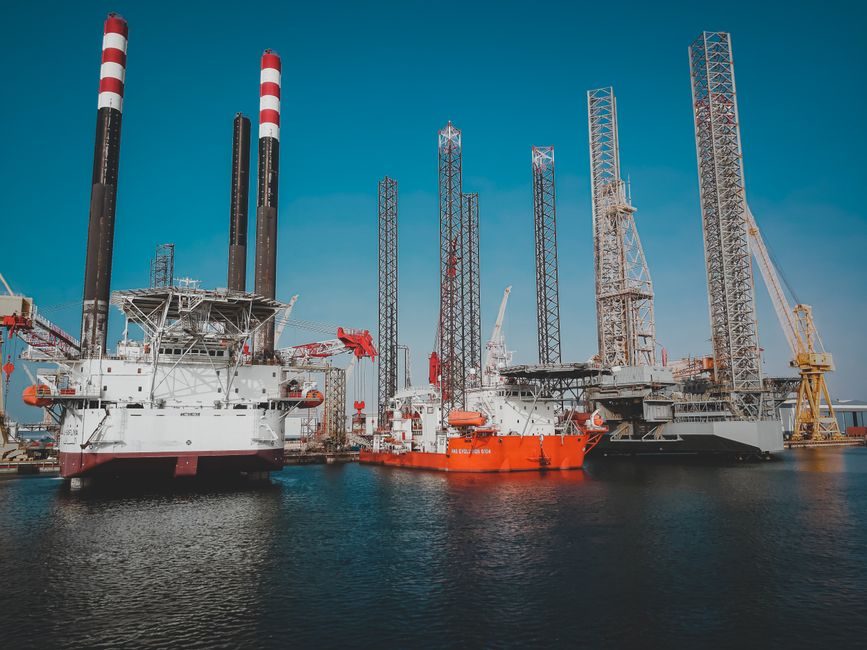
Specifying an oxygen detector for an upstream or midstream facility is not a one-line "buy a sensor" task: the same oxygen molecule drives three different hazards — asphyxiation in confined spaces, fire enrichment above 23.5% vol, and process integrity on cryogenic ASU tie-ins — and each one demands a different sensing principle [S1][S2][S3]. Crowcon's Triple Plus+ alone has logged more than 90,000 units sold into oil and gas, chemical, utility and manufacturing sites, which is the clearest field signal that the portable multigas archetype is the de facto worker-entry tool [S2].
For fixed-area coverage on a platform or refinery, the Teledyne MultiTox DG7 family uses a common housing with three swappable cartridges: DGI-TT7-E for toxic or oxygen monitoring, DG-TT7-S as a solid-state metal-oxide semiconductor, and DG-TX7 with paired OXYCOL catalytic sensors — intrinsically safe cells, hot-swappable with the detector powered [S1]. That cartridge architecture is the practical answer to "one housing, three hazards," and it is the spec the rest of this article is built around.
Match the sensing principle to the hazard, not to the brand
An oxygen-deficient atmosphere alarm (typically 19.5% vol OSHA trigger, 18% vol in IECEx-style guidance) is read with an electrochemical or zirconia cell, not with a catalytic bead or NDIR [S3]. Teledyne's DGI-TT7-E is explicitly designated for "Toxic gases or Oxygen monitoring" inside the same DG7 housing, which is why the cartridge is the spec gate, not the enclosure [S1]. A zirconia limiting-current cell, as used in the HV GIS switchgear detector, hits 0-25% vol O₂ at ±0.5% vol accuracy with T90 ≤60 s — the typical envelope for an enclosed-space O₂ depletion alarm [S3].
For enrichment / fire-risk detection, an IR or NDIR channel becomes interesting because pellistor / catalytic sensors fail in oxygen-free or oxygen-rich backgrounds. Crowcon's IR sensor module is published as "very high resistance to interference or inhibition" and is rated for both %LEL and %vol measurement in air or inert backgrounds, with IR CO₂ at 0-5% vol as an add-on [S2]. For oil and gas, that matters during tank and line purging — the same instrument covers entry, purge verification, and continuous monitoring without sensor swap [S2].
Fixed vs. portable: who each is FOR and who it is NOT for
Fixed gas detectors — DG7-class units — are FOR permanent area coverage at wellheads, compressor shelters, LRU skids, ASU tie-ins, and battery rooms; the housing is intrinsically safe, the cartridge is hot-swappable, and the unit exposes HART plus a wireless TLU for non-intrusive calibration [S1]. They are NOT for confined-space entry on their own — a fixed sensor does not follow the worker into a vessel, and a 60-second T90 on a zirconia cell is far too slow to protect against an inerting gas release during entry [S3].
Portable combustible-gas detectors such as the Triple Plus+ are FOR worker entry, routine leak-survey walking, and short-duration permit work; they carry oxygen plus flammable plus one or two toxics in a single body, log data, and are intrinsically safe [S2]. They are NOT for permanent area classification — battery life, bump-test cadence, and mechanical abuse make them the wrong primary layer for an unmanned platform.
Comparison matrix: three sensor families against the four oil-and-gas decision criteria
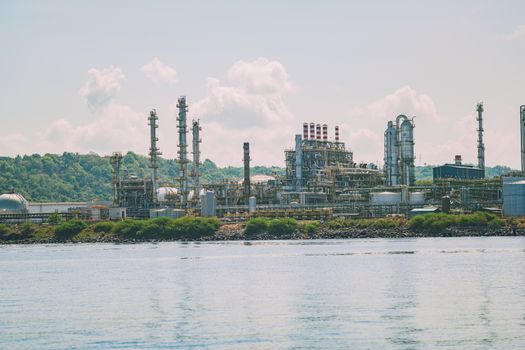
Selecting an oxygen channel for a hydrocarbon facility boils down to four criteria: hazard (depletion vs. enrichment), response time, poisoning resistance, and digital interface. On depletion monitoring, an electrochemical or zirconia limiting-current cell is the only credible choice: the SF6/O₂ detector specifies zirconia at ±0.5% vol full-scale accuracy, 0.1% vol resolution and a default 18% vol alarm threshold [S3]. On enrichment and inert-background work, NDIR / IR wins because catalytic pellistors "perform poorly" in oxygen-free backgrounds, as Crowcon's own literature states [S2].
Response time at T90 ≤60 s is the typical spec envelope for both zirconia and NDIR oxygen channels in industrial housings [S3]. Poisoning resistance splits cleanly: IR sensors have "no poisoning effects" and "no burnout" against catalyst poisons such as silicones, lead, and sulfur compounds that destroy pellistors on a wellhead [S2]. For the digital interface, modern fixed units expose HART and a wireless TLU for non-intrusive calibration — a meaningful reduction in service cost when the detector sits in a classified area [S1].
Standards and certifications that gate the spec
An oxygen detector specified for an oil and gas facility must be selected against the same three certification pillars as any other fixed gas detector: ATEX/IECEx for hazardous-area classification, SIL rating for safety-instrumented functions, and HART/Modbus for integration into the plant DCS. The DG7-series is published as intrinsically safe, with HART as a hard-wired option alongside the wireless TLU [S1]. The Triple Plus+ portable is published as intrinsically safe, with LIBRA lithium-ion battery technology and IR sensor options [S2].
Hazardous-area practice still applies even on the "simple" oxygen channel: the SF6/O₂ GIS detector specifies IP54 (customizable), 24 Vdc at <15 W, RS485 and optional RS232, and an operating envelope of -20 °C to +50 °C at 0-90% RH non-condensing, with atmospheric pressure 86-106 kPa [S3]. Those numbers are the floor a downstream oil-and-gas spec should accept, not the ceiling — and the same detector is also rated for a >10-year design life, which is what makes a fixed oxygen channel economically defensible on a remote platform [S3].
Selection criteria mapped to the application
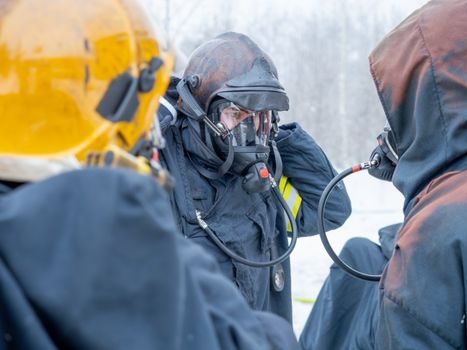
On a drilling or production platform, the practical spec for a fixed fixed-gas-detector oxygen channel is a zirconia or electrochemical cartridge in an ATEX/IECEx-certified housing, HART output to the platform ESD, and a hot-swappable cell so the technician never breaks the loop. The DG-TT7-E oxygen/toxic cartridge inside the DG7 housing is the published reference for that architecture [S1].
For confined-space entry, a portable multigas with a dedicated oxygen channel plus LEL, CO and H₂S is the standard four-gas configuration; the Triple Plus+ is a published reference with IR option and data logging [S2]. For a cryogenic ASU tie-in, a zirconia cell is the correct match because the oxygen concentration drifts across a wide 0-25% vol range and the sensor must be stable at high purity; the JINHUA 99.6% cryogenic oxygen plant is the kind of facility that needs that envelope at the tie-in point [S6].
Field-data check: depletion, enrichment and purge on the same site
The same platform routinely needs three oxygen channels doing three different jobs: depletion alarm at 19.5% vol (confined space, battery room), enrichment alarm above 23.5% vol (medical air, vapor return), and purge verification from 0 to 25% vol during line clearing. Crowcon documents the IR module as measuring hydrocarbons at both %LEL and %vol, with a 0-5% vol IR CO₂ channel as an option for the same instrument — so the same Triple Plus+ can verify a nitrogen purge and then monitor entry [S2].
On-site generation is the parallel input: on-site O₂/N₂ membrane and PSA systems such as those supplied by On Site Gas Systems are the supply side, and they need their own oxygen enrichment detectors downstream of the generator [S4]. The detector on the supply side is the often-forgotten half of the loop — without it, a membrane failure on the N₂ side can quietly push the O₂ side into enrichment.
What the published data does and does not justify
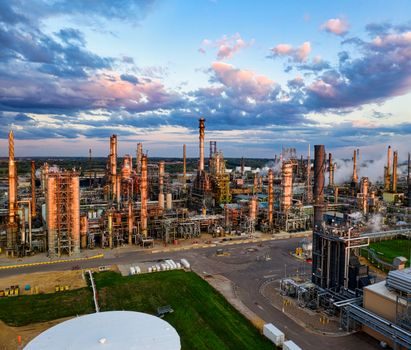
Across the cited material, three concrete numbers carry the spec: 90,000+ Triple Plus+ units deployed in oil and gas, chemical, utility and manufacturing (a field-proven portable baseline) [S2]; ±0.5% vol O₂ accuracy and 18% vol default alarm on the SF6/O₂ GIS detector (a fixed-channel envelope) [S3]; and 99.6% purity for cryogenic gaseous oxygen from a packaged ASU (the supply-side ceiling) [S6]. They are not interchangeable: the 90,000 figure is a portable deployment count, not a market share, and the 99.6% number is a generator product spec, not a detector spec [S2][S6].
The literature also confirms that catalytic pellistor and metal-oxide sensors are degraded by poisons and by oxygen-free backgrounds, while IR and zirconia are not — that is the actual engineering boundary between sensor families, and it is the boundary a spec sheet has to respect [S1][S2][S3]. On those grounds, the next step for any platform or refinery is to map each oxygen hazard to a sensing principle and a deployment archetype, then write the spec gate as a cartridge, an interface, and a certification triad, in that order.
For related coverage, see Demolition Hammer Selection: Impact Energy, Chuck Class and Duty Cycle.