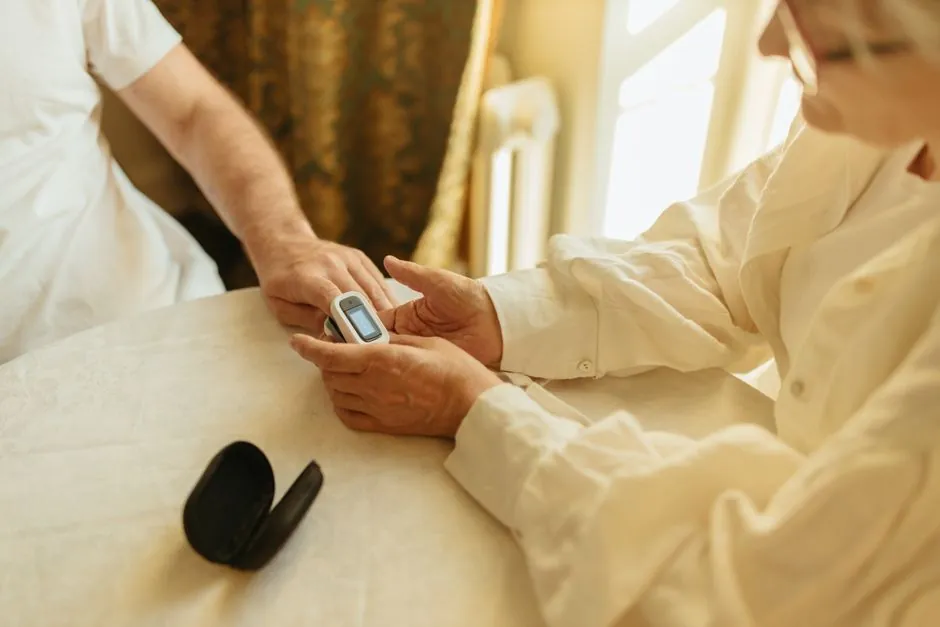
Atmospheric oxygen sits at 20.9% by volume, and the universally cited confined-space alarm window is below 19.5% (deficiency) and above 23.5% (enrichment) [S1]. Anything outside that band is treated as immediately unsafe for human entry, which is why an oxygen detector is non-negotiable in tanks, manholes, silos, and any area purged with nitrogen or argon.
Selecting the right unit is not about the loudest alarm; it is about matching sensor chemistry, ingress protection, mounting position, and calibration interval to the specific hazard. A handheld personal monitor for a sewer entry has almost nothing in common with a fixed-area transmitter on a CO2 cylinder store, and treating them as interchangeable is the most common specification mistake on procurement forms.
What the Alarm Setpoints Actually Mean in Practice
OSHA-aligned confined-space practice defines 19.5% O2 as the lower action level and 23.5% as the upper action level, with 20.9% as the calibration target [S1]. The 4 percentage-point upper band exists because enriched atmospheres dramatically accelerate combustion; a spark that would be harmless at 21% can ignite clothing or solvent vapors at 24%.
For inert-gas labs, the University of Manchester Safety Services guidance recommends siting an oxygen depletion monitor approximately 1 metre above floor level when liquid nitrogen is in use, because cold nitrogen settles before it warms and diffuses [S4]. The same document is explicit that detection systems are not safety devices: they are warning devices, and the contingency plan for an alarm event must exist on paper before the sensor is mounted.
Sensor Technologies and When Each One Fits
Electrochemical cells dominate portable and personal monitors because they are small, cheap, and draw microamps, which lets a 4-series battery run a unit for 12 to 24 months [S1]. They do consume themselves during exposure, so a 2-year replacement interval is the de facto rule in fixed-area ambient-air service.
For fixed installations, the Dräger catalogue shows infrared and electrochemical options with operating temperature ranges from -40°F to 149°F (-40°C to 65°C) and IP65/66/67 housings [S2]. Infrared O2 sensing is less common than IR CO2, but paramagnetic and zirconia cells are the workhorses for process oxygen measurement in stacks and inert-gas blanketing, with response times in the 5 to 15 second band and drift under 1% of full scale per month when properly conditioned.
Buyers should treat the sensor as a consumable, not a component. Budget line items must include calibration gas (typically 20.9% O2 in N2 for span checks), a regulator, and a bump-test adapter; a detector that cannot be field-bumped is a detector that will not be field-bumped.
Fixed vs Portable: A Criteria-Based Comparison
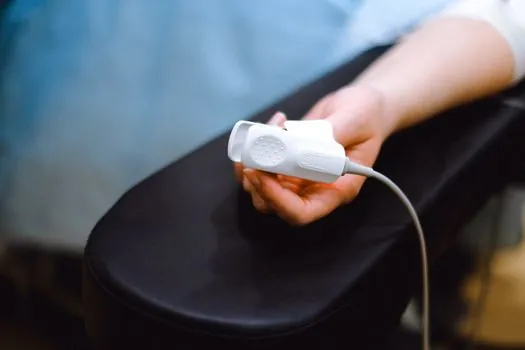
Portable personal units prioritise size, weight, and continuous run-time, typically 24 hours per charge and 12 to 24 months on a single electrochemical cell. Fixed transmitters prioritise loop power (24 VDC), 4-20 mA or digital output, and ATEX/IECEx certification for hazardous areas; Dräger's PointGard 3100 series, for instance, ships as a 1-channel gas detection system with IP66 housing and a plug-and-play DrägerSensor [S2].
Three criteria separate the two categories cleanly. Power: portable runs on Li-ion or alkaline, fixed loops 24 VDC. Output: portable gives local audible, visual, and vibration alarms at 95 to 100 dB at 1 m, fixed adds 4-20 mA, relay, or bus signalling to a controller. Certification: portable often carries UL or CSA for industrial use, fixed in Zone 1 or Zone 2 areas needs ATEX 2014/34/EU and IECEx marking, both visible on the Dräger fixed-detector label set [S2].
Specifiers who pick a portable for a fixed-location CO2 cylinder store, or a fixed transmitter for a sewer entry team, will fail the risk assessment on the first line. The form factor follows the work, not the other way round.
IP Rating, Mounting Height, and Sensor Placement Rules
For gases heavier than air such as CO2, sit the sensor near floor level or in ducts where the heavy gas accumulates; for gases lighter than air such as helium, mount above the release point [S4]. Manchester's guidance adds that gases do not stratify into clean density layers because air itself is a homogeneous mixture, so a sensor placed exactly at the wrong height will read ambient while the hazard pools two metres away.
Ingress protection must match the environment. Indoor ambient air monitors are fine at IP65; washdown or food-and-beverage plants need IP66/67; offshore or chemical plants with hose-down exposure should not accept anything below IP66. Dräger's toxic and O2 fixed detectors are offered in IP65, IP65/66/67, and IP66/67 variants, with operating ranges from -40°F to 149°F for the narrower window and -40°F to 170.6°F for the wider [S2].
Mount the unit where a calibration technician can reach it with a gas cylinder. A fixed O2 detector that requires a scaffold for every bump test is a fixed O2 detector that will not be tested, which on a 24-month sensor cycle is a real liability.
Calibration Interval, Bump Testing, and Sensor Life

Most electrochemical O2 cells drift noticeably by month 18 and must be replaced by month 24, regardless of alarm history. The drift signature is a slow upward bias at 20.9%, so a unit that reads 21.5% in fresh air is telling you it is near end-of-life, not that the atmosphere is unusual. [S1]
Bump testing is a functional check with calibration gas, not a full calibration, and takes 30 to 60 seconds per unit. A gas detector fleet that bump-tests weekly, calibrates monthly, and replaces sensors on a 24-month cycle will hit the reliability benchmarks that the Manchester guidance implies, which is that gas detection systems provide a warning, and warnings that are wrong are worse than no warning at all [S4].
For process-side dissolved oxygen meters in wastewater or pharmaceutical water, the calibration logic differs: two-point calibration with air-saturated water and nitrogen-purged water, membrane replacement every 6 to 12 months, and probe storage in electrolyte when offline. Confusing an atmospheric O2 detector spec with a DO meter spec is a common cross-category error.
Who Should NOT Pick the Cheapest Electrochemical Unit
Cold-storage facilities operating below -20°C, pharmaceutical cleanrooms with H2O2 vapor exposure, and offshore platforms with salt spray should reject generic sub-USD 200 personal monitors. The first fails on low-temperature electrolyte freezing, the second on cross-sensitivity to H2O2 giving false low-O2 readings, the third on corrosion of the sensor housing within a single season. [S1]
For those duties, a fixed infrared or paramagnetic transmitter with ATEX/IECEx certification, a 4-20 mA isolated output, and a stainless-steel head is the only defensible specification. The same logic appears in the related explosion-proof vs anti-static hazardous-area selection discussion: when the atmosphere itself is the hazard, the certification label is the spec.
Teams buying for inert-gas labs, cryogenic storage, or CO2 cylinder stores should cross-reference the dust detector selection rules for ATEX-rated assemblies, because the same Zone 1/2 classification logic governs the cabinet, the cable gland, and the sensor housing, and re-using that decision tree saves a week of spec writing.
Shortlist Logic: Three Steps to a Defensible Specification

Step one: write the alarm setpoints, 19.5% low and 23.5% high, into the purchase order so the supplier cannot substitute a 18% or 25% unit. Step two: pick sensor chemistry from the duty, electrochemical for personal portable, infrared or paramagnetic for fixed process, zirconia for high-temperature combustion streams. Step three: lock the IP rating, the hazardous-area certification, and the calibration-gas kit into the same line item, so a low bid cannot strip them out at the last minute. [S1]
A detector that fails any of those three gates is the wrong detector, and the price difference between a compliant unit and a non-compliant one is trivial compared with the cost of a single incident that the audit trail says you should have foreseen.