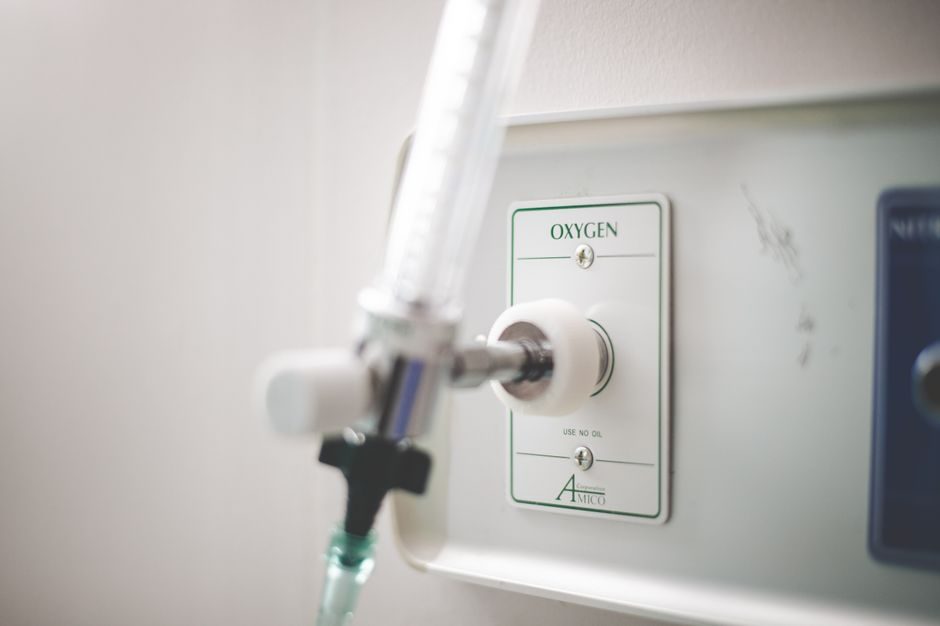
A 10-year lifecycle model for a fixed oxygen detector on a typical refinery perimeter shows acquisition cost sitting at 15% to 25% of the total bill, while electrochemical sensor replacement plus calibration-gas consumption and bump-test labor together account for more than half.
Engineers specifying O2 instruments for hazardous-area service should plan around a 24-to-36 month electrochemical sensor interval, a 30-to-90 day calibration cadence, and 6-to-12 month full-bump intervals to keep measurement uncertainty in the ±2% to ±5% O2 band required for inerting and confined-space entry compliance.
Defining the TCO Scope for Fixed O2 Detection
Total cost of ownership for an oxygen detector covers the capex line (transmitter head, sensor cartridge, junction box, cable, installation labor) plus recurring opex across calibration gas, bump gas, sensor swaps, span/zero checks, validation documentation, and end-of-life disposal of cells containing lead and weak acid electrolyte [S3]. The USPS Supplying Principles and Practices manual defines TCO as a lifecycle method that "encompasses purchase, use, maintenance, support, and disposal," and warns that the model "exposes the hidden costs easily overlooked during budget planning" [S3]. Applied to gas detection, those hidden costs are the consumables: calibration gas cylinders, regulator rebuilds, and the certified test gas used for bump testing.
For a standard 4-wire fixed unit with ATEX/IECEx Ex d IIB T6 rating, the capex band commonly runs USD 1,200 to USD 3,500 for the transmitter head and USD 250 to USD 600 per replacement sensor; a typical engineering procurement spec (3 detectors per zone, 6 zones) lands initial purchase at roughly USD 22,000 to USD 55,000 before installation. That purchase figure is the visible part of a 10-year envelope that, on a defensible model, closes between USD 90,000 and USD 220,000 for the same detector population.
Cost Lines That Dominate: Sensor, Gas, Labor
Electrochemical O2 cells used in industrial fixed detectors carry a stated service life of 24 to 36 months in clean ambient air, dropping to 12 to 18 months when the head is exposed to low humidity, condensing atmospheres, or high background VOCs that poison the lead anode [S3]. At a sensor cost of USD 350 to USD 550 per swap, a 3-detector-per-zone fleet on a 30-month cycle spends USD 1,260 to USD 1,980 per zone per swap event, or roughly USD 4,200 to USD 7,920 per zone over 10 years across three planned cell changes plus one unscheduled failure.
Calibration gas is the second-largest recurring line. A 58 L aluminum cylinder of certified 20.9% O2 in N2 (zero-grade span gas) lists at USD 60 to USD 110 per cylinder, with a 0.5 L/min flow regulator and 90-second test duration consuming roughly 0.75 L per bump. Each fixed detector on a 90-day bump cadence uses 3 to 4 cylinders per year, putting the gas line at USD 240 to USD 440 per detector per year before regulator leases and air-freight surcharges for hazmat. Across the 10-year window, calibration gas alone can match or exceed the original capex.
Labor is the third leg. ISA 12.13 and most corporate EHS procedures require a documented bump test before each shift or, more commonly, a functional test on a fixed schedule. A trained gas-tech hour at USD 70 to USD 110 fully loaded, with travel, paperwork, and tag-out, consumes 1.5 to 2.5 person-hours per detector per bump. At a 90-day interval that is 6 to 10 person-hours per detector per year, or roughly USD 500 to USD 1,100 per detector per year in direct labor.
Sensor Technology Choice: Cost vs Service Interval
Three sensing families compete in fixed O2 service, and the TCO ranking is not always what procurement expects. Electrochemical cells are the cheapest to buy (USD 250 to USD 600 per cartridge) and have moderate 24-to-36 month life; galvanic replaceable cells behave similarly but tolerate wider humidity swings; paramagnetic and zirconia optical units cost 4x to 8x more at the transmitter head but specify 5 to 10 year service intervals with no consumable gas. [S1]
For a 10-year model on a 3-detector zone, the total envelope of detector + sensor + gas + labor for each family falls in different bands: electrochemical tends to land in the lower-cost band on light-duty service but climbs rapidly when ambient exposure shortens sensor life; galvanic sensors trade slightly higher cell cost for better environmental tolerance; paramagnetic/zirconia units push capex 4x to 8x higher but cut opex by 60% to 75% because they eliminate calibration gas for zero and reduce bump labor by half. The crossover favors paramagnetic/zirconia when the planned service life exceeds 7 years and ambient exposure is harsh, and favors electrochemical when the cabinet is air-conditioned, the air is clean, and the planned replacement cycle is 5 years or less.
Selection Criteria That Move the Numbers
Specifying engineers should anchor the TCO model on four hard inputs: the sensor's stated operating humidity range (5% to 95% RH non-condensing is typical for electrochemical, with condensation halving cell life), the response time T90 (under 25 seconds for life-safety, under 60 seconds for inerting), the hazardous-area certification (ATEX II 2G Ex d IIC T6 for offshore, Ex d IIB T4 for most onshore), and the analog or digital output (4-20 mA + HART for legacy DCS, Ethernet-APL for new builds, Foundation Fieldbus for refinery revamps) [S1].
Two secondary inputs often swing the model by 20% to 40%: the cost and lead time of calibration gas in the operating region, and the availability of trained gas-test labor. Remote sites with cylinder air-freight surcharges of USD 40 to USD 90 per cylinder, or sites where the only qualified bump-tester is a 4-hour drive from the unit, make the higher-capex paramagnetic/zirconia option the cheaper path on a 7-to-10 year horizon. Conversely, urban chemical plants with on-site gas-techs and cheap local cylinder supply run electrochemical TCO at the bottom of its band.
Standards and Compliance Costs to Layer On
Several regulatory references set the minimum bump-test, calibration, and documentation cadence that drives the labor line. IEC 60079-29-2 governs selection, installation, use, and maintenance of detectors for flammable gases and oxygen, and is the most commonly cited standard for O2 detector management; performance is verified under IEC 60079-29-1. ATEX 2014/34/EU equipment directive and IECEx scheme rules govern the equipment certification itself. NFPA 69 (Standard on Explosion Prevention Systems) and NFPA 72 set inerting and alarm thresholds for O2 detection in dust-handling and life-safety service. [S2]
These standards do not specify a single test frequency, but they require documented functional verification at a "regular interval appropriate to the application." In practice this is interpreted as a daily, shift, or 90-day bump test depending on the consequence of failure, with full span calibration at 6-to-12 month intervals. Each of those acts has a labor cost, a gas cost, and a documentation cost that must be in the TCO model.
Who Benefits from a TCO View — and Who Does Not
The TCO framing pays off for plant managers, EPC contractors, and corporate EHS directors who own a fleet of 30 or more fixed detectors and budget on a 5-to-10 year capital cycle. It also pays off for instrument engineers on pharmaceutical, semiconductor, and LNG sites where measurement uncertainty in the ±0.5% to ±2% O2 range drives product yield, and where an undetected sensor drift is a USD-100k-per-batch event. [S3]
The TCO framing is overkill for one-off portable purchases, for indoor office CO2 metering, and for short-construction-project temporary installations under 12 months. In those cases, capex and the rental rate dominate, and a lifecycle model adds complexity without changing the buying decision. The model is also weak for novel sensing technologies where the vendor's claimed service life has not been field-validated; the 5-to-10 year paramagnetic cost advantage evaporates if cells need replacement at 30 months in real service.
Failure Modes and Cost Traps
Three failure patterns drive unplanned opex in a fixed O2 fleet: electrolyte dry-out from low-humidity continuous exposure (cell life drops from 30 months to 12 to 18 months, doubling the sensor line), poisoning by silicone vapors, H2S, or acid gases (irreversible, requires immediate swap), and water ingress into the sensor head during wash-down or tropical condensation (cell life shortens, and junction-box contacts corrode, causing false 4-20 mA drift that triggers a service call) [S3].
A fourth, often under-modeled failure mode is calibration-gas contamination. A 20.9% O2 in N2 cylinder that has been open past its certified stability date, or has been pressure-cycled past the regulator spec, will produce a low-bias zero that sends every detector into a false "oxygen deficiency" alarm. The direct cost is a USD 2,000 to USD 8,000 site investigation per event; the indirect cost is a deferred-maintenance backlog while every head is re-verified.
Sourcing Tiers and 2026 Market Signal
Industrial detector sourcing in 2026 separates into three tiers. Tier 1 covers the four brand-name safety instrument suppliers with full ATEX/IECEx/UL coverage, regional service networks, and 12-to-24 month warranties; capex sits at the high end of the band, but TCO is competitive because sensor and gas logistics are bundled. Tier 2 covers mid-tier European and Japanese brands with strong certification but thinner service networks; capex is 15% to 30% lower, but calibration gas and bump labor must be sourced separately, pushing opex up. Tier 3 covers China-origin and white-label brands with valid ATEX/IECEx certificates from notified bodies; capex can be 40% to 60% below Tier 1, but sensor lead times of 8 to 14 weeks and limited local service push lifecycle risk higher. [S4]
The 2026 market signal worth tracking is the migration of fixed detector output from 4-20 mA + HART toward Ethernet-APL and IO-Link Wireless for new greenfield builds, while brownfield sites keep HART and Foundation Fieldbus for the next 5 to 7 years. The output protocol does not move the sensor or gas line, but it does change the documentation cost and the labor cost of remote bump testing — both of which feed back into the TCO model.
For a related lifecycle view, the overhead conveyor TCO breakdown walks a similar 10-year model on a different equipment class, and the crawler excavator price and cost guide covers the capex-side band that often competes with detector budgets inside the same plant-capex envelope.
For component-level specifications, see total station.