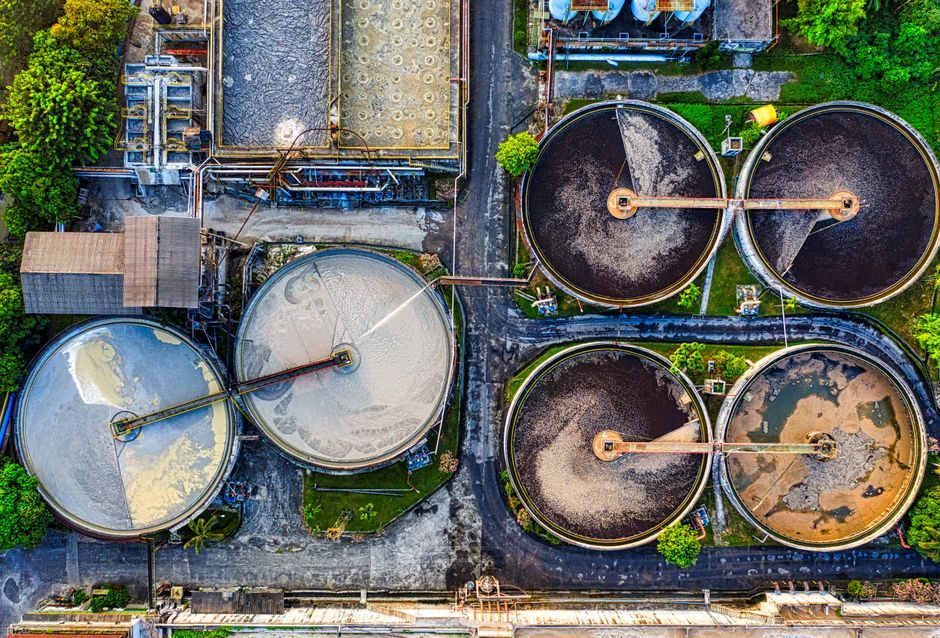
Toxic gas detectors fall into four structural classes — fixed point, portable, stand-off optical/IMS, and 2-wire/4-wire transmitters — and across at least seven sensor families including electrochemical, semiconductor, catalytic bead, infrared, photoionization, ion-mobility spectrometry and MEMS [S3][S4].
The Honeywell Signalpoint, New Cosmos PS-8, Crowcon Triple Plus, Bruker RAPIDplus and GRI-9106 collectively illustrate the spread from US$113 wholesale fixed units [S9] to kilometre-range stand-off CWA detectors [S2], and that price/performance gap defines the selection logic detailed below.
Fixed-Point vs Portable vs Stand-Off: The Structural Split
Fixed-point detectors dominate continuous plant monitoring: the GRI-9106 uses a Membrapor (Switzerland) electrochemical cell with a low-power microprocessor and 4–20 mA output for petroleum, metallurgy, mining and fire-service applications [S8]. Honeywell's Signalpoint is the canonical 2-wire 4–20 mA toxic/O2 fixed head, with an impact-resistant Nylon junction box, M20 cable entry and a PPS sensor housing; flammable variants carry mV bridge output and ATEX certification, while toxic and O2 versions are non-explosive-atmosphere only [S1].
Portable detectors trade fixed installation for worker-worn protection. The Crowcon Triple Plus is a multi-gas IR portable that simultaneously reads CO, H2S, flammable gas, O2, NH3, CO2, Cl2, NO2 and SO2 [S4]. Stand-off detectors form a third class: the Bruker RAPIDplus uses an ion-mobility spectrometer plus RockSolid flex-pivot interferometer to identify Chemical Warfare Agents and Toxic Industrial Chemicals at distances of several kilometres, mounted on a stationary tripod or moving platform [S2]. The Bruker RAID-AFM adds continuous radioactive contamination monitoring to that CWA/TIC stand-off role for critical-infrastructure security [S5]. Compare them on reach, target list and platform mobility in the table below — a portable gas detector makes sense for confined-space entry, a fixed gas detector for perimeter coverage, and stand-off for perimeter-event triage.
Sensor Family Decision Tree
Electrochemical cells remain the default for toxic gases such as CO, H2S, NH3, Cl2 and NO2 because they deliver ppm-level resolution at low power and are drop-in for 2-wire 4–20 mA loops [S1][S8]. The PS-8 series lists seven interchangeable sensor technologies in one platform — electrochemical, semiconductor, catalytic bead, diffusion-type, pellistor, MEMS and suction-type — which lets a fab build one rack and swap cartridges by target gas without re-engineering the backplane [S3].
Semiconductor and MEMS sensors handle refrigerants, SF6, ozone, hydrogen and acetone where the target is hard to electrochemically reduce; catalytic bead (pellistor) sensors sit on the combustible-gas side and complement, not replace, electrochemical toxic cells [S3]. Infrared covers CO2 and hydrocarbons on portable multi-gas units like the Triple Plus [S4], while ion-mobility spectrometry is the only family that resolves a chemical warfare agent cloud versus a benign interferent at stand-off range [S2]. For a broad instrument overview, see the gas detector reference, and for the combustible side of the same plant, the combustible gas detector entry.
Target-Gas Coverage and What Each Detector Will Not See
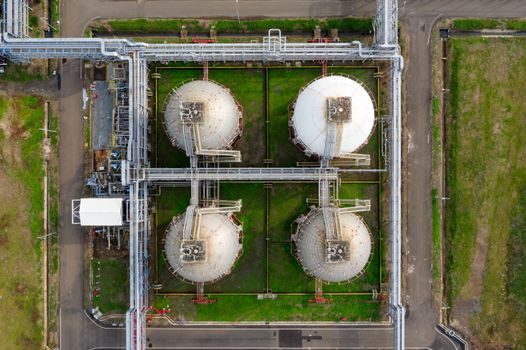
The Honeywell Signalpoint line is restricted in its toxic/O2 variants to non-explosive atmospheres and is not a drop-in for flammable-gas areas — that role belongs to its mV-bridge flammable sibling, which is ATEX-certified [S1]. Crowcon's Triple Plus lists nine gases (CO, H2S, flammable, O2, NH3, CO2, Cl2, NO2, SO2) but uses IR sensing, which excludes the low-molecular-weight toxics that only an electrochemical cell resolves [S4].
The New Cosmos PS-8 covers more than fifteen gases including carbon monoxide, phosphine, acetone, methane, oxygen, argon, hydrogen, chlorine, ammonia, propane, sulfur, ozone, refrigerants, freon and SF6 — a breadth driven by its swappable cartridge design [S3]. The Bruker stand-off family is intentionally narrow: RAPIDplus and RAID-AFM are tuned for CWA/TIC libraries and ammonia-at-km-range, not for routine industrial-hygiene ppm measurement [S2][S5]. When the use case is "what is the HCN concentration at this worker's lapel," none of the stand-off IMS units are the right tool; a wearable electrochemical or a fixed-point head is.
Output, Wiring and Hazardous-Area Wiring Choices
Signalpoint is 2-wire 4–20 mA loop-powered for toxic and O2 versions, and mV bridge for flammable versions that feed a dedicated controller such as Unipoint — and this distinction decides cable count, controller type and ATEX applicability [S1]. The PS-8 series pushes the same idea into a digital backplane: 0–20 mA, Modbus/TCP, Modbus-RTU, RS-485, PoE, plus a relay/dry-contact output, with front-access sensor replacement to minimise fab downtime [S3].
The GRI-9106 publishes a test-parameter table covering range, accuracy, response time and output for each supported gas and is built around a Membrapor cell with a 4–20 mA interface, aimed at fixed installation in hazardous process plants [S8]. For a head-to-head with the four-gas portable format, see the multi-gas detector reference; the toxic gas detector page covers the dedicated single-gas cell form factor that all of the above can be configured as.
Application, Certification and TLV Distance
Three application classes dominate the spec sheets: indoor air monitoring (Signalpoint) [S1], industrial multi-channel panels (PS-8, GRI-9106) [S3][S8], and security/CW-protection (RAPIDplus, RAID-AFM) [S2][S5]. ATEX certification is explicitly carried by Signalpoint's flammable variant and is the gating item for European chemical-plant builds [S1].
In the US, the National Institute for Occupational Safety and Health (NIOSH) and the American Conference of Governmental Industrial Hygienists (ACGIH) set the threshold-limit values that detector ranges must reach — Analog Devices cites chlorine, phosphine, arsine and hydrogen cyanide as the design-driving toxics for low-power portable designs in semiconductor and pharmaceutical plants [S6]. SIL certification shows up on Chinese export listings: Hebei Zehong Technology publishes SIL-certified fixed online toxic-CO detectors at US$113–132.50 per piece with a 10-piece MOQ, ISO 9001:2015 / ISO 45001:2018 / ISO 14001 factory credentials, and the buyer is told to "contact issuer for current status" on the SIL rating [S9].
Power Budget, Calibration and Field Maintenance
Low-power design choices cascade into sensor selection: an electrochemical cell typically draws microamps to a few milliamps, a pellistor tens of milliamps, an IR bench hundreds of milliamps when the lamp is hot, and a stand-off IMS unit mains-power or vehicle-power [S2][S3][S6]. Calibration interval is gas-specific: chlorine, ozone and phosgene cells drift faster than CO or H2S cells, and the PS-8 design front-loads sensor replacement to keep the rack online while a cell is swapped [S3].
Pre-calibrated cartridges ship factory-set to reduce commissioning time on multi-channel PS-8 racks [S3], while the GRI-9106 relies on its low-power microprocessor and Membrapor cell to keep drift within published test-parameter limits [S8]. The ToxCO, ToxCO+ and similar breath-test portables reuse the same electrochemical stock but add a single-button calibration flow — a different maintenance profile from the plant-fixed head.
Pricing, Sourcing and What to Watch in the Next Cycle
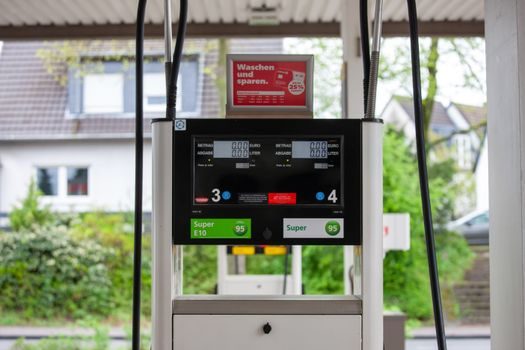
Wholesale toxic-detector pricing on Made-in-China.com clusters around US$113–132.50 per piece for SIL-certified fixed CO units, with 10-piece MOQs and ISO 9001/14001/45001 factory credentials typical of the Hebei supplier base [S9]. Premium stand-off CWA detectors (RAPIDplus, RAID-AFM) are not price-listed and ship as configured systems for homeland-security and critical-infrastructure customers [S2][S5].
Trackable signals for the next procurement cycle: (1) MEMS-based toxic-cell rollouts extending refrigerant and SF6 coverage into the same 4–20 mA loop footprint as legacy electrochemical cells [S3]; (2) PoE-powered multi-channel racks displacing point-to-point 4–20 mA wiring in semiconductor fab greenfield builds, since the PS-8 already ships PoE and Modbus/TCP on the same backplane [S3]; (3) demand for stand-off CWA/TIC units following any new critical-infrastructure protection rule, given the RAID-AFM NC variant is explicitly built to that requirement [S5]. For a related TCO view, the multi-gas detector TCO piece covers sensor, calibration and certification cost levers across this same product family.