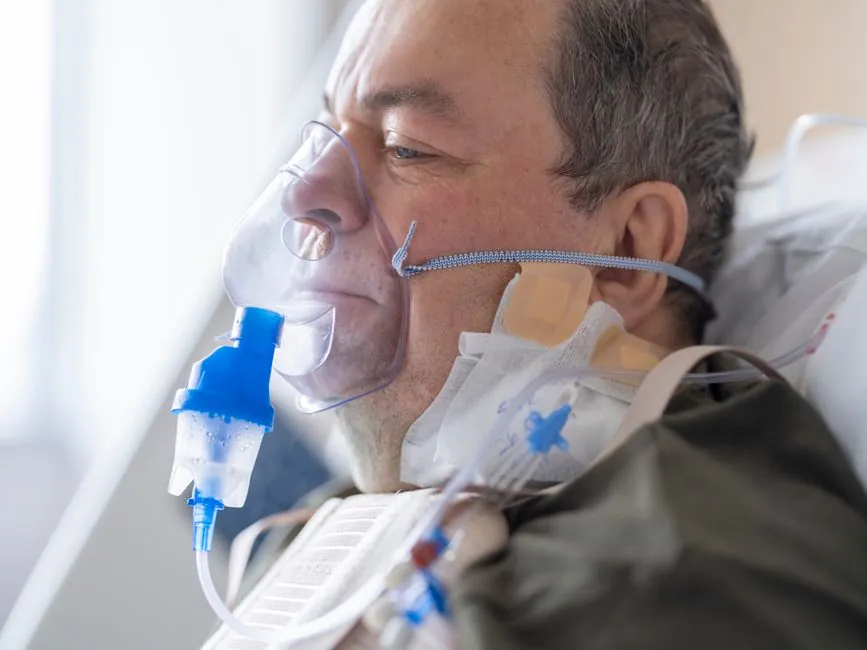
An oxygen detector is a safety device that alarms when ambient O2 drifts outside roughly 19.5–23.5% by volume, while a process oxygen analyzer is an instrument that quantifies O2 in a gas stream from low ppm up to 100% and feeds a control or quality system [S1][S2][S5].
Detectors and analyzers share a sensor, but they diverge on output type, accuracy, certification, and ownership cost. Mis-substituting them is a common engineering error: a detector will not close a combustion trim loop, and a lab-grade analyzer is overkill for a confined-space alarm [S5].
Functional definition: alarm instrument vs quantitative analyzer
An oxygen detector, often called an O2 gas detector or oxygen deficiency monitor, is built for life-safety duty. It continuously samples ambient air, compares the reading against fixed thresholds, and trips an alarm (relay, horn, light) when the concentration leaves the safe band, typically 19.5% lower and 23.5% upper [S2]. The output is qualitative: safe, warning, or fault.
A process oxygen analyzer is built for process-control and quality-assurance duty. It outputs a calibrated analog or digital signal (4–20 mA, HART, FOUNDATION Fieldbus, Modbus) proportional to actual O2 partial pressure or volume fraction, and it is documented with stated accuracy, repeatability, and a measurement range [S1][S4]. Process analyzers split into trace units (ppm-level) and percent units (0.5% up to 100% O2) [S1][S2].
Accuracy and data type: qualitative vs quantitative
Oxygen gas detectors typically only provide qualitative analysis results for specified gases, while the oxygen analyzer has higher accuracy and can provide quantitative data [S5]. In practice that means a detector answers "is O2 within band, yes/no" and an analyzer answers "what is O2, to within ±1% of reading or ±0.5 ppm".
Process analyzers are typically delivered with a calibration certificate traceable to a national standard (NIST, NPL, or equivalent), and many carry an accuracy spec such as ±1% of full scale for zirconia percent analyzers or ±2% of reading for electrochemical trace units [S2][S4]. Detectors are accepted with a bump-test certificate, not a multi-point calibration report.
Sensor technologies: which chemistry fits which job

The four dominant O2 sensing chemistries each map to a different job. Zirconia (zirconium oxide) cells must be held at up to 700 °C, give 10+ years of sensor life, cover 0.5–100% O2, and are widely used in combustion and inert-gas applications [S2]. They cannot measure low ppm and cannot be exposed to flammable gas mixtures.
Electrochemical fuel cells read a true zero with no oxygen present, reach parts-per-billion trace sensitivity, cost less up front, but have a service life of about 18 months and need recalibration on roughly a 6-month interval [S2][S4]. Paramagnetic cells exploit the magnetic susceptibility of O2, are non-consuming, and are the standard for percent-level measurement in flue gas and medical gas [S3]. Tunable diode laser (TDL) and zirconia probes are the preferred solutions for hydrogen and other explosive atmospheres because they are intrinsically safe in the right housing [S7].
Decision criteria: which device to specify
Pick a detector when the question is "do I evacuate this room": fixed or portable O2 safety monitor with audio/visual alarm, 19.5/23.5% trip points, battery or loop power, and a housing rated for the area classification [S2]. Pick a process analyzer when the question is "is my inert blank holding at <10 ppm, or is my trim loop on target": in-line probe or sample-draw analyzer, calibrated range, and a documented output protocol [S1][S4].
A simple comparison on four criteria clarifies the choice:
1) Output type: detector gives relay/LED; analyzer gives 4–20 mA, HART, or FOUNDATION Fieldbus proportional to concentration [S1][S4].
2) Accuracy: detector is uncalibrated alarm threshold only; analyzer is typically ±1–2% of reading or ±0.5 ppm at the point of use [S2].
3) Sensor life: detector electrochemical cell 18–24 months; analyzer zirconia 10+ years, paramagnetic 5+ years [S2].
4) Cost of ownership: detector is low capital, low-to-moderate sensor replacement; analyzer is high capital with low recurring calibration gas cost [S2][S4].
Process-side integration: closing a control loop
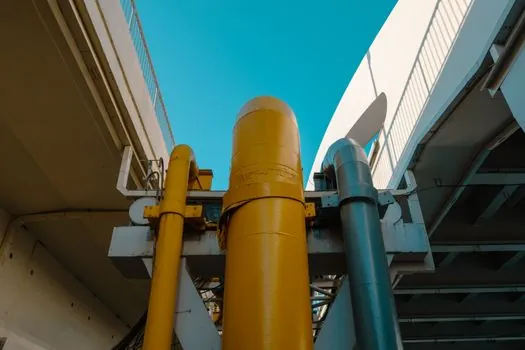
On a combustion air trim, a percent-range zirconia analyzer feeds back to the burner management system to hold excess O2 at the setpoint, usually 2–4% on a gas-fired furnace, recovering 1–3% of fuel versus a fixed-air setup. The same loop cannot run on a detector because the detector has no proportional output and no documented linearity [S2].
On a nitrogen or argon pipeline, a trace electrochemical or TDL analyzer verifies <10 ppm O2 in the inert stream, which protects product quality in pharmaceutical, semiconductor, and food processes. In hydrogen-rich streams such as electrolyzer output, zirconia-based process O2 analyzers are specified for hazardous-area mounting, with measurement cells separated from flammable gas by design [S7]. For broader instrument context on control loops and field calibration routines, see process control and process calibration.
Where each instrument fails
Detectors fail when they are asked to do analyzer work: their alarm-only output cannot drive a control valve, and a failed sensor will silently read mid-band (around 20.9%) rather than drive the reading to a true zero. Analyzers fail when they are dropped into safety service without a redundant sensor, a watchdog, and a fault relay that mimics a detector trip output. [S4]
For personnel protection, a process analyzer should be paired with a dedicated oxygen detector so the safety function is independent of the process function. For liquid-phase work such as fermentation, boiler feedwater, or wastewater aeration, the same principle applies but the device is a dissolved oxygen meter with a membrane sensor rather than a gas-phase analyzer. In lab or field verification, a portable multifunction process calibrator is used to inject known O2-in-N2 span gas against the installed analyzer.
Looking ahead, two trackable signals will reshape spec sheets: tighter harmonization of ATEX/IECEx certification for in-line zirconia and TDL analyzers in hydrogen service, and growing adoption of inline dissolved-oxygen sensors in pharmaceutical water loops. Engineers should watch for updated vendor cross-sensitivity data on H2 and He backgrounds, and for any IECEx test-house updates covering the same sensor housings referenced in current hazardous-area datasheets [S7].
For related coverage, see Water-cooled copper tuyere leak detection: flow-meter spec, alarm thresholds, and 2026.