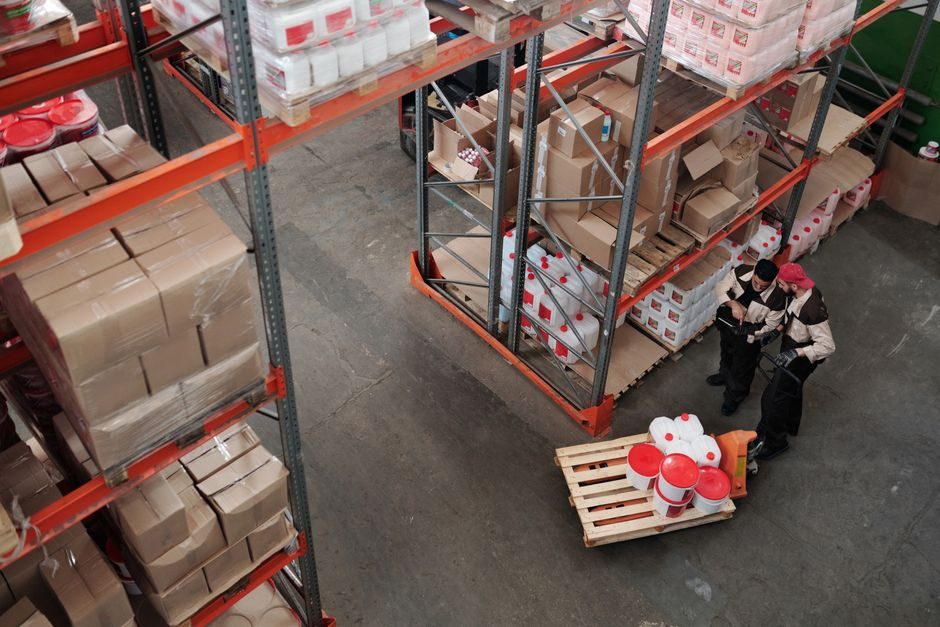
A 5,500-lb-capacity manual hand pallet jack lists between $200 and $600 at U.S. industrial distributors in July 2026, with steel-frame hydraulic units from Asian OEM lines like Niuli's CBY series landing in the $180-$320 range at 1-piece minimum order quantity [S4][S6]. Electric walkie pallet trucks cluster in a $2,500-$6,500 band, while AGV-class autonomous pallet jacks start above $25,000 and commonly reach $80,000 once navigation, batteries and WMS integration are bundled [S3].
Three categories dominate the specification envelope: manual, electric, and AGV/autonomous. Each sits in a distinct cost band and addresses a different duty cycle, so buyers who anchor on sticker price alone tend to overpay on labor or under-buy on throughput [S3]. Reference benchmarks for the manual end — including fork length, load rating and turning radius — are catalogued on the manual pallet jack specification page.
Manual Pallet Jack Cost: $180-$600 Retail, $130-$280 Bulk
A standard 5,500-lb hand pallet jack with 27-inch-wide forks, 48-inch fork length and a single-stage hydraulic pump lists at roughly $300-$500 from U.S. stocking distributors such as ULINE, with half-pallet and low-profile variants landing below $400 [S4]. The Vestil PMSF-M-400, a compact half-pallet hand truck rated at 400 lb (181.44 kg) with 23.63-inch forks and 4.8-inch lift height, targets retail backrooms where a full-size 5,500-lb unit is over-spec [S1].
Chinese OEM pricing through portals such as Okorder places CE-marked hydraulic hand pallet jacks in a $180-$320 FOB Shanghai window at 1-piece MOQ, with monthly supply capability stated at 2,500 units for the Niuli CBY model [S6]. Volume breaks below 50 units are uncommon; buyers ordering a 20-40 foot container typically see effective unit cost drop 25-35% versus the single-piece quotation. The dominant cost drivers in this band are fork-steel thickness (typically 3-4 mm), polyurethane vs nylon wheel sets, and the chrome-plated hard-chrome hydraulic ram.
Electric Walkie Pallet Truck: $2,500-$6,500, Lithium Premium Adds 15-25%
Electric pallet trucks with 24 V lead-acid batteries, 3,000-4,500 lb capacity and manual walk-behind tiller arms list between $2,500 and $4,500 from mainstream OEM lines [S3]. Linde's M10X series (12 V architecture) and Noblelift's PT 16/20L-Li (24 V lithium) sit in the upper half of that band, with the lithium-battery premium adding an estimated 15-25% over equivalent lead-acid configurations [S3].
Total cost of ownership on an electric unit is dominated by battery replacement cycles — lead-acid packs typically need replacement at 500-800 cycles versus 2,000+ cycles for LiFePO4 — and by the cost of onboard charger hardware. Buyers in cold-storage or food-grade operations should verify the truck's IP rating for wash-down environments, and confirm whether the tiller head carries an emergency reverse button (a common specification across Crown's One Source parts programme that supports 50+ equipment brands).
AGV Pallet Jack: $25,000-$80,000, 24/7 ROI Threshold
Auto pallet jacks — AGV-class autonomous units that navigate via LiDAR SLAM, magnetic tape, or 2D-code floor markers — start above $25,000 for a single-vehicle configuration and commonly reach $80,000 once WMS/ERP integration, charging docks, and fleet management software are bundled [S3]. The economic case rests on shift coverage: a single AGV pallet jack operating 24/7 replaces approximately 1.5-2 full-time manual handler positions in high-throughput e-commerce or manufacturing cells, with VisionNav-style deployments reporting payback inside 18-30 months at three-shift utilization [S3].
For an apples-to-apples comparison of these three classes against automation level, labor cost, initial investment, and maintenance cost, the table from the VisionNav buying guide is the cleanest reference on the open web [S3]. Use it to size the duty cycle: if the truck moves fewer than 50 pallets per shift, a manual unit wins; 50-200 favors electric; above 200, AGV math begins to close.
What Drives Cost: Capacity, Fork Length, Steel, Wheels
Four levers explain roughly 80% of the price spread within any single class. Capacity rating: a 4,500-lb manual jack can be 10-15% cheaper than its 5,500-lb sibling; 6,000-7,000-lb heavy-duty hand trucks push 25-40% above standard. Fork length and width: 48-inch standard forks dominate, but 36-inch compact or 60/72-inch long-fork variants carry surcharges of 8-20% [S1][S4].
Steel grade and frame construction: powder-coated structural steel is the industry default, with the Vestil PMSF-M-400 specifying a powder coat over steel for warehouse use [S1]. Wheels and bearings: polyurethane (PU) wheels on the PMSF series deliver low-noise operation and are standard; nylon wheels lower cost and suit rough concrete but ride harder. Hydraulic seal and pump quality: units with chrome-plated hard-chrome pistons and Italian-made pumps command premiums; the cheapest Chinese hand jacks often spec domestic seals rated for 3-5 years versus 7-10 years on premium seals.
Manual vs Electric vs AGV: Selection Matrix
Use this rule of thumb before any quote request. Manual: pallets moved under 50 per shift, single-shift operation, retail backroom, rental truck fleets, or operations with frequent operator rotation. Capital threshold under $600 per unit, no battery infrastructure, no charger circuit. [S3][S4].
Electric walkie: 50-200 pallets per shift, multi-shift coverage, distribution centers, loading-dock loops of 50-200 m. Capital $2,500-$6,500, requires 110-220 V charging outlet, lead-acid or lithium battery handling. AGV: above 200 pallets per shift or 24/7 operation, e-commerce fulfillment, manufacturing line-side delivery. Capital $25,000-$80,000, requires WMS/ERP integration, mapped floor, charging dock, and change-management for warehouse staff [S3].
For warehousing layouts that already use pallet racking at heights above 1.5 m, the throughput calculus tilts toward powered equipment; at ground level only, manual remains the dominant cost-per-pallet-moved solution. Where vertical stacking enters the workflow, a pallet stacker typically pairs with a manual or electric jack rather than replacing it.
Standards, Compliance and Used-Market Notes
Hand pallet jacks manufactured for the U.S. market carry ANSI/ITSDF B56.1 compliance for operator controls and load-handling stability; European-bound units typically carry CE marking under the Machinery Directive with the EN ISO 3691-5 industrial-truck safety standard governing pallet-jack-specific design [S6]. For operations handling food, pharmaceutical, or export-crated plastic pallet loads, food-grade grease in the hydraulic pump and stainless hardware on load-contact points are common spec upgrades, generally adding 10-18% to unit cost.
For a fuller capex/opex breakdown of electric material-handling assets, see the electric forklift price & cost guide 2026 — the battery and lifecycle logic carries over directly to electric walkie pallet trucks.
Track three signals over the next two quarters: (1) Chinese OEM FOB Shanghai unit pricing through B2B portals, where 2,500-unit/month supply capability is already published [S6]; (2) U.S. distributor lead times and freight surcharges on 40-foot container imports from East Asia; (3) AGV vendor announcements of sub-$25,000 entry configurations as LiDAR costs continue to compress, which would reset the manual-vs-AGV crossover threshold lower for mid-size operations [S3].