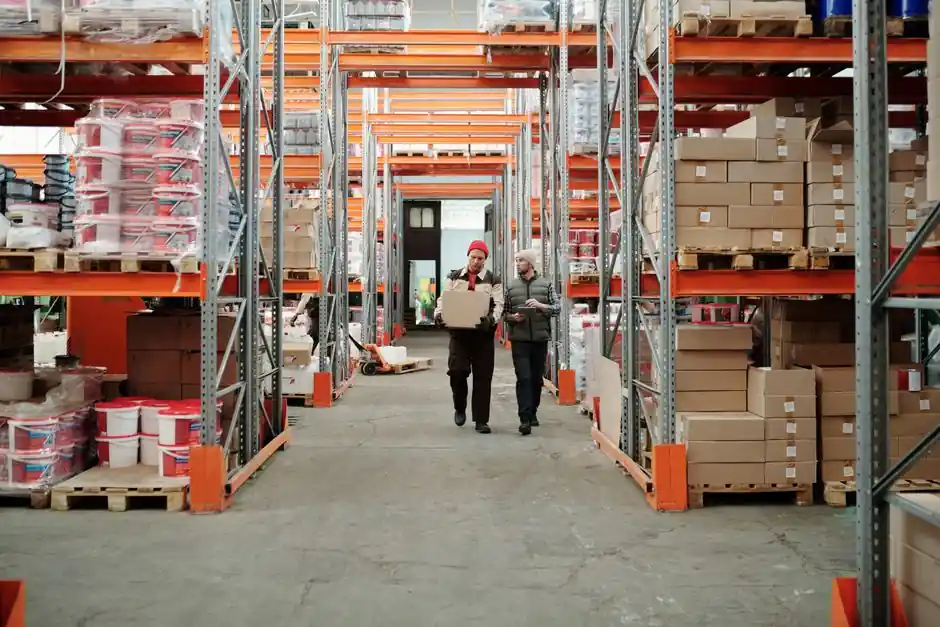
Selective pallet rack, drive-in/drive-through rack, push-back, pallet flow, cantilever, and radio-shuttle are the six structural families engineers actually specify, and each one is tuned to a different combination of SKU count, pallet velocity, and forklift aisle width [S1][S4]. SJF Material Handling lists selective rack, cantilever rack, conveyor, and sortation as the four core building blocks of a turnkey automated warehouse, with custom rack design and high-density pallet rack called out as the upgrade paths for existing buildings [S1]. A typical heavy-duty selective rack bay is built for around 3,000 kg per pallet position with 8-12 m frame heights available as customized builds [S9], which sets the baseline load case for almost every North American distribution center.
Because every extra centimeter of vertical free span changes the steel section, the first spec gate is always the same: pallet size, gross pallet weight, and required beam elevation drive the upright profile, beam section, and base-plate anchor pattern [S2]. The wrong family decision made at this stage is the single most expensive change to reverse later, since re-driving anchor bolts into a cured slab or cutting new cross-aisles is rarely budgeted in the original PO. For facilities that have already committed to a pallet stacker or electric pallet truck fleet, the rack spec must be frozen before the MHE order goes out, not after.
Selective rack: the default for mixed-SKU and 100% selectivity
Selective pallet rack is the most common family in U.S. and U.K. warehouses because every pallet position is individually accessible from the aisle, with no FIFO/LIFO constraint built into the structure [S2][S3]. This family typically runs with 2,500-4,000 kg per beam level and frame heights from 8 ft up to 24 ft+ for new builds, with used uprights in the 8 ft to 24 ft range widely available on the secondary market [S5]. A standard counterbalance or manual pallet jack aisle is 8-10 ft wide, which gives the highest SKU density of the families that still preserve 100% selectivity, but it also burns the most floor per cube stored.
Selective rack is the right pick when the operation runs more than 800-1,000 SKUs, when every pick is one pallet, and when damaged or returned pallets need to be re-slotted without a full lane tear-down. It is the wrong pick for freezers running the same SKU for months on end, for pipe, lumber, or steel stock with no pallet, and for any lane storing more than 12-14 pallets deep. For mixed-SKU electronics sites, the spec sheet for selective rack in an automation-ready bay is covered in Pallet rack selection for electronics handling: 2026 spec map.
Drive-in, drive-through, and push-back: dense storage at the cost of selectivity
Drive-in and drive-through rack collapse the aisle count by letting a forklift drive into the structure, with 2-10 pallets deep per lane and per-pallet loads commonly specified up to 1,000-1,500 kg per position [S4]. This is the right structural family when you have low SKU count, high pallets-per-SKU, and a LIFO (drive-in) or FIFO (drive-through) rotation rule that matches the throughput. The structural penalty is real: drive-in rack uses more steel per pallet position than selective rack and demands tighter tolerances on the forklift operator, because rack impact damage on the bottom rail is a routine maintenance event rather than a rare incident.
Push-back rack uses nested carts on a slight pitch so pallets push back as the lane is loaded and float forward as it is picked, supporting 2-5 pallets deep per lane with LIFO rotation and roughly 1,000-1,500 kg per pallet [S4]. It is a common retrofit in 3PL and food-grade sites because it adds cube density without the aisle-narrowing pressure of very narrow aisle (VNA) trucks. For corrosion-prone sites such as cold stores or chemical warehouses, dense rack amplifies coating risk, and the coating and material trade-off is mapped in Pallet rack coating and material choices for corrosion-prone warehouses.
Cantilever and long-load rack: anything that is not a standard pallet
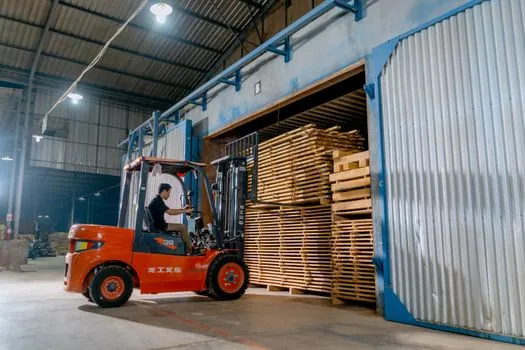
Cantilever rack is the structural family for long, awkward loads: pipe, lumber, sheet metal, furniture, and steel bar stock [S2][S8]. It replaces the front upright columns of a selective rack with a row of arms cantilevered off a central column, so the only limit on load length is the bay width, not the column spacing. Cantilever columns are typically 8-12 m tall with 600-1,500 kg per arm pair for light-duty steel service, and 2,000-3,000+ kg per arm pair for structural-grade racking used in steel service centers and building-supply hubs [S1].
Cantilever is mandatory when the SKU is not a standard GMA or CHEP pallet, and it is the wrong family the moment a forklift operator tries to handle a 2,000 lb coil of rebar or a 6 m length of structural steel on a selective beam. The risk to control is column-base uplift on tall cantilever under offset load, which is why engineered base-plate and anchor specs are non-negotiable on columns above 6 m. SJF's project history for the Sioux Falls building-supply hub lists selective rack paired with cantilever as a typical multi-family solution when one building stores both palletized hardware and long-length lumber [S1].
Load class, beam length, and frame height: the numbers that actually move steel
Per-pallet gross weight is the first number that has to be locked, and heavy-duty selective rack classes are commonly quoted at 3,000 kg per pallet position with 8-12 m frame heights as a custom-build standard [S9]. Module-type pallet rack systems add drawer and slide-rail hardware to that baseline, giving drawer-load access within a standard selective footprint for spare-parts and slow-mover storage [S7]. Once per-pallet weight and frame height are fixed, beam length sets the bay width, bay width sets the aisle, and aisle width sets the MHE class (counterbalance, reach, turret VNA, or AGV/AMR).
Second-hand and new-build pricing both react to beam length and frame height, not just family: used uprights from 8 ft to 24 ft are commonly listed as in-stock SKUs by Seattle Pallet Racking [S5], and TK Systems specifies a regional contractor footprint covering CA, NV, AZ, UT, CO, NM, WA, and MD for turnkey installs [S3]. The four operational inputs that Pallet Racking Systems Ltd. explicitly lists on its site are the same four any engineer should freeze in writing before a PO: pallet size and weight, available warehouse space and layout, stock type and rotation requirements, and budget plus future growth plans [S2].
Automation interfaces: rack is no longer a passive steel structure
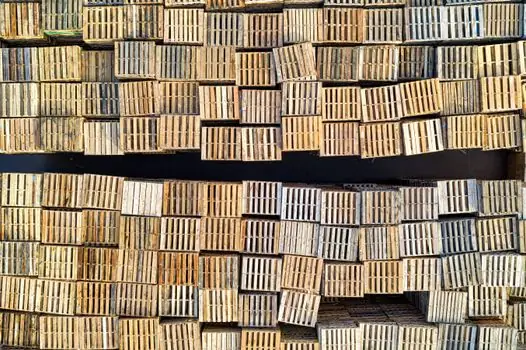
Automated warehouses change the rack spec, not just the MHE spec, and the change is concentrated in three places: beam flange alignment, base-plate datum, and frame straightness tolerance. A goods-to-person or AS/RS crane bay needs beam flange alignment within roughly ±2-3 mm over the full run, which rules out mixed-vintage used rack and forces new-rack-only quotes for the AS/RS lanes. SJF's 3PL home-goods project in Pennsylvania combines tunnel scanning, Stewart Glapat receiving conveyor, NBS 30 sortation, gravity conveyor, and MDR accumulation into a single system, and the rack in that facility is essentially the pick-facing buffer for the conveyor and sortation equipment [S1].
Radio-shuttle racking is a hybrid family where a battery shuttle carries the pallet into the lane under remote control, supporting deep-lane density of 10-30+ pallets per lane with FIFO or LIFO rotation, and per-pallet loads that mirror the structural family underneath [S4]. It is the right family for high-throughput, low-SKU-count operations that want drive-in cube without drive-in forklift impact damage. The trade-off is shuttle fleet size, battery duty cycle, and a higher bar on rack straightness; it is the wrong family for sites that have not committed to a disciplined lane-depth plan and a controlled pallet dimensional spec.
Compliance, anchoring, and the site survey that prevents rework
Any used racking installation in the U.K. and most new builds in the U.S. is expected to be installed to the manufacturer's specification, with site-specific RAMS and insurance cover in place before the first beam is lifted [S2]. That is the procedural layer: the structural layer is slab condition, anchor type, and base-plate dimension, and the operational layer is the free site survey that maps fork-truck class, ceiling height, column grid, and sprinkler clearances against the rack family. SJF's project method covers all five of those layers in sequence: requirements and needs assessment, custom solution design, engineering and permitting, installation and implementation, and optimization and growth planning [S1].
TK Systems reinforces the same five-layer model from a regional integrator's perspective, calling out professional project managers and turnkey delivery for distribution centers across CA, AZ, NV, OR, WA, and NM [S3]. The failure mode at the compliance layer is predictable: anchor pull-out on a slab that was never tested, beam-end safety clips left off after a rack reconfiguration, and a base-plate shim stack that hides a low spot in the slab until a forklift impact cracks the concrete. All three are caught by a documented site survey and an engineered drawing set, not by a price-driven quote comparison. Track the next decision node by locking pallet gross weight, per-beam level load, frame height, and aisle width into a one-page spec sheet before any vendor quote is opened, and require the bidder to call out the rack family, steel gauge, base-plate anchor pattern, and a reference project in writing; a 2026 retrofit that omits any one of those four items should be treated as a non-conforming bid.