
A double-pallet walkie-rider stacker such as the Crown DT Series transports two 1000 kg pallets at travel speeds up to 12.5 km/h across four configurations, giving it the duty cycle envelope where TCO modelling actually pays back [S1].
For warehouse buyers, the headline number is rarely the invoice: over a 7-10 year horizon, batteries, energy, scheduled service and operator throughput drive 60-80% of lifetime spend on a class III electric pallet stacker, with purchase price typically 20-35% of the total [S4].
What TCO Actually Counts in a Pallet Stacker Fleet
TCO is a time-bounded cost envelope covering acquisition plus every dollar spent to keep the truck earning, commonly averaged over 3-5 years for material-handling fleets and extended to 7-10 years for capitalised electric units [S4].
For a pallet stacker, the line items that actually move the number are: acquisition cost, battery and charger, energy (kWh), preventive maintenance hours, spare parts, tyres and drive castors, operator training, insurance/permits, and residual value at disposal. The Crown DT series illustrates the class with a spring-loaded drive unit on heavy-duty castors, a 10 mm protective skirt and 5 mm wrap-around covers — features that target the maintenance and uptime axes of TCO rather than the spec-sheet top speed [S1].
The Five Cost Drivers That Move the Number
1) Acquisition. Pedestrian counterbalanced stackers sit at the entry tier; ride-on double-pallet walkies such as the DT command a 30-60% premium because of the larger chassis, twin-pallet hydraulics and rider platform [S1].
2) Battery and charger. Lithium-ion (LiFePO4) packs of 24 V / 200-300 Ah typically add 25-40% to truck cost versus lead-acid, but eliminate equalisation charges, watering and the dedicated battery room; opportunity charging during breaks extends single-shift runtime on a 2 x 1000 kg double-stack duty cycle.
3) Energy. At roughly 4-6 kWh per shift for a 1.6-2.0 t class III electric stacker, electricity is small in absolute terms but predictable; pairing with on-site PV or off-peak tariffs is the usual optimisation lever.
4) Maintenance. Active Traction, die-cast aluminium handles and cast-steel chassis reinforcement on premium OEM trucks target the wear curves that drive unplanned downtime [S1].
5) Operator and throughput.
Pedestrian vs Walkie-Rider vs Ride-On: Decision Criteria

Selection is best framed by four axes: load (single vs double pallet), travel distance per shift, aisle width, and shift count. Pedestrian single-pallet stackers suit < 200 pallet moves/shift under 50 m; walkie-rider doubles such as the Crown DT cover 200-400 moves at 12.5 km/h with 2 x 1000 kg capability [S1]; full ride-on reach trucks or stacker crane systems take over above 400 moves/shift or in very narrow aisle applications.
A useful comparison lens for a buyer:
- Pedestrian single: lowest capex (1.0x), lowest throughput, fits 2.4-2.6 m aisles, single-shift duty.
- Walkie-rider double: 1.3-1.6x capex, ~1.5-2x throughput from twin-pallet moves and 12.5 km/h travel, fits 2.8-3.2 m aisles, 1-2 shift duty with LiFePO4 [S1].
- Ride-on reach: 2.0-2.5x capex, but halves labour cost per pallet and unlocks 6-8 m lift heights; complements a pallet rack investment above 4 m.
Where TCO Modelling Breaks Down (Failure Modes)
Most under-spec'd TCO sheets ignore three items: (a) opportunity cost of downtime when a stacker is the bottleneck at a dock door; (b) floor damage from worn drive wheels — a 10 mm skirt and cast-steel chassis are cheap insurance versus concrete repair bills [S1]; (c) residual value cannibalisation, since fleets that skip preventive service resell at 20-30% of acquisition versus 40-50% for documented service histories.
Battery Math: Lead-Acid vs LiFePO4 Over 10 Years

Factoring equalisation charging labour, watering and the floor space of a battery room, the LiFePO4 premium is commonly recovered in 3-5 years on two-shift operations. [S2]
Charger sizing matters more than buyers expect: a 30 A opportunity charger paired with break-time top-ups keeps a LiFePO4 pack in the 40-80% state-of-charge window where cycle life is maximised; undersized 15 A legacy units force deeper discharges and shorten service life by 20-30%.
Standards, Safety and Compliance Cost Lines
Stackers operating as work platforms in some jurisdictions trigger additional inspection regimes; truck design items such as side restraints, foldable platforms with Quick-Exit release and proportional hydraulics feed directly into operator certification cost and incident-driven premiums [S1].
Specifying trucks to recognised truck safety standards (e.g. EN ISO 3691-1 for industrial trucks, EN 1175 for electrical requirements, and operator-training codes from national federations) is a cheap hedge against the TCO surprise of a single serious incident; insurance carriers increasingly surcharge fleets without documented compliance.
How This Connects to Adjacent Material-Handling Capex
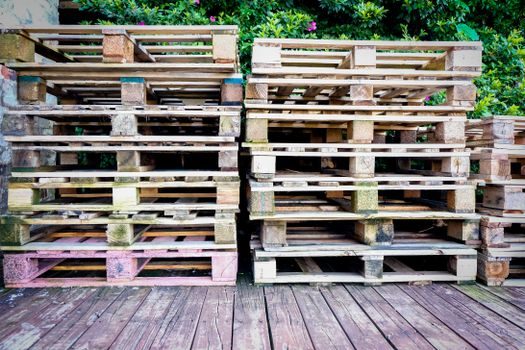
A stacker rarely stands alone — the pallet rack aisle width, the plastic pallet footprint (EUR 1200 x 800 vs US GMA 1219 x 1016) and the WMS slotting rules all bound what a stacker can earn per shift. A 12.5 km/h walkie-rider is wasted on a 30 m dock-to-aisle run; conversely, a pedestrian single is throttled by a 200 m cross-warehouse loop [S1].
Buyers cross-referencing stacker TCO with gantry crane TCO or truck-mounted crane TCO will recognise the same five-line structure: acquisition, energy, maintenance, labour, residual — and the same lesson that operator throughput, not invoice price, drives lifetime economics.
What to Track Over the Next Reporting Cycle
[S1]