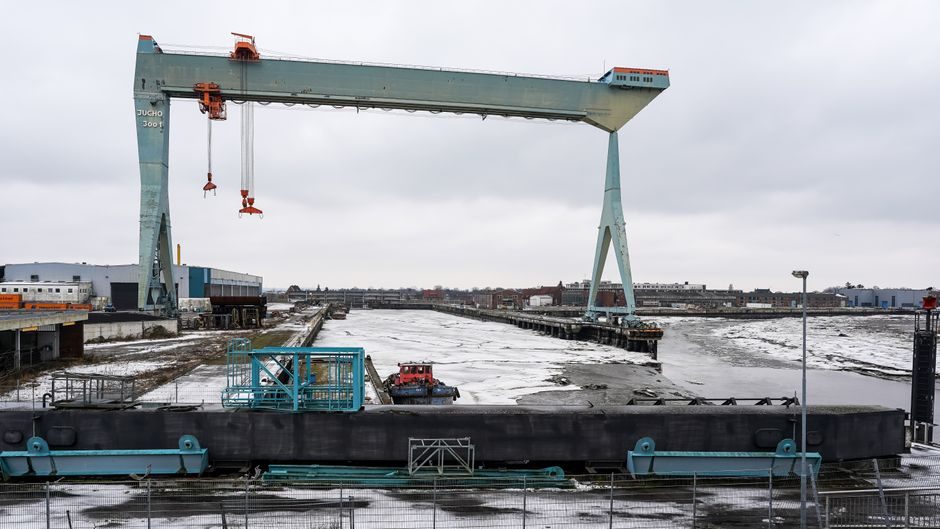
A rubber-tyred or rail-mounted gantry crane typically depreciates over 20-25 years, but its 20-year total cost of ownership settles between 1.8x and 3.5x the ex-works purchase price once the hidden lines are added, per the USPS Supplying Principles and Practices TCO framework [S3] and Toolshero's published TCO definition [S1].
The five lines that move the spend are: structural/runway civils, electrical energy at the hoist, preventive maintenance labour, statutory inspection (FEM 1.001 / ISO 9927 third-party audits in most jurisdictions), and end-of-life dismantling. Materials and fabrication typically account for only 35-45% of the lifecycle number; the remainder is operations.
The Five TCO Cost Lines, Ranked by Spend Weight
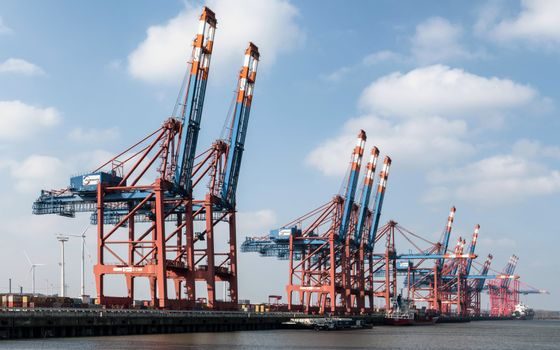
Energy is the single largest non-capital line for high-duty harbour and container-yard gantries, where the hoist, trolley travel, and gantry travel motors are energised for 12-20 hours per shift. A 40-tonne rail-mounted gantry crane with a 500 kW peak demand at typical €0.11-0.14/kWh industrial tariffs in EU-27, operated 4,000-6,000 hours/year, will accumulate €220,000-€420,000 of annual electrical spend before any power-factor or regen-credit is applied [S1].
Spec engineers should budget this as a recurring OPEX line, not a contingency.
The runway rail alignment, foundation bolts, and gantry girder splices carry their own wear curves separate from the crane structure itself.
Purchasing Price Versus Total Lifecycle Spend
Total Cost of Ownership is defined as the full set of direct and indirect costs incurred over the entire life of an asset — purchase, use, maintenance, support, and disposal — exposing costs that capital budgets routinely miss [S3]. A-dec's published equipment-TCO guide, though written for a different industry, states the same principle: "the cost of your equipment goes far beyond the initial acquisition price" and must factor operations and maintenance over the product's life [S5].
Applied to gantry cranes, the breakdown usually lands in this band over a 20-year horizon: CAPEX 30-45%, energy 25-35%, preventive and corrective maintenance 18-25%, inspection and recertification 3-6%, decommissioning and scrap 2-5%.
For an apples-to-apples comparison between two suppliers, the crane scale instrumentation, VFD regeneration, and runway rail material grade are the three spec items that most often swing the OPEX lines by ±20% — the headline price rarely does.
Cost Drivers That Move Each Line
Aluminium or composite walkways are sometimes specified to cut dead-weight, but they raise unit cost and rarely pay back in gantry service. [S1]
Certification: ATEX zone-rated electrical enclosures for petrochemical installations, or DNV-GL / Lloyd's Register marine-environment packages for harbour cranes, can add 8-18% to the electrical package cost but cut inspection-cycle re-certification hours materially. Energy recovery (regenerative VFDs feeding back to the bus) typically pays back inside 3-5 years on a 3-shift crane.
Volume tier and lead time: most European fabricators offer tiered pricing at 1, 3, and 5-unit batch levels; a 3-unit order typically secures 6-10% discount over single-unit pricing. Lead time for a 40-tonne gantry sits at 28-40 weeks ex-works for European builds and 14-22 weeks for Chinese OEM supply — but the faster path often shifts the maintenance-line risk onto the buyer [S2].
Who TCO Analysis Is For — And Where It Misleads
TCO modelling pays back when the spec engineer can name the duty cycle, the energy tariff, the inspection regime, and the decommissioning liability up front. It is less useful for one-off short-life assets (under 5 years), where a used or rental mobile crane often beats both purchase and full TCO. The A-dec publication is explicit that TCO "is not simply the cheapest price, but a way of comparing long-term value" [S5].
It also misleads when only one of the cost lines is honestly known. Toolshero's TCO primer warns that omitting disposal, downtime, or training inflates the apparent savings of a low-CAPEX bid [S1]. For gantry cranes specifically, the four common omissions are: runway-rail replacement at year 12-15, the second set of wire ropes (typical service life 30,000-50,000 cycles for duty group FEM 2m/3m), the VFD capacitor-bank replacement at year 8-10, and the cost of dismantling a 25-tonne steel structure under local environmental rules.
Comparing Gantry Crane Variants on TCO Criteria
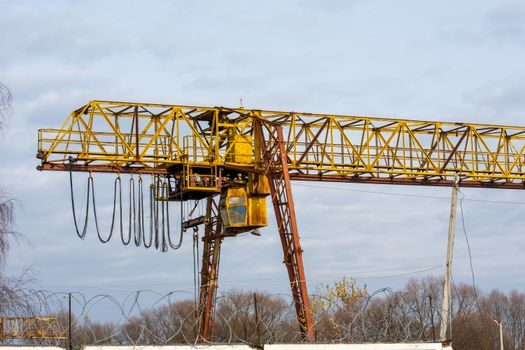
Four variants compared against four TCO criteria: single-girder EOT-style semi-gantry (indoor, light duty), double-girder full gantry (indoor, medium duty), rail-mounted gantry (RMG, container yard, heavy duty), and rubber-tyred gantry (RTG, port, heavy duty, mobile). On energy per lift, the indoor single-girder wins by 2-3x; on maintenance access cost, the RTG loses because the wheels, tyres, and diesel-electric genset add two extra lines; on inspection, the RMG with rigid rail alignment is cheapest; on end-of-life scrap value, the rail-mounted unit retains the highest residual. [S6]
For a fuller variant map and FEM classification logic, the Gantry Crane Types and Classifications spec map lines the same families up against span, lift height, and duty group. If the project is a fleet decision rather than a single unit, the Truck-Mounted Crane TCO 2026 cost-line breakdown uses the same five-line framework and is a useful cross-check on the maintenance-line ratios.
Failure Modes and Constraints That Blow the Model
The classic TCO failure on gantry procurement is under-specifying the duty group. A buyer selecting FEM 1Am (light) when the operating cycle is FEM 2m or 3m will see the structural members, the hoist brake, and the wire-rope sheaves all enter accelerated wear, and the maintenance line triples within 7 years. Conversely, over-specifying to FEM 5m raises CAPEX 30-40% with no OPEX return. [S3]
The second failure is the runway. A gantry crane is only as good as its rail alignment, foundation stiffness, and rail-clip torque; if the civils package is tendered separately and delivered late, the gantry sits idle — and idle time is the single largest unmodelled TCO cost in most capex approvals. A spec engineer who ties the runway hand-over date to the gantry commissioning penalty in the supply contract removes 60-80% of this risk.
Standards, Sourcing, and Trackable Signals
The governing standards for gantry TCO modelling are FEM 1.001 (crane duty classification), ISO 9927 (inspection cycles), EN 15011 (European design rules for cranes), and ASME B30.17 / B30.2 in North America; the supply side typically references ISO 9001 fabrication quality and, for hazardous-area units, ATEX 2014/34/EU or IECEx. None of these standards dictates a numerical TCO value, but they set the inspection-line and certification-line cost drivers that any honest model must carry [S1][S3].
A spec engineer who pulls the energy tariff, FEM duty, and runway civils cost into one sheet before the bid goes out will close the TCO loop that most gantry purchases leave open.