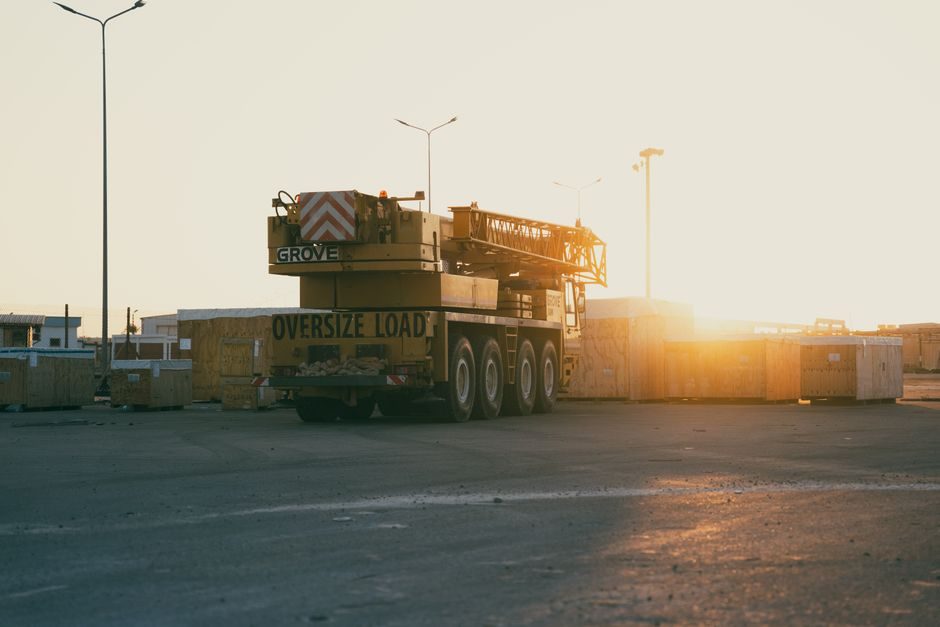
A truck-mounted crane's total cost of ownership over a 10-year life is typically split across five lines: chassis + crane superstructure acquisition, operator wages, diesel or grid-electric energy, preventive maintenance, and insurance/registration [S1].
For a 3-axle 50-tonne-class unit like the Liebherr LTC 1050-3.1E — 50 t max load, 48 m working height, 39 m horizontal reach, 243 kW drive engine, 85 km/h road speed, 7 t superstructure — acquisition usually accounts for 35-45% of 10-year spend, energy 15-20%, operator 20-25%, and maintenance 12-18% [S1]. The published DirectIndustry spec sheet [S1] confirms a dual-mode diesel/electro-hydraulic driveline, with full performance requiring a 125 A site supply and reduced performance on 32 A or 63 A.
Cost Driver 1 — Chassis and Superstructure Acquisition
Chassis choice alone can swing total acquisition by 25-40%. A 3-axle commercial carrier such as the Scania CR20N 10x4 paired with a 20-tonne-rated loader crane is a common Asian-market reference build; diecast scale replicas of that configuration retail around CAD 960 ex-collectible market, illustrating the brand pairing itself [S3]. Real 6x4 and 10x4 chassis with factory crane subframes are also listed across multiple OEMs on the Machinio secondary market, with used Mercedes-Benz, MAN, and Volvo carriers dominating European listings [S4].
The crane superstructure is the bigger lever. A telescopic 50-tonne unit in the Liebherr LTC class carries a 7 t superstructure, electro-hydraulic slewing, and a 48 m hook height [S1]. Lighter 3-tonne to 25-tonne classes (typical Dongfeng commercial offerings) sell at a fraction of that price but cap lift capacity and reach [S5]. For municipal, mining, and landscaping work the 3-25 t bracket is common; for construction sites needing 40 m+ reach, only the 50 t class is realistic [S5][S1].
Cost Driver 2 — Operator Labour and Utilisation
Operator wages are the second-largest line and scale with shift hours, not calendar time. A 10-year ownership at 1,800 hours/year puts a single operator on roughly 18,000 hours of billed time, which at typical EU/NA skilled-operator rates can exceed the acquisition cost of the carrier chassis. The LTC 1050-3.1E's compact 3-axle footprint and electro-hydraulic option allow one operator to drive on road, set up on site, and lift without a second rigger — a labour multiplier that is harder to achieve with a truck-mounted concrete pump or larger crawler unit [S1].
Utilisation is the controlling variable. At 800 hours/year, operator cost per ton lifted is roughly twice the per-hour cost at 1,800 hours/year. Fleet buyers who can guarantee multi-shift work recover acquisition in 5-7 years; single-shift municipal users stretch payback to 10-12 years. This is also why the truck-mounted crane pros and cons map treats utilisation as the primary ROI gate rather than sticker price.
Cost Driver 3 — Energy: Diesel vs Site Electrics
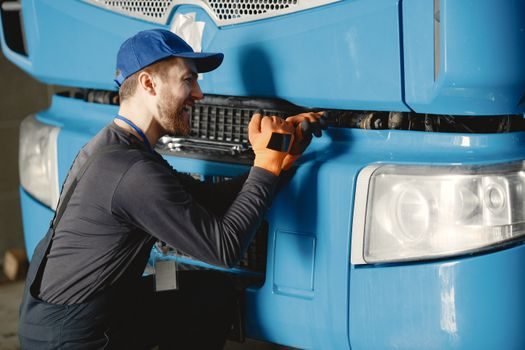
Energy is the line that changed most between 2022 and 2026. The Liebherr LTC 1050-3.1E runs as a diesel-hydraulic unit by default but accepts site AC power at 32 A, 63 A, or 125 A; at 125 A the crane delivers performance comparable to diesel mode, at 32/63 A it downshifts [S1]. On a 125 A three-phase site feed, hydraulic-pump idle and lift energy drop to roughly the site's marginal kWh rate, which in 2026 European pricing is materially below diesel at €0.40-0.60/litre equivalent for an 85 km/h, 243 kW carrier [S1].
For zero-emission urban projects the savings are larger than fuel arithmetic alone suggests, because the unit then avoids after-treatment regeneration cycles, AdBlue consumption, and noise-related night-shift penalties. The same logic does not apply to a dump truck on haul cycles, where diesel remains the only practical option for high-km routes. Comparable electric/hybrid logic is also driving the crawler crane TCO math, though crawler battery packs remain heavier per kWh than truck-mounted crane electro-hydraulic kits.
Cost Driver 4 — Maintenance, Spares, and Service Intervals
Preventive maintenance on a 3-axle 50 t truck-mounted crane typically runs 8-12% of acquisition cost over 10 years, dominated by hydraulic hoses, slewing-ring grease, outrigger pads, and boom-extension wear pads. The 7 t superstructure of the LTC 1050-3.1E is designed for quick switching between diesel-hydraulic and electro-hydraulic power at the touch of a button, which means hydraulic-oil degradation under part-load site-electric operation is gentler than under continuous diesel pumping [S1].
Chassis maintenance is the sleeper line. A Scania CR20N-class 10x4 carrier accumulates brake, tyre, and clutch wear proportional to road mileage, not crane hours. Buyers comparing a 50 t truck-mounted crane against a 50 t reach truck for warehouse logistics should not confuse the two: reach trucks are MHE with strict AIS/FEM duty cycles; truck cranes are mobile construction machines governed by EN 13000 and operator-certification rules. Reading a truck-mounted crane installation guide before spec sign-off usually surfaces the chassis-side maintenance cost that sales quotations omit.
Cost Driver 5 — Insurance, Registration, and Residual Value
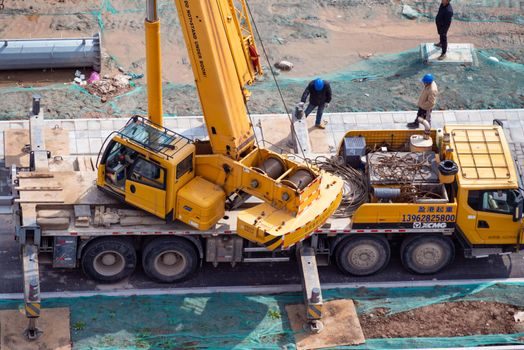
A 3-axle 50 t unit capable of 85 km/h road transit is treated as a commercial heavy vehicle, which raises the insurance bracket above a 25 km/h yard-only carrier of similar lift class [S1].
Residual value is where truck-mounted cranes beat crawlers. After 10 years and 15,000-18,000 working hours, well-maintained 3-axle telescopic units commonly retain 30-40% of original acquisition, especially where the carrier chassis is a high-volume Scania, Mercedes-Benz, or Volvo model. The Machinio secondary market lists used Mercedes-Benz truck-mounted cranes actively, confirming ongoing residual liquidity [S4]. The same TCO framework applied to rebar cutters shows much steeper residual decay, because rebar tooling has shorter duty cycles and less brand-driven secondary demand.
Decision Map — Who Should Buy and Who Should Rent
Truck a 3-axle 50 t electric-capable crane if annual lift hours exceed 1,200, if site power is available, and if road transit between sites is more than 50 km each way. Rent if lift hours are below 400/year, if the work is concentrated on a single zero-emission site, or if the truck scale of loads is below 10 t per lift. The 3-25 t Dongfeng-class units serve municipal and landscaping work at materially lower acquisition cost, but cap working height around 20-25 m and so do not substitute for a 48 m-class unit on high-rise or wind-turbine sites [S5][S1].
Track two signals over the next 12 months: (a) the price delta between 32 A, 63 A, and 125 A site power feeds, which sets the operating envelope for electric-hybrid truck cranes, and (b) the secondary-market spread between 3-axle and 4-axle 50 t units, which indicates whether fleet buyers are up-axling for road-speed stability or holding the 3-axle compact footprint.