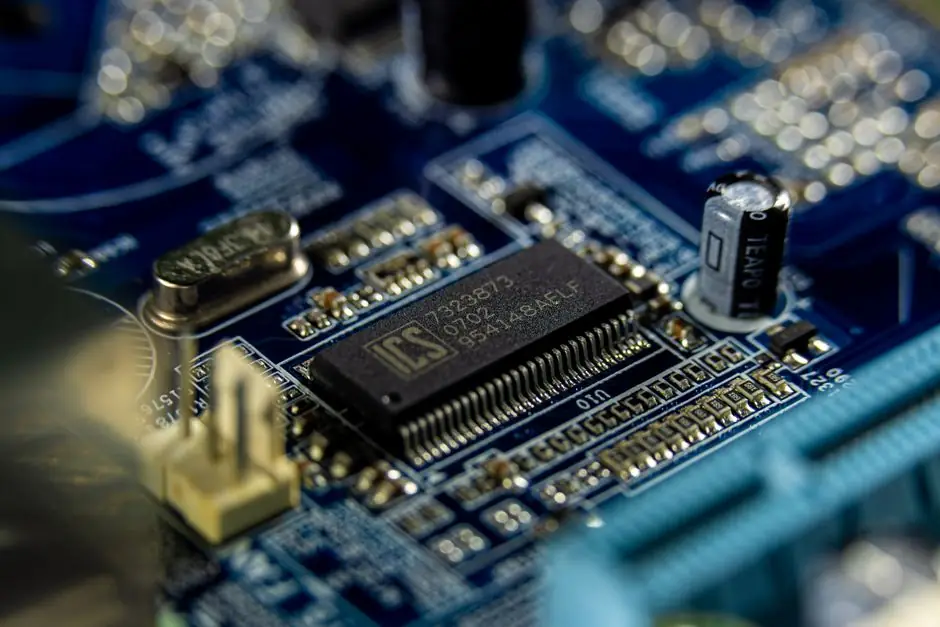
Standard turnkey PCB assembly requires 3–15 business days, while constrained laminates and components can extend the order-to-delivery path to 8–16 weeks [S2][S5].
Industrial electronics projects must separate fabrication time from material procurement, component allocation, engineering approval, testing, and delivery, because the critical path is usually the slowest unresolved stage [S1][S4].
Three lead times define the industrial PCB schedule
PCB fabrication lead time covers production of the bare board, PCB assembly lead time covers mounting, soldering, inspection, and testing, and turnkey lead time coordinates boards, components, assembly, and test under one supplier [S1]. A quote showing 5 or 10 production days does not establish total lead time if material is not on hand or a single component remains unavailable [S4][S5].
PCB lead time varies widely by board type, material, production process, and factory capacity, and total lead time can exceed production time because of engineering review, material availability, testing, and shipping [S4]. These are planning ranges rather than guarantees because board size, quantity, via structure, finish, test coverage, and factory loading can alter the schedule.
Industrial buyers should record four dates in every quotation: approval of manufacturing data, material release, component receipt, and shipment release. Without those gates, a factory production quote cannot be compared with an end-to-end project schedule [S1][S4].
Assembly stages add up to 3–15 business days
A standard turnkey assembly cycle uses five sequential stages: engineering and DFM review takes 1–2 days, bare PCB fabrication takes 2–5 days, component sourcing takes 2–7 or more days, SMT and THT assembly takes 1–3 days, and testing, QA, and packaging takes 1–2 days [S2]. Expedited work can reduce those stages to 4–12 hours for review, 24–48 hours for fabrication and in-stock sourcing, 12–24 hours for assembly, and 4–12 hours for test and packaging.
Volume changes the dominant work.
An industrial control assembly planned for a January commissioning date therefore needs component allocation frozen before the bare board enters fabrication, not after mechanical work is complete.
Advanced materials create the largest schedule exposure

Material procurement adds 3–8 weeks for spot purchases and can add 4–16 weeks for constrained grades, even when the factory quotes only fabrication time [S5]. High-speed M6, M7, and M8 laminates carry an 8–16 week planning range, while specialty M9 material can require 3–6 months; in-stock Rogers RO3003 and RT5880 can remain at 7–10 days because only fabrication is required [S5].
Average laminate lead time increased from 8.6 days in Q4 2025 to 8.9 days in Q1 2026, and from 8 days in February 2025 to 9.1 days in February 2026 [S4]. High-end copper-clad laminate, copper foil, glass fabric, and prepreg remained under strong pressure, while AI-server demand also tightened allocation for selected general-server components, with some reported lead times approaching one year [S4].
The comparison is direct: standard FR-4 is manageable at 3–5 weeks when allocation is secure, high-speed M6–M8 material is substantially harder at 8–16 weeks, and specialty M9 material can reach 3–6 months [S5]. RF laminates such as Rogers RO4350B and RO4003C generally require 5–8 weeks because procurement, rather than board processing, sets the pace [S5].
Components can outweigh board fabrication
A single unavailable part can block a complete printed circuit board assembly even when the bare board and assembly line are ready [S8].
Turnkey PCB lead time coordinates bare boards, component sourcing, assembly, and testing under one supplier [S1]. Consigned assembly offers more purchasing control but transfers kit preparation, customs clearance, part-count accuracy, reel condition, and kitting delays to the buyer. For a constrained microcontroller or power module, confirmed supplier allocation is usually more valuable than a nominally short assembly quote.
Industrial controls also need traceability and inspection. PCB assembly lead time includes mounting and soldering components, followed by inspection and testing [S1].
Industrial projects need different buffers by board class
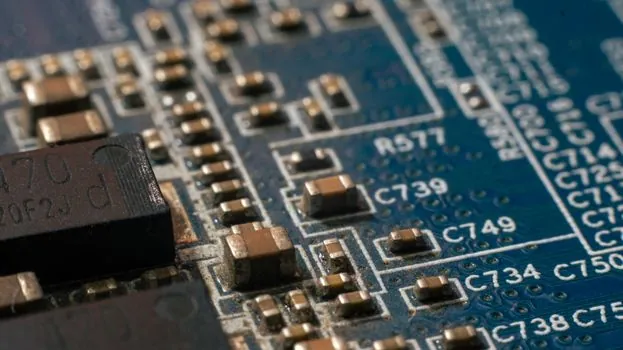
Turnkey PCB assembly suits industrial equipment, IoT products, and other programs where one supplier must coordinate procurement and production, particularly when the buyer cannot allocate scarce parts itself [S2][S7].
Standard multilayer FR-4 supports an economical route at 5–10 business days for fabrication, but material risk can turn a nominally standard order into a multiweek schedule [S1][S4]. High-density interconnect, rigid-flex, high-speed, and specialty-material boards require longer planning windows because sequential lamination, controlled impedance, advanced glass fabric, and qualified processes add schedule steps [S1][S4].
Engineers should compare options against four criteria rather than lead time alone: material availability, component allocation, inspection coverage, and responsiveness to engineering changes. A 3-day assembly quote has little value if the specified laminate requires 8 weeks or a PLC module requires 26 weeks. The practical commitment is a date for each critical input, not merely a factory production duration.
Capacity cannot absorb a schedule shock quickly
New PCB manufacturing capacity takes 18–24 months to move from investment to production output [S3]. This makes a sudden change in industrial demand difficult to absorb through new lines. Advanced-board capacity was described as running more than 20 percent above demand in 2026, while complex-board prices had risen 10–40 percent since April [S3].
North American PCB bookings increased 62 percent year over year in July 2026, and 64 percent of electronics manufacturers reported limited component or material availability or extended lead times [S1]. Those figures point to allocation pressure rather than a universal stoppage: standard FR-4 can remain practical, while advanced laminates and specialized electronics face much longer queues [S4][S5].
For an industrial OEM, the most defensible forecast is a 3–15 business-day assembly window after approved drawings and available materials, plus an explicit component and laminate buffer outside that window [S2]. The exception is a controlled-release specialty laminate or a factory-assigned component, where the 8–16 week or longer procurement range becomes the governing schedule [S5].
Release order and schedule controls

Release industrial electronics in two controlled tranches: freeze the BOM and approved alternate parts before purchasing, then release the PCB only after the manufacturer confirms material grade, copper weight, finish, stackup, controlled-impedance targets, drill tolerances, and test requirements. Incomplete stackups or unspecified impedance targets can add 1–5 days per DFM revision round, while quote approval and purchase-order processing can consume another 1–2 weeks [S5].
The schedule should carry named gates for material allocation, component receipt, first article, inspection, and shipment. For industrial programs, a comparison with Industrial Drive and VFD Lead Times: 2026 Planning Guide can expose whether the PCB assembly is actually the critical path or merely one dependency within a longer drive-system procurement cycle. Track two signals before each build: the supplier's promised component allocation date and the written laminate procurement date, because either one can move delivery by weeks [S2][S5].