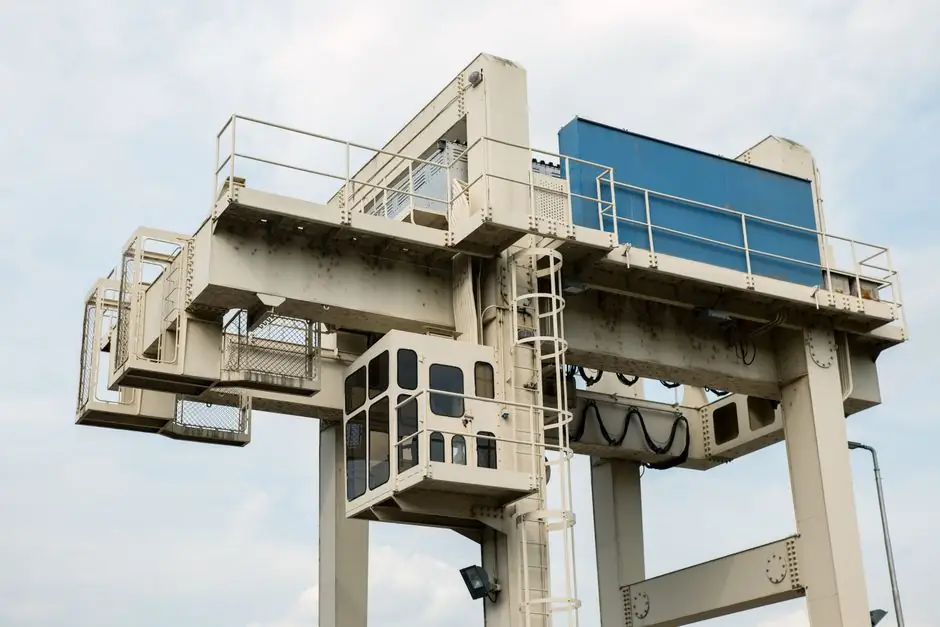
Heavy-duty overhead crane lead times require separate budgets for fabrication, structural work, installation, and commissioning, with standard single-girder equipment typically taking 15 to 30 days after design approval [S6].
Heavy-duty bays should expect longer schedules because heavy loads, heat, abrasive dust, continuous duty, and new runway supports add engineering and site work beyond the crane delivery date [S1][S2].
What Controls a Heavy-Duty Bay Lead Time?
For a single-girder overhead crane within a standard capacity and span range, manufacturing typically requires 15 to 30 days after design approval [S6]. That interval covers equipment production after the technical baseline is accepted, not site survey, structural reinforcement, delivery, installation, or load testing.
Overhead crane installation timelines range from a few days to several weeks depending on crane size and facility readiness [S2]. A bay with existing adequate runway beams may move faster, while an old or undersupported building can add engineering, fabrication, and erection time that the crane supplier does not control.
This quote-building period is separate from manufacturing, and it should not be presented to a project team as the delivery commitment.
The controllable milestones are therefore design approval, mechanical fabrication, electrical equipment delivery, runway readiness, crane erection, alignment, and commissioning. A credible heavy-duty schedule should assign a date and owner to each milestone rather than quote one undifferentiated factory lead time.
Manufacturing, Installation, and Commissioning Are Different
Overhead crane installation has eight coordinated stages: site inspection, engineering approval, delivery and staging, runway-beam installation, bridge and end-truck assembly, hoist and electrical installation, alignment and calibration, and final testing and commissioning [S2].
Overhead crane installation timelines range from a few days to several weeks depending on crane size and facility readiness [S2]. This spread shows why equipment class alone does not determine the site schedule.
Installation covers the mechanical, structural, and electrical work needed to place the bridge, runway, hoist, trolley, and controls in service. Assembly is only the mechanical joining of components, while commissioning includes testing, calibration, and operational certification [S2].
Reading Crane performs functional checks after installation, including travel limits, emergency stops, range of motion, and hoist operation, and can conduct load tests using test weights [S3]. The project schedule must reserve time for these checks instead of treating physical crane erection as operational handover.
Heavy-Duty Configuration Adds Engineering Scope

Heavy-duty overhead cranes are used for high-tonnage loads such as coils and billets, and their design must account for the duty cycle, operating environment, and handling sequence rather than only rated capacity [S7]. For metals plants, available configurations include single-girder, double-girder, top-running, and under-running systems, with capacities up to 75 tons and spans up to 150 ft [S1].
G.W. Becker, Inc. offers fully custom-built or packaged overhead crane systems designed to meet CMAA Class D and E requirements [S1]. The six CMAA overhead crane classifications consider service, speed, maintenance requirements, distance, rated capacity, and service conditions [S5].
Environmental protection adds engineering work. G.W. Becker, Inc. engineers overhead cranes for metals-industry applications involving high temperatures, heavy loads, and around-the-clock operation [S1]. Those options must be priced before design approval because late changes can move both quotation and manufacturing dates.
The overhead bridge crane should therefore be specified around capacity, span, lift height, duty class, load profile, environmental exposure, controls, and below-the-hook requirements. A capacity-only specification leaves the most schedule-sensitive engineering unresolved.
Standard, Packaged, and Custom Crane Comparisons
Standard single-girder cranes offer the shortest defensible manufacturing interval, at 15 to 30 days after design approval for standard capacity and span ranges [S6]. Their lower engineering burden makes them practical for maintenance bays and support operations where the duty cycle is limited.
Packaged pre-engineered systems are positioned for shorter delivery times and lower cost than fully custom-built equipment, but their suitability depends on the load, space, and cycle requirements already present in the application [S1]. They fit routine lifting, not every metallurgical duty profile.
Custom heavy-duty systems provide the highest configuration freedom for continuous operation, heat, dust, high-tonnage loads, and specialized handling, but the quotation process can take 10 to 14 business days or one month before production begins [S5]. The table below compares the three procurement routes against schedule exposure, configuration freedom, and typical use.
Who Needs Each Heavy-Duty Crane Type?
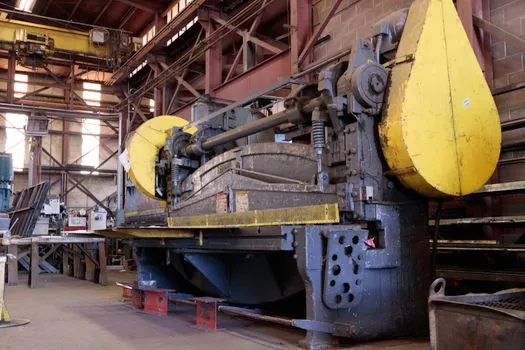
A heavy-duty overhead bridge crane is suitable when a bay must move heavy loads repeatedly across a fixed operating area and can support the runway structure; installation complexity is high because the building or dedicated columns carry both crane dead weight and rated load [S2].
A gantry crane is more appropriate where a fixed overhead runway is impractical or an outdoor operating area is required. Its legs bear on floor rails rather than building columns, reducing building-structure dependence but increasing floor-loading and foundation considerations [S2].
A workstation crane is appropriate for localized, lighter-duty handling. These systems can be installed in 1 to 3 days, while a workstation crane capacity can be rated up to 2 tons [S2][S3]. They are not substitutes for a mill-duty crane handling continuously repeated high-tonnage loads.
Pre-engineered packaged systems suit low- to mid-capacity maintenance and support lifting where fast delivery and standardization outweigh bespoke engineering [S1]. A custom crane is justified where the load cycle, heat exposure, hook tooling, controls, or structural interface falls outside the packaged envelope.
Structural Readiness Can Dominate the Schedule
Bridge-crane installation requires an evaluation of whether the building or dedicated support columns can carry the crane dead weight, rated load, and dynamic forces; runway compatibility must also be checked against planned span and duty class [S2]. This survey is the first control point for preventing a delayed delivery from becoming a delayed installation.
Runway beams, columns, foundations, clearances, power, and control routing should be surveyed before the manufacturing baseline is approved. A crane arriving before the runway is ready creates storage, weather-exposure, and resequencing risk without shortening the total project.
Older facilities face higher installation costs and more complex integration work, which can delay projects even where equipment demand is strong [S4]. That risk is especially relevant to heavy-duty bays because reinforcement, track alignment, and electrical infrastructure often become the governing path after crane fabrication begins.
For a brownfield bay, owners should obtain a structural assessment and construction schedule separately from the crane delivery statement. Treating “shipped” as “installed” would conceal the likely six-week-plus path associated with a large double-girder crane and new structural support [S2].
Standards, Controls, and Acceptance Tests
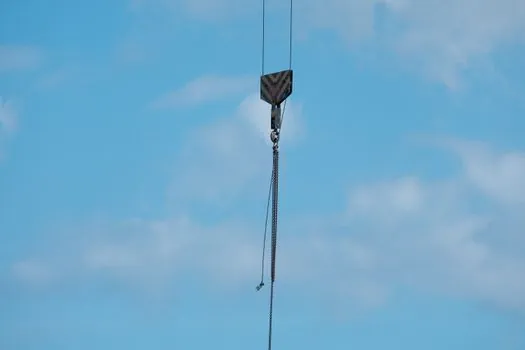
OSHA 29 CFR 1910.179 governs safety and commissioning requirements for overhead crane installations described in the 2026 installation guide [S2]. Commissioning also requires verification of the installed system rather than acceptance based on the supplier’s manufacturing documentation alone.
Post-installation functional testing includes bridge and trolley travel, hoist operation, travel-limit switches, emergency stops, rope spooling, alignment, and load testing [S3]. The project acceptance plan should identify the test loads, test weights, hold times, witnessed tests, and required defect closeout before equipment is released for production.
Controls selection changes the engineering package. Metals-duty systems can use manual, pneumatic, or motorized operation, as well as two-speed or variable-frequency controls, with safety lighting, warning systems, collision avoidance, and zone controls [S1]. Automation and remote monitoring are driving new-equipment investment, but connected controls must be included in the electrical design and functional acceptance scope rather than added after commissioning [S4].
For buyers comparing other long-cycle industrial equipment, industrial robot lead times by payload class provide a useful parallel: payload class and integration scope change the procurement timeline, just as crane capacity, duty class, and site preparation determine an overhead crane schedule.
Planning Signals for 2026 Procurement
The overhead crane market was valued at USD 4.88 billion in 2026, with bridge cranes holding a 37.13% share and cranes up to 10 tons holding a 45.23% share [S4]. The same analysis identifies integration delays in older facilities as a factor that can extend project schedules even when crane demand remains available.
New equipment accounted for 67.13% of 2026 sales by type, while modernization and services were projected to grow at a 7.43% CAGR through 2032 [S4]. For heavy-duty bay operators, this supports a two-stage strategy: reserve manufacturing capacity for a qualified standard machine while separately surveying runway structures and controls for customized work.
Track three signals before releasing a purchase order: written confirmation of the manufacturing start after drawing approval, a structural-readiness certificate for the runway, and a dated commissioning plan covering functional and load tests. If any one remains open, the equipment delivery date is not yet a reliable heavy-duty bay start date.