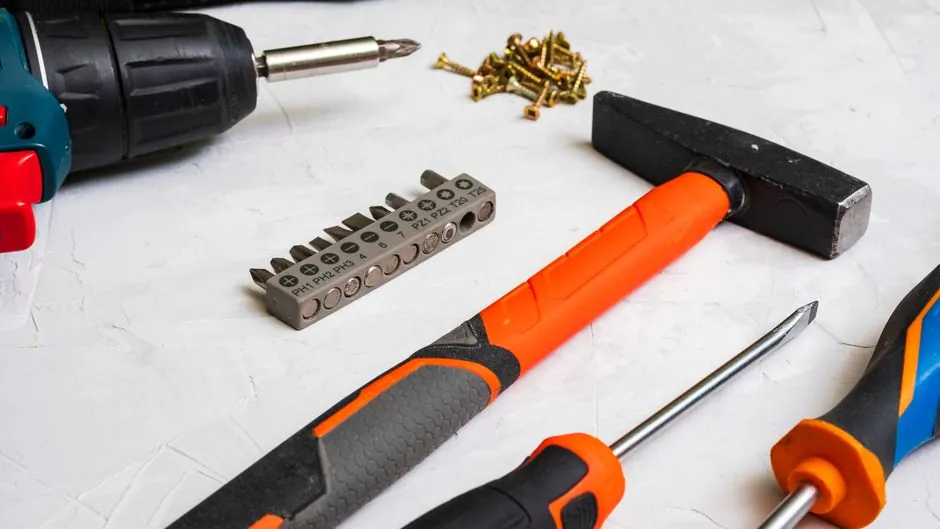
A standard rotary drill fitted with a tungsten-carbide masonry bit will penetrate soft brick and mortar, but on cured concrete above ~25 MPa compressive strength the same setup stalls: the bit wanders, dust packs the flutes, and hole time stretches past 30 seconds for a 6 mm diameter by 30 mm depth [S1][S2].
The hammer function adds a percussive axial blow, typically 20,000-50,000 BPM on a consumer hammer drill, that fractures the substrate ahead of the cutting edge and lets the bit advance in short pulses rather than grinding continuously. That single mechanism change is what separates a tool suited for general fastening from a tool rated for masonry anchor installation, conduit runs, and small-diameter through-holes in structural walls [S1].
Mechanism, Blow Rate, and What Actually Chips the Concrete
A standard drill delivers pure rotation: torque on the bit shank, no axial impact, dust evacuated only by the flute geometry of a masonry bit. Penetration into concrete, brick, or stone relies on the carbide insert being harder than the aggregate; if the bit stops rotating or the operator cannot maintain feed pressure, no cutting happens [S1][S3].
A hammer drill (percussion drill) layers a rapid axial ratcheting or cam action on top of rotation. The bit does not just scrape, it strikes the hole bottom thousands of times per minute while turning, pulverising the binder and freeing aggregate chips. The cutting element is a brazed or pressed tungsten-carbide tip, commonly a 2-cutter or 4-cutter head, with flute geometry tuned to lift dust out before it re-binds the cutting edges [S1][S5].
Where a Standard Drill With a Masonry Bit Is the Right Tool
Soft substrates are the standard drill's natural territory. Clay brick, calcium-silicate brick, and lime-cement mortar all cut cleanly with a quality carbide-tipped bit at slow feed, and the absence of impact gives measurable benefits on the finished hole [S2].
Six concrete advantages show up in side-by-side testing: quieter operation (no percussive clatter), lower hand-arm vibration exposure, ability to drill closer to a free edge without spalling, lower risk of loosening surrounding mortar joints, less risk of blow-out on the back side of a brick when the bit breaks through, and a tighter hole tolerance because the bit does not chip the wall oversized [S2]. For a 2- or 3-anchor trellis mount into a brick chimney, the standard drill is the rational choice, and an impact driver with a 1/4 inch hex-shank masonry bit has also been reported to work in mortar, though it carries a higher risk of splitting clay brick because concrete does not compress like wood fibre [S3].
Where a Hammer Drill Is Non-Negotiable
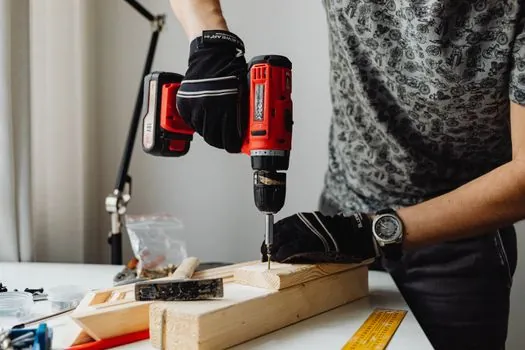
Hard, cured concrete and repetitive production work flip the decision. Operators describe drilling a concrete floor with a standard drill and a masonry bit as similar to watching grass grow, with the bit barely advancing and tip wear accelerating from heat [S3]. On the same job a hammer drill cuts the time per hole by a factor of 3-5, which is why a $25 corded hammer drill is widely treated as the break-even purchase for occasional concrete work [S3].
Performance ceilings also matter. A 6 mm hole in a concrete block will typically take 5-10 seconds in hammer mode versus 30-60 seconds in rotation-only mode with the same bit, and the gap widens with diameter. Above 10 mm in cured concrete, or when the hole depth exceeds three bit diameters, dust evacuation becomes the limiting factor and the percussive pulse is what keeps the flute clear [S2]. For anchors specified at 100 mm embedment or larger, the hammer drill is the default tool.
Rotary Hammer as the Third Tier
Rotary hammers sit above hammer drills in impact energy. A hammer drill typically delivers 1-3 J per blow using a ridged clutch plate, while an SDS-plus rotary hammer delivers 2-5 J and an SDS-max machine 5-20 J, with a piston mechanism that drives the bit rather than rattling it [S4]. The chuck is also different: SDS-plus and SDS-max shanks slide axially in the chuck, so impact energy transfers with minimal loss instead of dissipating through a three-jaw gear chuck that can only transmit torque.
The trade-off is cost, weight, and overkill. For anchor counts in the dozens and hole diameters up to ~14 mm, a hammer drill is the sweet spot. Above that, a rotary hammer is the more efficient choice, especially in production masonry, quarrying, or heavy demolition anchor work [S4]. Related guidance on impact-mechanism selection across drill classes is covered in Percussion Drill vs Rotary Hammer: Impact Mechanism Compared.
Bit Selection and Edge-Clearance Constraints
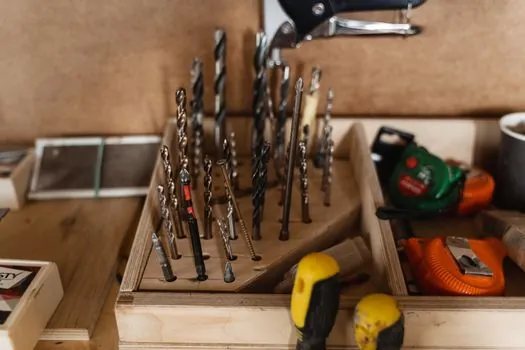
Bit choice matters as much as tool choice. Standard masonry bits with a 1/4 inch hex or round shank and a single brazed carbide tip handle light brick and mortar; SDS-plus bits with a 2- or 4-cutter head are required to survive the percussive load of a hammer drill without shearing at the brazed joint [S1][S5]. A mismatched bit on a hammer chuck is the most common cause of premature tip loss and wandering holes.
For mortar specifically, a standard masonry bit is usually sufficient because the binder is softer than the surrounding brick. For detailed or precision work, a smaller-diameter bit run at low RPM in a drill press or hand drill gives cleaner results than firing a hammer drill at the same spot. Shallow anchor depths under 25 mm rarely need percussion, and the risk-reward favours rotation-only to protect the surrounding substrate [S5]. A structured comparison of substrate response to bit and tool choice for fasteners and anchors also appears in Parallel Thread vs Taper Thread Rebar Coupler Installation, which covers substrate-side failure modes for the same class of fastening.
Decision Matrix: Standard Drill, Hammer Drill, or Rotary Hammer
Three criteria drive the call: substrate hardness, hole diameter and depth, and production volume. Soft brick or mortar, holes under 10 mm diameter, and one-off anchor counts: standard drill with a carbide masonry bit. Cured concrete above ~25 MPa, holes 10-14 mm, or more than ~10 holes per session: hammer drill with SDS-plus bits. Large-diameter through-holes 16 mm and up, deep embedments over 100 mm, or continuous production: SDS-max rotary hammer [S1][S4].
Edge clearance is the hidden override. When the hole centre is closer than one hole diameter to a free edge, the percussive pulse can spall the substrate; a standard drill with a sharp carbide bit is the safer tool even on hard concrete, accepting the longer cycle time to protect the surrounding material [S2]. For chiselling, channel-cutting, or light demolition, a rotary hammer is the only one of the three that accepts chisel-mode shanks, which neither a standard drill nor a hammer drill can drive effectively.
Operating Discipline and Failure Modes
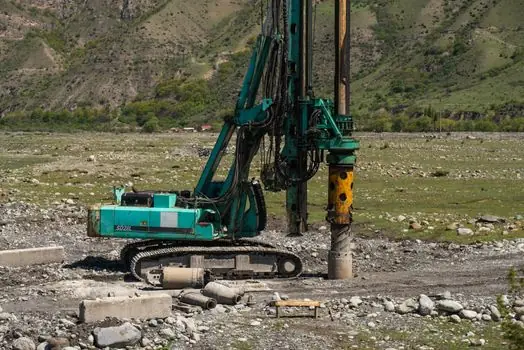
Three failure modes account for most field problems. Bit wander on first contact: solved by starting perpendicular to the wall with a centre-punch dimple or a pilot bit, and by keeping steady feed pressure so the carbide tip does not skate off aggregate [S3]. Dust binding in the flutes: solved by pecking the bit in and out every 5-10 seconds of advance, or by running a vacuum extraction nozzle at the hole mouth. Overheating the carbide: solved by reducing feed force on a hammer drill, since the impact does the cutting and the operator's pressure mostly converts to heat.
Hole straightness also separates the tools. Standard drills wander more on first contact with hard aggregate, and operators tend to compensate by angling the bit, which leaves an oversize or oval hole [S3]. A hammer drill's percussive pulse keeps the bit tracking because each blow re-centres the shank in the previously struck crater. For anchor holes that have to meet a tight diameter tolerance for chemical resin or expansion-shell anchors, this tracking advantage is decisive.
Trackable signals to watch: the migration of compact 18 V brushless hammer drills below the 4 kg mark with 2.5 J+ impact ratings, which keeps pulling light-concrete work back from rotary hammers into hammer drills; and the wider adoption of vacuum-rated dust extraction shrouds on both SDS-plus and SDS-max machines, driven by silica-dust regulations on construction sites.
For the relevant spec sheets and selection criteria, see impact drill, masonry insulation, and rotary drilling rig.