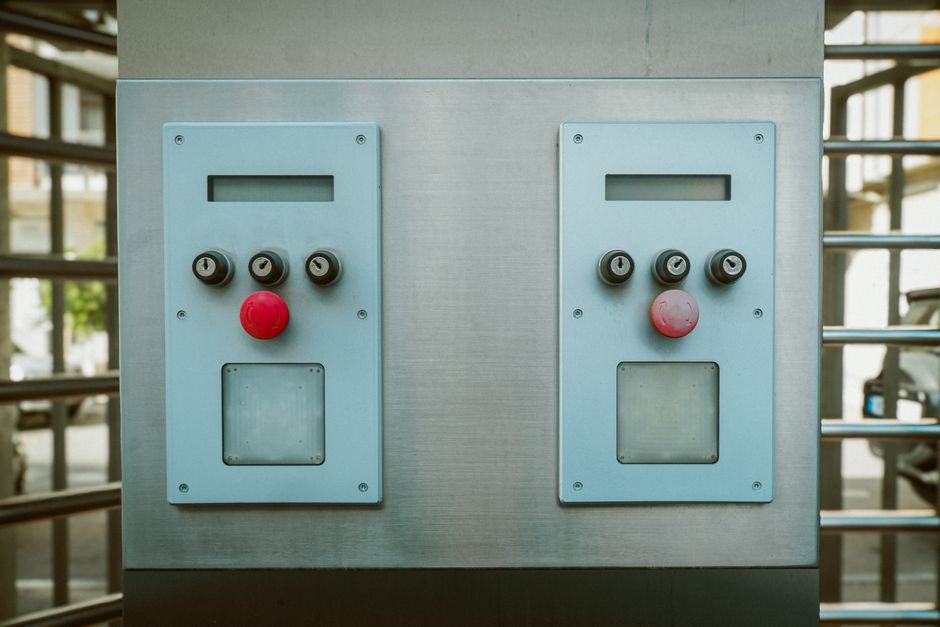
For 2026 procurement, a perimeter alarm is a stack of outdoor detection technologies — active infrared, fibre-optic fence, microwave and laser barriers — feeding a control panel, with detection range 50–500 m, false-alarm rate under 1 alarm/km/day and IP66/IK10 housing as the headline spec levers [S1][S2].
The category covers critical infrastructure, rail corridors, industrial plants and commercial sites; Chinese OEMs such as the XD-B100FL 6-beam laser platform ship a multi-beam transmitter/receiver pair from Qingdao at container-load pricing [S1], while Italian integrators like GPS Standard bundle engineered anti-intrusion systems with full perimeter burglar alarm commissioning [S2].
Sensor Technologies and Typical Operating Bands
Active infrared beam pairs remain the volume choice, with 6-beam outdoor laser units like the XD-B100FL designed for fence-line and gate-post mounting in perimeter-security applications [S1]. Microwave and fibre-optic fence sensors cover the longer perimeter segments where weather-induced beam drift would otherwise drive nuisance alarms.
Selection pivots on the detection range band, the beam count, and the environmental rating. The XD-B100FL-class 6-beam platform from Chinese makers is exported as a complete transmitter/receiver pair, and the same maker also builds laser photoelectric switches for the adjacent industrial-sensor market [S1].
Detection Range, Beam Count and Detection Zones
Perimeter laser units are quoted on three numeric axes: maximum detection range, number of stacked beams, and zone resolution. The 6-beam XD-B100FL outdoor platform from the cited Qingdao maker is the working example for a mid-range 100–300 m fence segment [S1].
For longer perimeters above 500 m, multi-pair stacking or fibre-optic fence cable replaces a single laser tower. The dedicated anti-intrusion system builder GPS Standard frames the offering around full-project coverage with engineered sensor-to-panel integration rather than per-beam pricing [S2].
High-speed rail perimeter intrusion detection is its own sub-discipline, with National Railway Administration safety-technology centre guidance historically treating intrusion alarm systems as a signalling-adjacent safety layer — the same architectural logic carries over to 2026 rail-corridor builds [S3].
Control Panel, Signalling and Stack Integration
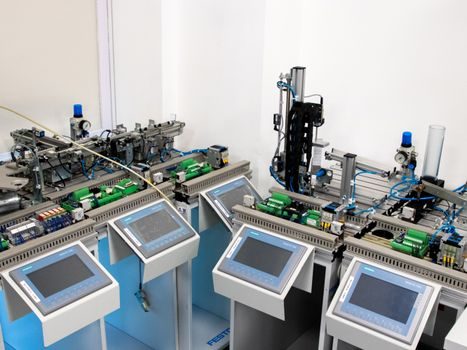
Outdoor detectors terminate at a control panel that handles zone mapping, alarm relay output, and IP/uplink to a VMS or PSIM layer. The panel side of the stack is covered in the dedicated fire alarm control panel reference, but the same zone-and-relay architecture applies to perimeter panels. [S1]
Where the detection chain also drives evacuation logic or area-broadcast, a parallel gas alarm controller layer is added — but for pure intrusion use cases, the perimeter panel sits alone. Long-run fence installations in rail and utility corridors often pair the intrusion stack with linear guide and roller-guide hardware for the camera towers, as catalogued in the crossed roller guide and linear guide references.
Site Selection: Where Perimeter Alarms Pay Back
Perimeter alarms are specified for: substations and utility compounds, rail and metro corridors, logistics yards, data-centre fences, and high-value manufacturing lots. They are NOT the right tool for indoor intrusion, where volumetric PIR or dual-tech covers the same threat at lower cost. [S2]
For a brownfield industrial plant adding perimeter coverage to an existing surveillance camera stack, the Industrial Surveillance Camera Buying Guide 2026 covers the camera-side spec, while perimeter alarm hardware sits one layer out on the fence. Cable routing from the fence to the panel follows the same cable-tray rules catalogued in the Cable Tray Buying Guide 2026.
Comparison of Main Sensor Types on 2026 Buying Criteria

Decision criteria: detection range, false-alarm immunity, install cost per metre, weather hardening. [S3]
Active IR (6-beam laser, e.g. XD-B100FL): range 100–300 m per pair, lowest per-metre cost, vulnerable to fog/heavy snow — best for short commercial fences [S1].
Fibre-optic fence cable: range up to several km per processor, high false-alarm rejection via distributed sensing, mid-cost — best for rail and utility corridors (architecture covered in [S3]).
Microwave barrier: range 50–250 m, weather-robust, higher unit cost — best for gate sally-ports and open-ground perimeters.
Engineered anti-intrusion system (e.g. GPS Standard integrator model): scope-defined, full-project engineered, premium tier — best for critical infrastructure where the integrator takes detection responsibility end-to-end [S2].
Procurement Sourcing Map and Lead-Time Signals
Chinese OEMs ship beam-pair units in FOB-Qingdao terms with T/T payment and multi-beam configurations as a stock catalogue line [S1]. European integrators such as GPS Standard quote on engineered project basis with Made-in-Italy assembly and field commissioning included [S2].
Two signals to track through 2026: first, rail-corridor specification releases feeding back into the National Railway Administration safety-technology centre guidance lineage [S3]; second, integration of perimeter alarm zones into warehouse ASRS-facility control rooms, where the ASRS system reference describes the wider automation stack the perimeter layer now plugs into.