
A broad European PFAS restriction could affect more than 10,000 substances, while six fluoropolymers account for about 93% of fluoropolymer use in Europe [S1].
Supply risk will vary by polymer, formulation and service condition: PTFE, FKM, FFKM and related fluorinated materials remain difficult to replace in chemical, pharmaceutical and high-temperature duties [S1][S2][S3].
What the proposed rules actually change
The European Union is evaluating a broad PFAS restriction under REACH, and the proposal could cover more than 10,000 substances [S1]. This is a regulatory workstream, not a uniform ban already covering every fluoropolymer seal, gasket or hose. ECHA has considered different transition periods depending on whether technically viable substitutes exist [S3].
PTFE, PVDF, ETFE, FEP, PFA and KFM/FFKM form the six-polymer group representing about 93% of European fluoropolymer use [S1]. Their polymeric structure and stability differ from the smaller PFAS molecules most closely associated with environmental concerns, so material scope will matter as much as end use [S1].
In the United States, EPA's PFAS reporting rule under the Toxic Substances Control Act covers specified reporting years for manufacturers and importers, including information on uses, volumes, disposal and exposure. As of April 2026, EPA said the reporting start would move to 60 days after a further rule revision [S3].
Why PTFE and FFKM remain hard to substitute
Fluoropolymers combine chemical resistance, temperature resistance, low friction and surface properties in a way that many conventional materials cannot reproduce. ITRC documentation identifies more than 200 industrial uses for more than 1,400 individual PFAS, including sealing, gasket and corrosion-resistant coating applications [S5].
Pharmaceutical manufacturing illustrates the qualification problem. PTFE-lined pipework and process equipment can sometimes be replaced by high-nickel alloys or glass-lined carbon steel, but flange joints still require PTFE sealing material; an alternative with comparable chemical stability may itself be persistent, making it a possible regulatory substitution rather than a clean solution [S2].
Fluoroelastomers create a different supply concern. FKM and FFKM are elastomers rather than melt-processable fluoropolymers, and their performance is tied to polymer chemistry, fluorine content and compounding. The 2025 U.S. Department of Defense critical-uses report separately identifies FKM, FFKM, FEP, ECTFE, EPTFE and ETFE among the fluorinated material families relevant to supply planning [S4].
Seal and hose material comparison
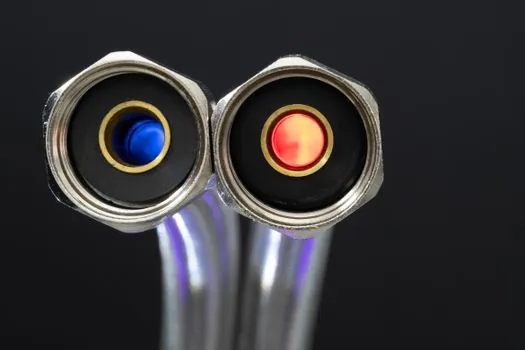
The decision should be made at the component and service-condition level, not by treating every material carrying a fluorinated name as interchangeable. A practical inventory must record operating temperature, pressure, chemical exposure, compression requirements, service life and required certifications for each O-ring, gasket, seal and hose [S3].
PTFE is suited to highly chemical-resistant liners, flange gaskets and nonstick surfaces, but its cold-flow and creep behavior makes reinforcement, thickness and compression design important. FKM offers resistance to fuels, oils and aggressive fluids, while FFKM targets demanding chemical and temperature service. EPDM, silicone, nitrile and urethane can reduce fluorinated content in suitable applications, but each requires testing against the actual media and service envelope [S3].
For a selection comparison, PTFE generally has the broadest chemical compatibility, FKM and FFKM provide elastomeric sealing flexibility, and EPDM or silicone are non-fluorinated candidates where temperature, oil, fuel and chemical limits permit. Compression set, permeation, extrusion, reinforcement, extractables and requalification must be checked before any material swap. A hose change also affects bend radius, pressure, liner compatibility, end-fitting geometry and applicable certification [S3].
Where supply disruption will appear first
The immediate effect is more likely to be administrative than physical. Buyers will need clearer resin, polymer and compound declarations, manufacturer PFAS statements, traceability records, and evidence supporting each part's use. These requirements can add qualification and paperwork even where production volumes of PTFE sheet, gasket stock or molded components remain available [S1][S3].
Longer transition periods are being considered for applications without technically viable alternatives [S3]. That means spare parts and service continuity may remain the immediate concern for existing plants. OEMs with no complete bill of materials may discover fluorinated O-rings, fluorosilicone, FKM or FFKM only after customers request documentation or a PFAS-free specification [S3].
Pharmaceutical users face a separate qualification burden. Changes to equipment used in bioprocessing and sterile manufacturing require evaluation of product-quality risks, including extractables and leachables, so a nominally equivalent seal material can trigger process validation work [S2]. The relevant FKM compound supply after PFAS restrictions risk is therefore as much about formulation evidence and requalification as physical compound availability.
Where replacement is technically realistic
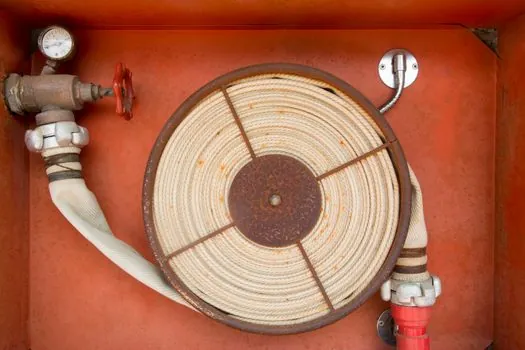
Substitution is most defensible where the service envelope excludes the features that make fluoropolymers valuable: low temperature, modest pressure, non-aggressive media and no fuel or oil exposure. EPDM can be evaluated for suitable water, steam and chemical services, while silicone and nitrile may fit other thermal or fluid requirements, subject to test results [S3].
High-temperature process lines, aggressive chemical service and pharmaceutical single-use systems are less forgiving. ITRC lists fluoropolymer coatings for chemical tanks and pipes, where the function is corrosion and high-temperature resistance, as well as sealing and gasket applications [S5]. In pharmaceutical facilities, fluoropolymer components are used in utilities, piping, process equipment and single-use systems, with some alternatives available but complete functional equivalence difficult to secure [S2].
Engineers should separate two workstreams: regulatory exclusion of a material and functional substitution of a component. The first can affect a product family across multiple markets; the second depends on dimensions, compound, liner, reinforcement, compression and service conditions. Mixing those decisions creates both compliance errors and unnecessary downtime.
How to secure supply without a blanket material ban
Start with a component-level inventory covering gaskets, O-rings, seals, liners and hoses, then record polymer family, compound designation, supplier, plant, machine, service media, maximum temperature, design pressure and criticality [S3]. Request substance declarations that distinguish fluoropolymers from other fluorinated ingredients, because a component labeled generically as PTFE, FKM or FFKM may contain additional additives and processing aids [S6].
For new equipment, prepare a qualified primary material and a documented non-PFAS contingency with different dimensions or a redesigned joint if necessary. For installed assets, retain inventoried spare seals and hoses, link them to equipment records, and review them before planned shutdowns. A specification should also define whether the requirement covers the base polymer, the entire compound, the finished article or only article reporting, because those are different compliance questions [S3].
Track ECHA's REACH restriction, the US EPA reporting rule and customer-specific PFAS clauses as separate signals. A practical near-term signal is the date on which a buyer first requires a polymer-level declaration for an existing part; another is the number of high-temperature or chemical-service components for which no alternative passes qualification [S1][S3].