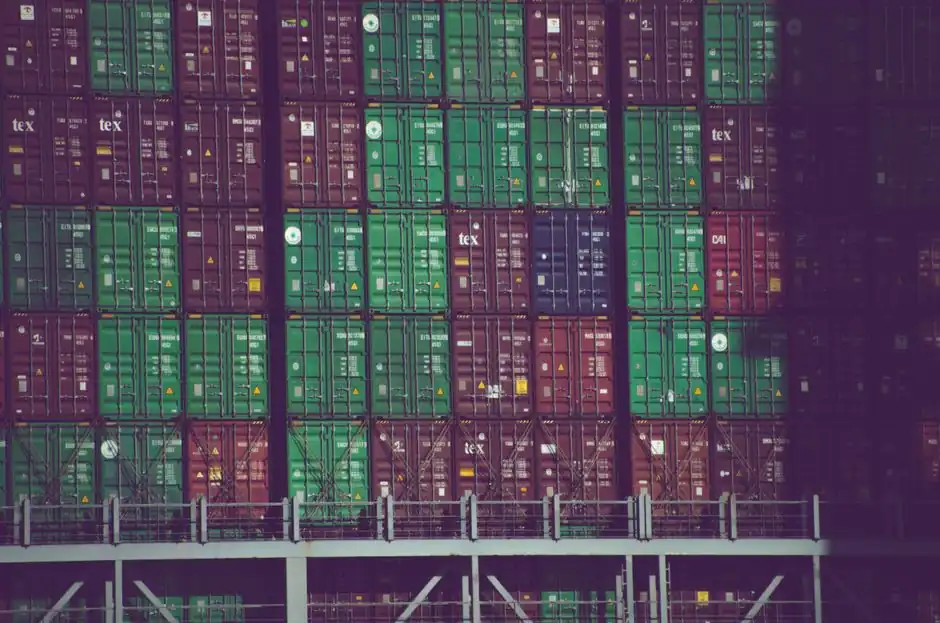
U.S. Customs and Border Protection had reviewed more than 16,700 shipments worth almost $3.7 billion under the Uyghur Forced Labor Prevention Act (UFLPA) as of the August 2025 DHS strategy update, with the UFLPA Entity List now naming 144 entities tied to forced-labor sourcing in the Xinjiang Uyghur Autonomous Region (XUAR) and other Chinese provinces [S1].
Importers of solar-grade polysilicon, aluminum-intensive components, and downstream goods now operate under a rebuttable presumption that any product mined, produced, or manufactured wholly or in part in the XUAR, or by an entity on the UFLPA Entity List, is denied entry unless the importer meets a "clear and convincing" evidence standard with full supply-chain documentation [S2][S3].
What the UFLPA Presumption Actually Demands
The UFLPA, signed December 23, 2021 and enforced from June 21, 2022, creates a rebuttable presumption covering goods produced wholly or in part in the XUAR, superseding prior CBP Withhold Release Orders (WROs) for imports arriving on or after that date [S2]. To overcome the presumption, an importer must demonstrate that it complied with UFLPA due-diligence guidance, fully responded to CBP inquiries, and that the product was not produced with forced labor in whole or in part [S2].
The statute operates alongside Section 307 of the Tariff Act of 1930, which already prohibits importation of merchandise mined, produced, or manufactured by forced or indentured labor, and complements the International Labour Organization's 1998 Declaration on Fundamental Principles and Rights at Work [S5][S7]. A Forced Labor Enforcement Task Force (FLETF), chaired by DHS, coordinates the strategy; CBP issued further sector guidance on June 13, 2022 naming polysilicon among the highest-risk exposure categories [S1][S3].
Polysilicon: Where the XUAR Sits in Global Supply
China produces roughly 80% of the world's silicon, with Xinjiang alone accounting for approximately 45% of the global total, a concentration that makes solar-grade polysilicon a textbook UFLPA exposure [S2]. The U.S. Department of Labor's Bureau of International Labor Affairs added polysilicon from China to its List of Goods Produced by Child Labor or Forced Labor on June 14, 2021, two years before the UFLPA enforcement date [S2].
Polysilicon continues to be listed as a high-priority sector in CBP's 2024 CSMS guidance (CSMS #61339299), which explicitly names "silica-based products including polysilicon" alongside apparel, cotton and cotton products, and tomatoes as priority enforcement categories [S8]. A November 2025 Responsible Sourcing Tool commodity report, drawing on the 2025 U.S. State Department Trafficking in Persons Report and the 2024 DOL List, confirms that all four major polysilicon manufacturers operating in Xinjiang participate in state-sponsored labor transfer programs that draw on rural Uyghur and other minority workers, often relocated far from their home communities [S4].
As of August 2022, UFLPA enforcement had already led CBP to detain more than 3 GW of solar modules, and CBP officials had received no formal admissibility-review petitions (the path to rebut the presumption) by September 2022, indicating that the documentation bar is high enough that most importers initially opt only for applicability reviews [S3].
Aluminum and Other XUAR-Linked Supply Chains
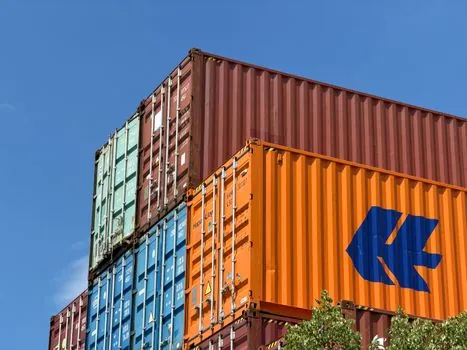
Aluminum inputs sit within the same UFLPA risk envelope as polysilicon because the rebuttable presumption applies to all goods mined, produced, or manufactured wholly or in part in the XUAR, not just to named commodities [S2][S6]. USITC analysis highlights that tracking XUAR inputs is technically difficult once finished goods are produced in third countries, particularly when upstream raw materials are commingled with non-Xinjiang feedstock in the same furnace, ingot, or coil [S2].
For aluminum specifically, the practical compliance burden is heaviest for extrusions, sheet, and EV battery enclosures where the value chain passes through smelters, refiners, and rolling mills that may draw alumina or primary metal from XUAR-linked entities. Importers must map and document each node to a non-listed, verifiable source to meet the clear-and-convincing standard [S2][S6]. Tracking Xinjiang cotton, polysilicon, and motor-vehicle parts was already being done under prior WROs, so for those three named inputs the UFLPA adds "only a very small additional burden" beyond the pre-existing WRO paperwork layer [S2].
How the UFLPA Entity List Changes Sourcing Math
The UFLPA Entity List functions as a hard exclusion roster: any goods produced by a listed entity are presumed to be made with forced labor, regardless of where the final product is assembled, so the list effectively defines the high-risk universe that procurement and compliance teams must screen against [S1]. The August 2025 update notes that the 144 listed entities span apparel, automotive parts, chemicals, electronics, flooring, and solar panels, multiple sectors where a single listed upstream node can cascade into thousands of downstream SKUs [S1].
Rebutting the presumption requires substantive documentation tying every component to a forced-labor-free source, typically supplier affidavits, bills of lading, production records, and invoices that survive CBP audit, and CBP has signaled the agency will not relax the evidentiary standard even as detention volumes grow [S1][S3]. For aluminum and polysilicon buyers, the operational result is a tiered vendor risk model: full traceability plus periodic third-party audit for any feedstock or intermediate that could plausibly have been touched by an XUAR producer, with XUAR-origin material treated as de facto excluded unless the seller can produce XUAR-free evidence at the lot level [S3][S6].
Comparison: UFLPA-Exposed Materials vs Standard Compliance Burden
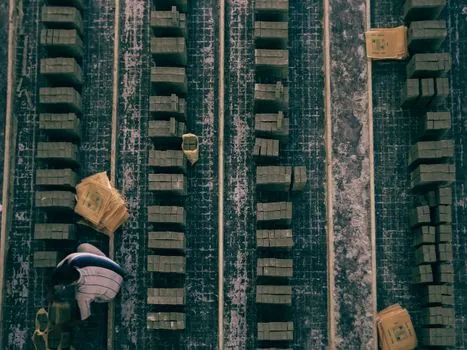
Four decision criteria determine how heavy the UFLPA burden is on a given material: (1) XUAR share of global supply, (2) ease of traceability through the value chain, (3) whether a CBP WRO was already in force pre-June 2022, and (4) the size of the FLETF entity list overlap. Primary aluminum and aluminum extrusions score moderately on (1) given significant XUAR capacity, worst on (2) at the smelter/refiner node where alumina and ingot are commingled, and (3) was already partially addressed by region-specific WROs [S2]. Cotton, automotive parts, and silica-based products including polysilicon appear on the July 2024 CBP CSMS priority list, signaling ongoing enforcement intensity across all three [S8].
What Importers Must Verify for Specs and Supply
Specifying engineers and procurement teams need four pieces of evidence before signing off on a polysilicon or aluminum PO: a mill or smelter-level origin statement naming the producing entity, cross-referenced against the UFLPA Entity List; production records (batch/lot, reactor or furnace ID, date) traceable to a non-listed facility; bills of lading and commercial invoices showing no commingling with XUAR-origin material; and a documented supplier audit program, often third-party, that is re-run at a defined cadence [S2][S3][S6].
For solar projects tied to U.S. federal incentives, polysilicon provenance ties directly into the parallel Department of Commerce circumvention investigation, where 51 GW of solar capacity and roughly $52 billion of utility-scale investment were already at risk in 2022, so UFLPA non-compliance is now a project-finance as well as a customs issue [S3]. Engineers should treat the UFLPA Entity List as a living document, expect periodic additions, and require suppliers to re-attest origin with each shipment rather than rely on a one-time qualification [S1][S6].
Trackable signals to watch through 2026: any expansion of the UFLPA Entity List beyond the 144 entities reported as of August 2025 [S1], further CBP CSMS messages adding or refining priority commodities [S8], and any movement on the proposed EU regulation that would prohibit forced-labor products from the EU market, which would compound U.S. enforcement with parallel European documentation requirements [S5].