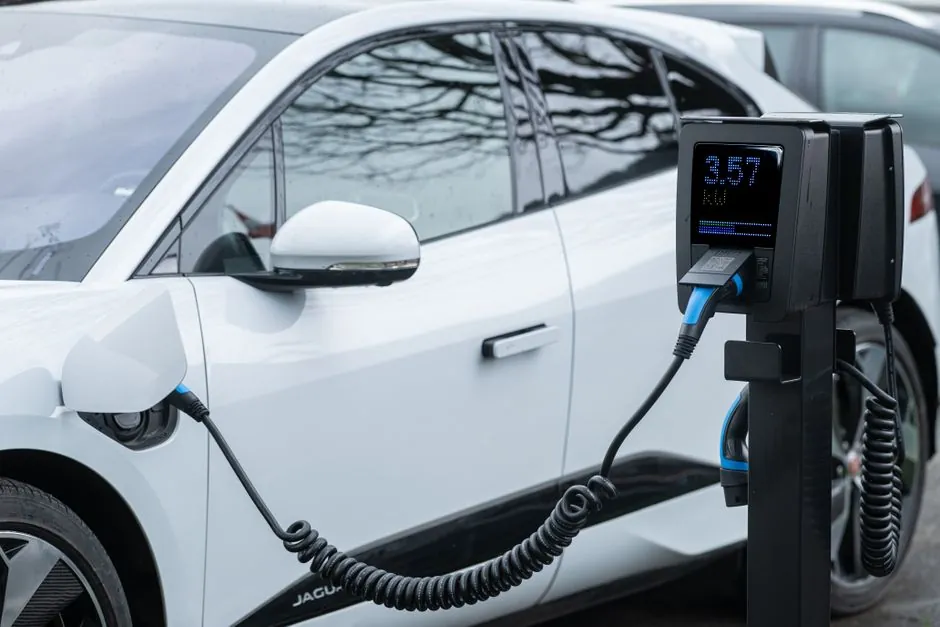
Plug-in hybrid electric vehicles use smaller batteries than battery electric vehicles, so they reduce cell material demand per vehicle while adding demand for engine, fuel-system and hybrid-drive components.
The trade-off depends on electric range, charging access, annual mileage and how often the vehicle reverts to liquid fuel, with one study finding hybrids delivered 14 times the emissions-reduction benefit per kilowatt-hour of installed battery capacity.
Battery demand per vehicle and fleet mix
A PHEV battery must provide enough energy for a meaningful share of travel between recharges, but it does not need to cover the vehicle's full driving range because an internal-combustion engine remains available [S1]. The result is a smaller pack than a comparable BEV, and therefore lower demand for lithium-ion cell materials per vehicle [S3].
That does not make a PHEV battery interchangeable with a BEV battery. A PHEV also requires traction-motor power electronics, an engine, a fuel tank, exhaust components and controls for two propulsion paths [S3]. In commercial terms, PHEV demand removes battery capacity from the vehicle while adding non-battery content, including engine and fuel-system components.
Fleet mix determines the net effect. If a PHEV replaces a BEV, the same number of vehicles requires less battery material and more conventional powertrain hardware. If a PHEV replaces a combustion-only vehicle, it creates new demand for traction batteries, cells and charging interfaces. Approximately two BEVs were sold for every PHEV globally in the cited market analysis, so the fleet effect depends on the production denominator rather than vehicle type alone [S4].
Electric range and usable battery capacity
Average plug-in hybrid electric range in Europe and the United States was approximately 45–60 km per charge in the cited 2024 market review, while China's average exceeded 80 km and was approaching 100 km [S4]. Range-extender models were described as exceeding 100 km, which allows more daily driving to occur in electric mode [S4].
US examples demonstrate the scale of variation. The 2025 Toyota RAV4 PHEV was listed with an estimated 42-mile electric range, while a broadly described PHEV category in the same review typically offered about 20–40 miles of electric range [S4][S5]. These ranges are not battery capacities: usable energy depends on pack size, state-of-charge limits, temperature, auxiliaries and driving conditions.
For material planners, electric range is the critical design variable. Increasing it raises cell demand per PHEV, while reducing it lowers material consumption but increases the likelihood of gasoline operation. A pack designed only for short commutes minimizes battery material but also limits the emissions benefit of grid charging.
Material intensity, cost and useful range
Battery material demand is not proportional to vehicle sales when comparing PHEVs with BEVs. A BEV may use a battery twice the capacity needed for normal daily driving while carrying an engine and fuel tank that add materials and weight without electric propulsion [S2].
One analysis of 153 vehicles compared 59 conventional full hybrids, 7 mild hybrids and 57 PHEVs with a theoretical BEV carrying a 60 kWh battery [S2]. A mild hybrid with a 400 Wh pack saved almost 30 g/km of CO2, equivalent to about 74 g/km per kilowatt-hour of installed capacity [S2]. Full hybrids averaged 1.3 kWh and achieved about 51 g of CO2 reduction per kilometer for each kilowatt-hour installed [S2].
That efficiency comparison does not make a mild hybrid a direct substitute for a PHEV. Conventional hybrids cannot be connected to an external charging source, and all propulsion energy ultimately comes from liquid fuel [S5]. PHEVs add external charging and larger packs, while range-extended electric vehicles use an engine only as a generator rather than for mechanical wheel drive [S3][S5].
Accordingly, PHEVs sit between the two extremes in battery-material demand: above conventional hybrids because they require a larger rechargeable pack, and below BEVs because they retain a combustion engine and need less battery capacity for equivalent market positioning.
Charging behavior changes the material payoff
GPS data from 432 Swedish vehicles showed that charging opportunities, distance between recharges and annual mileage materially change the economic value of a PHEV [S1]. Regular trips with adequate parking time for charging increased the portion of travel that could be powered by electricity [S1].
Workplace charging was especially important to the economics. For the average commuter, access to workplace charging was comparable in initial economic value to halving marginal battery cost [S1]. This means battery-cost optimization cannot be separated from charging availability when estimating how much PHEV capacity will actually be used.
External charging also enables PHEVs to use electricity from centralized renewable generation, while grid-generated electricity shifts emissions away from the tailpipe to the power plant [S3]. The environmental value of the smaller battery therefore depends on both kilowatt-hours charged and the electricity source, not on the nominal size of the pack alone.
Operating performance and the gasoline fallback
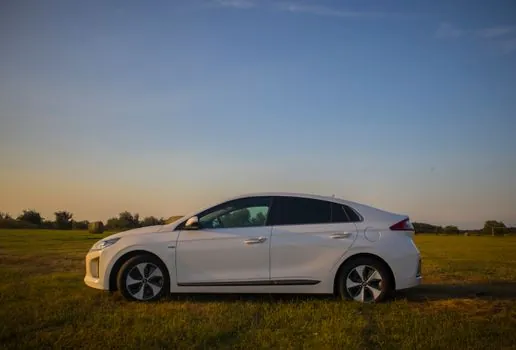
PHEVs can show high efficiency in regulatory testing, but real-world emissions depend on charging frequency, electric range, long-trip frequency and whether the engine can assist mechanically during high-load driving [S5]. All US PHEVs offered at the start of 2026 were described as parallel or power-split hybrids, meaning the engine could drive the wheels alongside the motor [S5].
That architecture can increase real-world fuel use when drivers fail to charge or regularly exceed the electric range. One 2026 analysis cited PHEVs using 42–67% more fuel than their EPA labels suggested [S5]. The figure identifies a utilization risk, not a universal model specification, but it shows why pack sizing cannot be evaluated from electric range alone.
Extended-range electric vehicles reduce that mechanical-linkage problem because the motor drives the wheels and the engine operates as a generator when charge is low [S5]. They remain PHEVs in the broader classification because they combine external charging with an internal-combustion generating system [S3].
Decision criteria for comparing PHEV and BEV demand
PHEVs are the better fit for drivers with regular short trips, dependable charging access, a need for cross-region travel and limited confidence in public charging infrastructure [S3][S7]. BEVs are better suited to users who can charge consistently and want no liquid-fuel system, while conventional hybrids are the lower-battery option when external charging is unavailable [S5].
On battery capacity, a PHEV sits below a BEV because its engine provides range beyond the charge [S1][S3]. On charging dependence, a PHEV remains more resilient than a BEV when a charger is unavailable [S3]. On material complexity, the PHEV adds engine, tank, exhaust and hybrid-control hardware to the battery and electric-drive system [S3]. On emissions performance, the PHEV can match a BEV when electric driving dominates, but the 42–67% excess-fuel finding shows substantial downside when charging behavior is poor [S5].
For a battery-material supplier, the strongest demand signal is not the PHEV sales number alone. It is the combination of vehicles sold, average electric range, annual mileage, charging frequency and the shift from parallel hybrids toward range-extended designs. A rise in PHEV production with shorter electric range can lower cell demand per vehicle even while the PHEV fleet grows.
The defensible procurement conclusion is narrower than “PHEVs save battery materials.” They reduce battery capacity per vehicle relative to a BEV, but their total material effect depends on displacement against BEVs or combustion vehicles, while hybrid drivetrain, charging and fuel-system demand moves elsewhere. Battery suppliers should therefore model pack kWh per vehicle alongside blended fleet sales, and should treat charging access as a determinant of both utilization and economic viability [S1].