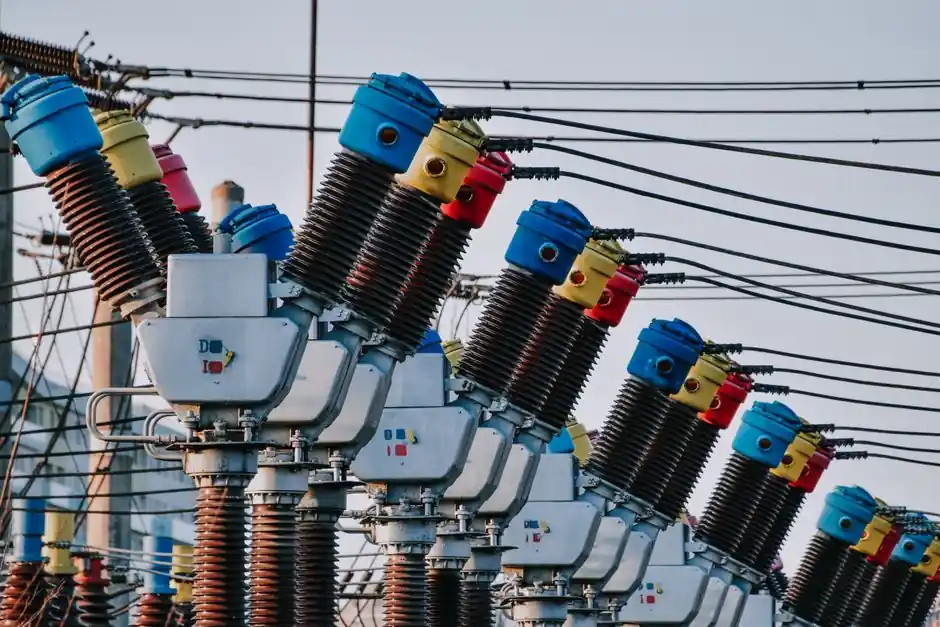
Phase-to-phase differential (ΔT) alarming catches a single loose busbar lug or eroded breaker contact before a fixed absolute threshold can, because the three phases of a healthy feeder track each other inside a roughly 5–10 °C band under unbalanced but proportional load [S1].
The practical case for ΔT-based alarming is that absolute temperature depends on load current (I²R), ambient, and enclosure ventilation, so a fixed 90 °C ceiling on a lightly loaded feeder masks a real contact problem on a heavily loaded one. FM Global's DS 5-19 (October 2024 interim revision) requires continuous thermal monitoring on covered switchgear and lists phase-comparison trending as an accepted analytical method, alongside absolute temperature limits [S3].
Why absolute-only thresholds miss real failures
A fixed absolute alarm set at, say, 90 °C on a 630 A breaker termination ignores the physics: that termination might run at 55 °C at 30% load and at 95 °C at full load, and a bad connection on phase B sitting at 78 °C will not trip the alarm until the load picks up. The Iderus et al. (2023) temperature-rise test study in The Journal of Engineering shows individual switchgear components carry their own permissible ΔT above ambient, and per-phase deviation is flagged as the leading indicator, not absolute hot-spot temperature [S4].
NFPA 70B (2023 edition) reinforced this by moving infrared thermography from a recommended practice to a standard, with severity classification keyed to the temperature delta between the suspect component and a reference phase under similar load, not to a single absolute number. ANSI/NETA MTS likewise grades thermographic findings by delta-to-similar-component, which is phase-comparison logic applied to handheld surveys.
How phase-comparison rules are typically set
Vendors and standards bodies converge on a tiered structure: a warning ΔT of 10–15 °C between the hottest phase and the average of the other two, an alarm ΔT of 15–25 °C, and an absolute over-temperature trip (often 90 °C, 105 °C, or 130 °C depending on insulation class) as the backstop that catches three-phase symmetric overloads no ΔT rule will see [S1][S2].
Grace Technologies' GraceSense Hot Spot Monitor, for example, uses a non-conductive polymer optical fiber with 9 to 18 ring-lug termination points per assembly, and alarms are configured as both high-temperature and low-temperature thresholds per point, so the same hardware can run ΔT or absolute rules depending on how the SCADA is mapped [S5]. The FM DS 5-19 data sheet treats both continuous thermal monitoring and periodic infrared thermography as acceptable condition-monitoring methods, with no mandate that one supersede the other [S3].
Selection criteria: ΔT, absolute, or both
For a three-phase, similarly-loaded feeder (most MCC and switchgear bus applications), ΔT alarming with an absolute backstop is the stronger spec: the false-alarm rate under varying load is lower, and a single loose bolted joint on one phase shows up as a 20 °C lift against the other two before the absolute ceiling is reached. Single-phase loads, ungrounded systems, and feeders with intentional phase imbalance (large single-phase rectifiers, welders) break the assumption, and an absolute ceiling is the only honest alarm rule. [S1]
For new builds the typical specification is: (1) ΔT warning at 10 K above the running mean of the three phases, (2) ΔT alarm at 15 K, (3) absolute high-temperature alarm per insulation class, (4) absolute low-temperature alarm to catch open-circuited sensor leads. This layered rule set is the de facto practice in continuous monitoring guides reviewed in mid-2026 [S1][S2].
Use cases where ΔT wins, and where it loses
ΔT rules win on: symmetrically loaded three-phase feeders, busbar joints inside one panel where all three phases see the same ambient, and any retrofit where you cannot easily set absolute thresholds because load profile is unknown. ΔT rules lose on: feeders serving large single-phase loads, the line side of a three-phase rectifier where DC ripple heats one phase disproportionately, and any application where the protected point is a single sensor (one breaker contact, one cable termination) with no phase peers on the same conductor run. [S2]
In those last cases the only workable comparison is to a like component under like load, which is what the Iderus et al. temperature-rise test method does manually: it references the suspect joint against an identical joint on a sister phase or a duplicate component. NFPA 70B (2023) and ANSI/NETA MTS both grade findings by delta to similar component under similar load, which is the survey-time equivalent of a continuous ΔT rule [S1].
Comparison: monitoring methods and alarm philosophies
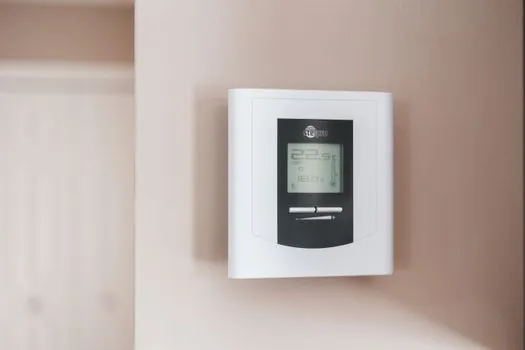
Four monitoring approaches are common in 2026: periodic handheld IR thermography, fixed IR cameras, battery-powered wireless contact sensors, and fiber-optic (GaAs or polymer) distributed sensors. Each maps differently to ΔT vs absolute alarming. Handheld IR and fixed cameras see surface temperature and are strong for absolute readings if emissivity is controlled; wireless contact sensors and fiber tips see local hot-spot temperature directly and are the easiest to wire into a ΔT rule because all three phases are read by matched sensors on the same bus run [S1][S2].
ESFI 2023–2024 data logged 5,180 nonfatal electrical injuries, a 59% rise from 2021–2022, with utilities carrying the highest electrical fatality rate of any sector; NFPA recorded 142 occupational electrical fatalities and 5 electric-arc deaths in a single year. The practical point is that loose, oxidized, or worn connections drive most of those events, and ΔT rules catch them earlier in the failure curve than fixed ceilings [S1].
Limits, failure modes, and what to verify in the spec
Three failure modes bite when ΔT-only rules are used without a backstop: symmetric three-phase overload (all phases rise together, ΔT stays flat, but the absolute ceiling is still dangerous), sensor drift on one phase (a drifting sensor reads 15 K low, masking a real ΔT problem on the phase it shadows), and a phase-loss event (one phase goes to ambient, the other two sit at normal loaded temperature, and the ΔT rule fires a false alarm). The robust spec mandates both an absolute high-temperature alarm and a per-sensor plausibility check, with the temperature monitor configured to flag a sensor that drops more than 20 K below its peers as suspect rather than as a fault. [S5]
FM Global DS 5-19 requires that the switchgear environment be clean, cool, dry, and tight, with no abnormal heat, and that thermal monitoring be paired with condition assessment; the standard explicitly accepts both periodic IR and continuous thermal monitoring, with the choice driven by the Equipment Condition Assessment under NFPA 70B Table 9.2.2. Sensors and limit switch-style trip contacts share the same cabinet, but the thermal channels are independent and should be specified on a separate monitoring rail to keep the alarm chain auditable [S3].
Sourcing, standards, and the verifiable signals to track
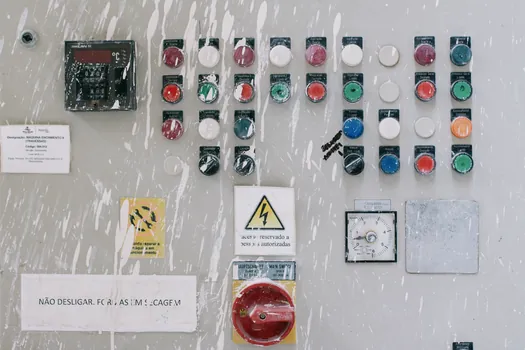
The standards stack is consistent: NFPA 70B (2023) sets the inspection interval and severity classification by ΔT, ANSI/NETA MTS grades thermographic findings by delta-to-similar-component, IEC 62271 governs MV/HV switchgear design and is cross-referenced in condition-monitoring literature, and FM DS 5-19 (October 2024 interim revision) lists continuous thermal monitoring as an approved loss-prevention method for covered switchgear [S1][S3].
Trackable signals: whether a new spec calls for ΔT warning at 10 K and alarm at 15 K with an absolute backstop, whether the same hardware supports both rules, and how the SCADA maps per-phase sensors into a phase-comparison block. See also: Fixed IR vs Contact Wireless Sensors in Switchgear for the sensor-side trade-off, and FM DS 5-19 §3.2.2 for the continuous thermal monitoring language to copy into a project spec.