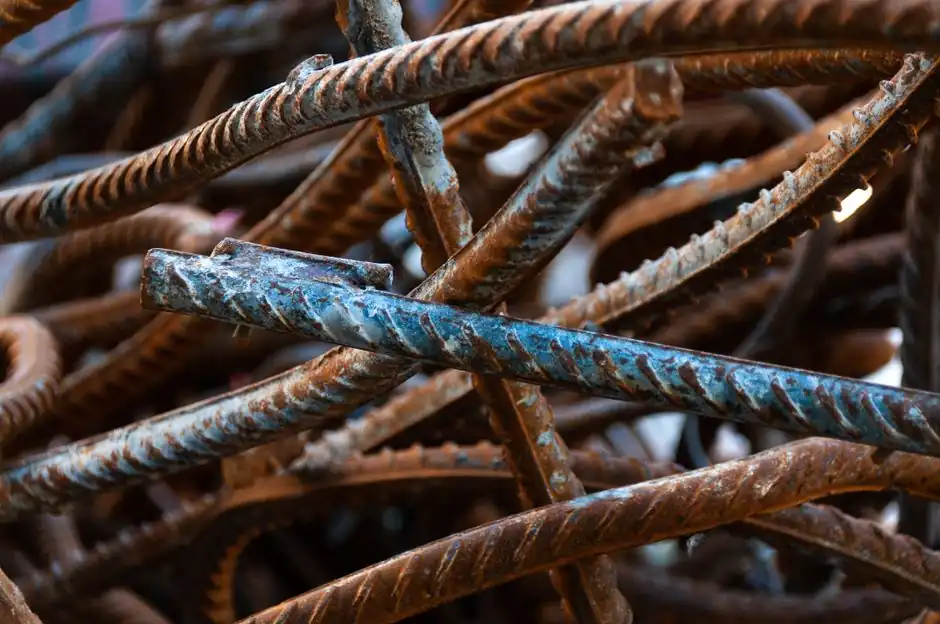
Landscape contractors cut rebar for edge restraints, tree-anchor cages, pergola and trellis posts, gabion cages, and small retaining-footing cages, and the cutter decision tracks two numbers more than anything else: typical bar diameter and cuts per shift. The 16-32 mm bar band is projected at 43.0% of 2026 rebar cutting machine demand by diameter, while electric machines lead power source at 48.0% and bench cutters hold 28.0% by machine type [S4]. That mix fits a landscape workflow where bars are walked to the pour, not fed at a fixed station.
Battery and SDS-Plus portable platforms dominate the 6-16 mm end of that band, while a hydraulic or 220 V bench unit covers the upper 16-32 mm range when a small workshop is on the site. A field reference for the full machine-type and power-source breakdown lives in the rebar cutter encyclopedia entry, which lines up the same 2026 segmentation against tool format.
Landscape Use Cases vs Fabrication-Yard Use Cases
Landscape work differs from rebar-fabrication-yard work in three measurable ways: average cut quantity per shift is lower, the work moves around the site, and cuts are made close to finished surfaces (pavers, timber edges, drip-line zones). The Milwaukee M18 rebar cutter delivers a cold cut through #9 bar in roughly 2 seconds with up to 240 cuts per charge, which is the kind of cycle figure that lets a small crew finish a 60-cage retaining-footing pour without generator power [S5]. For a fab yard, the work point is a stationary bench, so the same source positions bench cutters at 28.0% of 2026 demand because the fixed workstation delivers repeatable length and cycle timing [S4].
If your site cuts more than 200 m of rebar per shift at a single feed point, the bench or hydraulic line is the lower cost-per-cut. Below that, a battery or SDS-Plus portable platform typically wins on labour, even with the higher unit price. Similar logic applies to HVAC and masonry sites, where the spec gates mirror the landscape decision more than the fab-yard decision; a side-by-side of those trade-offs sits in Pick a Rebar Cutter for HVAC Installation: Capacity, Power, and Service Gates and Rebar Cutter Selection for Masonry Sites: 2026 Spec Gates.
Capacity, Bar Diameter, and Cut-Cycle Sizing
For landscape work, three capacity tiers cover almost every project: a 6-16 mm portable tier, a 6-25 mm mid-tier, and a 10-32 mm+ bench or hydraulic tier. CNB Machinery and Steel Corporation's TAEYEON B&C electric cutter/bender line spans 10 mm up to 42 mm rebar, which sets the upper bound of what a single-phase electric bench platform routinely delivers in the field [S1]. On the portable end, the DIABLO 1/2 in. x 12 in. SDS-Plus rebar bit cuts embedded rebar up to 1-1/2 in. and uses carbide tips rated for impact and high heat, which extends bit life versus standard rebar cutters [S3].
Match the bar diameter tier to the work, not to the largest bar on the truck. A 10 mm edge-restraint pin runs cleanly on a 6-16 mm portable; the same pin on a 10-32 mm bench unit wastes cycle time and adds 25-40 kg of dead weight to the work. For the gabion, pergola, and tree-anchor cages that sit in the 12-20 mm range, the mid-tier usually hits the best cost-per-cut. Battery-powered cutters close the cycle-time gap for the 6-16 mm range: the Milwaukee M18 platform cuts #9 bar in 2 seconds, which is comparable to corded electric cycle time on small bar [S5].
Power Source: Electric, Battery, Hydraulic, Pneumatic
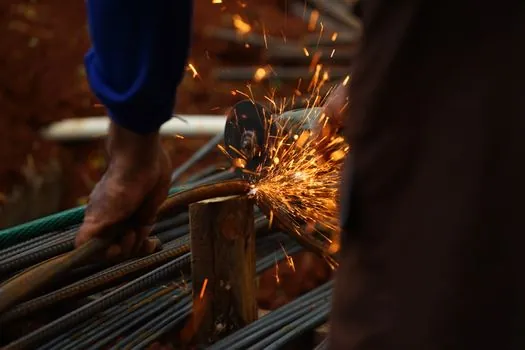
Electric mains units lead the 2026 power-source mix at 48.0% share because they support repeated cutting across organized shifts when a single-phase or three-phase supply is available [S4]. Battery units are the right pick when the site has no generator, the cut count is below ~240 per shift, and bar diameter stays at or below the rated limit. Hydraulic units enter the picture for 32 mm and above, or for high-volume bar schedules where heat build-up at the shear blade is a real concern. Pneumatic units stay niche and are usually chosen only when a compressor is already on site for other tools.
For a remote landscape site, a 220 V single-phase electric bench unit paired with a 2-3 kVA inverter generator is a common compromise that gets 10-32 mm coverage without battery-cycle limits. IDEAL's GQ50 bar cutting machine sits in that portable electric class and is widely used on construction sites for on-site bar work [S2]. A working reference for how battery, electric, and hydraulic shear formats compare lives next to the rebar cutter entry, which also covers blade geometry and cycle-time bands.
Service Gates: Spare Parts, Repair, and Local Stock
Service speed is a spec gate, not a soft factor, when a crew is paid by the day. CNB Machinery and Steel Corporation's differentiator as the TAEYEON B&C exclusive distributor in the Philippines is that spare parts for its 10-42 mm electric rebar cutter/bender line are kept on hand in local stock, and the same vendor runs on-site and warehouse repair with an online-consultation triage [S1]. IDEAL runs a 24-hour helpline (+86-374-6269005) plus mobile (+8613613843166) for its GQ50-class portable bar cutters and complementary lines, which matters for a contractor buying direct from a Chinese OEM rather than through a local agent [S2].
When evaluating a vendor, ask three measurable questions: (1) which consumables (blades, dies, pins) are stocked locally and lead time, (2) what is the warranty term and the turnaround for a warranty claim, and (3) can the vendor loan a unit while yours is down. BN Products-USA, Schnell S.p.A., KRB Machinery, SIMA, Gensco Equipment, HiKOKI, Ogura, and Toyo Kensetsu Kohki are the names that recur across the 2026 rebar-cutting-machine market, and the Toyo Kensetsu Kohki CSA-180Y4-PHV automatic cutter launched in April 2026 sets the productivity-upgrade benchmark for higher-volume operations [S4].
Standards, Safety, and On-Site Cutting Rules
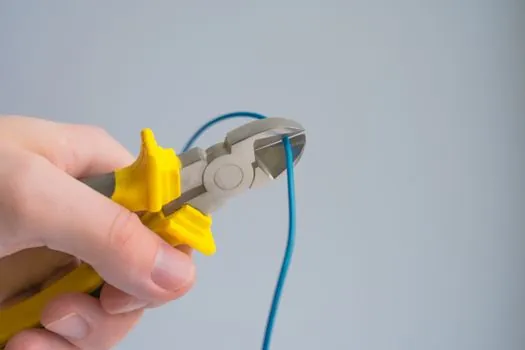
On-site rebar cutting carries the usual site-safety obligations: cut fragments are controlled, the operator wears ANSI Z87.1-rated eye protection, and any abrasive wheel on a portable cut-off saw is guarded to the tool's rated RPM. Cold-cut shear platforms (battery, hydraulic, bench) avoid the sparks and hot-slug risk of abrasive wheels, which is a real gain when cutting near timber edges, dry grass, or irrigation lines. The DIABLO SDS-Plus rebar bit and the Milwaukee M18 rebar cutter are both cold-cut shear platforms, and the M18 delivers #9 bar in 2 seconds without sparks or hot slug [S5], [S3].
For bar specification, ASTM A615 / A706 grade rebar is the typical landscape supply, and the 16-32 mm band covers the structural bars that show up in retaining-footing cages, pergola posts, and tree-anchor systems [S4]. Confirm the bar grade and ductility class with the supplier before specifying a cutter, because higher-strength grades can push a marginal cutter past its rated capacity. A 1-1/2 in. (roughly 38 mm) embedded-rebar cut on an SDS-Plus bit is a real working number; pushing the same bit past that diameter drops bit life sharply [S3].
Selection Criteria and Comparison Across Cutter Types
Four criteria sort the landscape cutter options cleanly: bar-diameter range, portability, cuts per shift, and unit cost. The comparison below uses the 2026 market shares and the product data in the source set: bench cutters at 28.0% of demand, electric power at 48.0%, and the 16-32 mm bar band at 43.0% [S4]; a 10-42 mm electric range from TAEYEON B&C [S1]; an SDS-Plus portable at 1-1/2 in. embedded capacity with carbide tips [S3]; a battery M18 platform at 2 s per #9 bar and 240 cuts per charge [S5]; and a portable GQ50-class electric unit for on-site work [S2].
Limitations and Failure Modes to Plan For
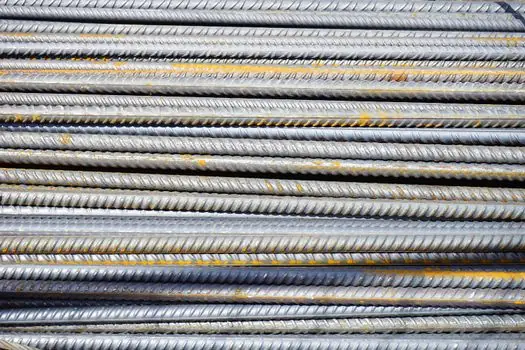
Every cutter format has a measurable failure mode. Battery shear units throttle in cold weather (capacity drops roughly 20-30% below 5 deg C) and wear the shear blade faster on stainless or epoxy-coated bar. SDS-Plus rebar bits work only on exposed or embedded rebar that the rotary hammer can reach, and bit life drops sharply when the bit is forced past its rated 1-1/2 in. diameter or run at low impact energy [S3]. Bench electric units overheat the gearbox if cycles are run continuously above the rated bar diameter, and the blade gap needs periodic re-setting to keep cut squareness within roughly 1 degree.
Pneumatic and hydraulic units introduce hose-management and leak-check work, which is non-trivial on a landscape site with a moving work point. The 2026 market read-through is that contractors and rebar fabricators increasingly use powered cutters to standardize cut length and cycle timing, but steel-price swings and uneven project utilization can delay replacement among contractors with uncertain cutting volumes [S4], so the right tool today is the one sized to the cuts-per-shift figure you can actually measure on a representative week.
Trackable Signals for the Next Buying Window
Three signals are worth watching over the next two quarters. First, the Toyo Kensetsu Kohki CSA-180Y4-PHV automatic cutter launched in April 2026, and follow-on automated loading products from the same vendor typically land within 6-9 months of a platform launch [S4]. Second, battery platforms are closing the cycle-time gap on corded units for the 6-16 mm range, with the M18-class platform at 2 s per #9 bar, so a price-per-cut crossover on corded electric for small bar is plausible by the next 18-month replacement cycle [S5]. Third, the 16-32 mm band is the structural-reinforcement workhorse and is unlikely to shift share quickly, so sizing to that band remains the conservative choice for a landscape contractor buying in 2026 [S4].
The underlying component specifications are covered under marble cutter, and plasma cutter.