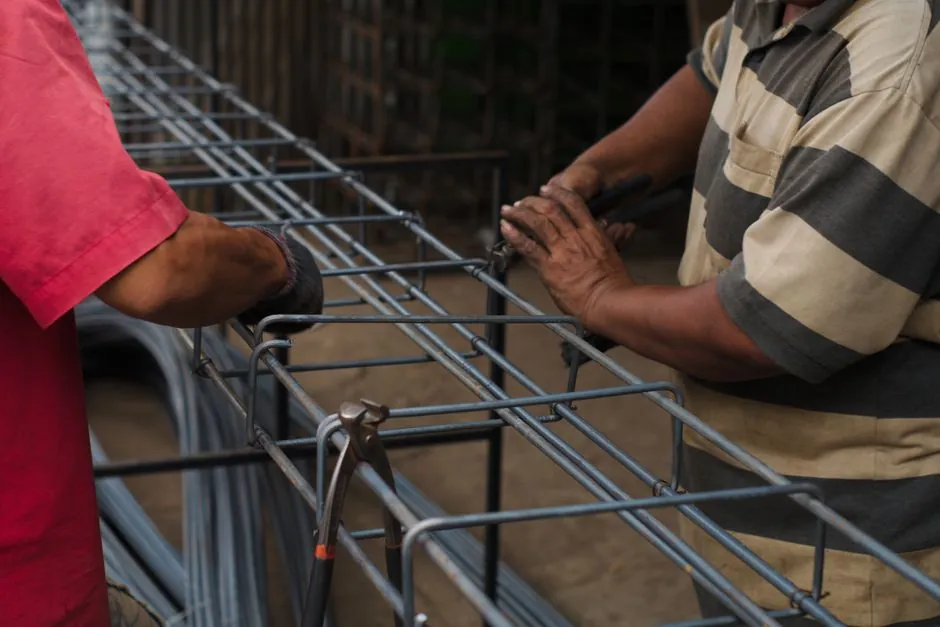
For plumbing infrastructure work, pump stations, lift stations, wet utilities, manholes, thrust blocks, and trenchless pipe penetrations through reinforced concrete, the dominant cutting range sits at 10-32 mm (#3-#10) Grade 40/60 rebar, which the IDEAL and CNB Machinery catalogs both cover with portable electric rebar cutter platforms [S2][S3].
The CNB lineup covers 10-42 mm capacity from a TAEYEON B&C (South Korea) electric range, while the IDEAL catalog of GQ-series portable bar cutting machines targets the on-site construction workflow with a 24-hour service line (+86-374-6269005) [S2][S3]. Gulf Coast Rebar's active 2026 work order at the L8 Pump Station in West Palm Beach is a representative commercial plumbing-scale rebar installation contract, illustrating where portable, on-trench cutting becomes the bottleneck, not fabrication-shop cutting [S1].
Cutting Capacity vs Bar Diameter at the Trench
For typical plumbing encasements, thrust blocks, manhole bases, and wet-well reinforcement, 90% of cuts land in the 10-25 mm (#3-#8) window, with occasional 32 mm (#10) bars at pile-cap and slab-on-grade transitions. The IDEAL GQ50 portable steel bar cutting machine is built for this 16-50 mm construction-site range and is widely used on open-trench sites [S3].
For jobs that regularly run 32-42 mm main bars (pump-station base mats, large-diameter pipe thrust pedestals), a 42 mm-class machine such as the TAEYEON TYB-HD42D bender's companion cutter gives the headroom needed to avoid stop-and-shop trips [S2]. Specifying a cutter with a published maximum diameter 20% above the heaviest bar on the cut list is the standard practice; under-spec'd blades deform burrs and overheat the hydraulic seal, and on plumbing sites that means rework inside a saturated trench.
Power Source: Electric, Battery, or Hydraulic
Electric 220 V/110 V portable rebar cutters dominate plumbing-installation work because the site already has a generator or temporary power for the dewatering pump, and because the GQ-series and CNB-listed machines are designed for that duty cycle [S2][S3]. CNB Machinery explicitly stocks electric rebar cutters in the 10-42 mm range as ready-on-hand inventory, not as build-to-order units [S2].
For confined-space work inside manholes or vaults, 18 V/36 V battery-class portable cutters are increasingly common as a secondary tool, but production cutting for 25 mm+ bar still falls back on corded electric or 380 V three-phase hydraulic units, per the IDEAL product mix [S3]. Air-driven pneumatic cutters appear in some specifications but lose out to electric on plumbing sites because the compressor is already loaded running the concrete vibrator and the pneumatic needle scaler.
Cut Quality, Burr, and Splice Tolerance
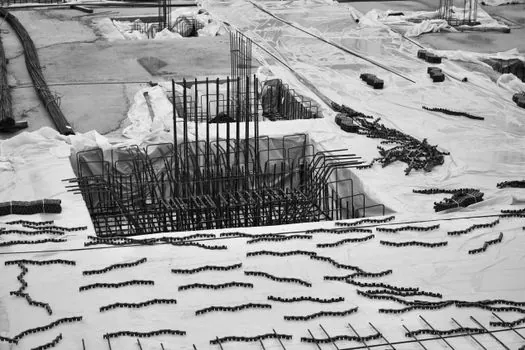
Plumbing reinforcement frequently terminates at mechanical splice sleeves, headed bars, or lap splices in the ACI 318 Chapter 25 category, where a deformed, overheated, or out-of-square end forces the ironworker to grind, recut, or scrap the bar. Hydraulic-pump and electric shear-head cutters produce a cleaner shear face than abrasive chop-saw wheels, which is why the GQ-series and TAEYEON portable units are the default rather than portable abrasive saws [S2][S3].
For epoxy-coated or galvanized bar specified in corrosive soil (sewer manholes, lift-station wet wells, coastal pump stations), abrasive cutting burns the coating back 5-15 mm and forces re-coating; shear cutters leave the coating intact to the cut line [S2]. Accept a maximum cut-time of 3-4 seconds for 25 mm Grade 60 bar on a properly sized machine; anything beyond that signals a worn blade or undersized hydraulic pump and a quality risk for the splice crew.
Site Logistics, Weight, and Spare-Parts Gates
A plumbing-installation crew typically works off a single pickup truck and a small trailer, so a cutter above ~35 kg dry weight slows the cycle. The CNB service model, identical-day spare-part supply from a Philippine warehouse, sets the benchmark that any portable-cutter spec should be measured against [S2]. IDEAL markets 24-hour service and a +86-374-6269005 helpline for its GQ-series and related rebar equipment, again signaling that downtime tolerance on a plumbing site is measured in hours, not days [S3].
For US Gulf Coast work like the L8 Pump Station project, the spare-part distance between a US job site and an Asian OEM warehouse is a real risk; contractors in that geography typically pair the Asian-built cutter with a locally stocked shear blade, hydraulic seal kit, and pressure-relief valve before mobilization [S1]. For related mobile-equipment spares strategy on linear utility work, the mason-site cutter selection article walks through the same parts-stocking logic for a different bar grade mix.
What NOT to Use on a Plumbing Site
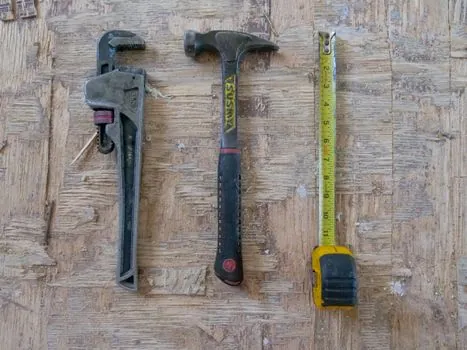
An oxy-fuel torch is the wrong tool: the heat-affected zone destroys the epoxy or galvanizing on coated bar, the cut face is rarely square, and open-flame work inside a trench with residual methane or sewer gas is a permit violation in most US jurisdictions. A handheld plasma cutter is reserved for plate steel and stainless pipe work, not for rebar, and will burn through consumables faster than the cost of a proper shear cutter. A chop-saw with an abrasive disc is acceptable only for occasional cuts on bare, uncoated bar above 25 mm, never as the primary tool. For trenchless work near a host pipe, the road-maintenance cutter spec gates piece is a useful cross-reference because the wet-cut and dust-suppression requirements overlap with plumbing wet-well work. [S3]
Selection Checklist for Plumbing-Installation Procurement
1) Bar-grade and diameter range on the cut list, with a 20% capacity margin. 2) Power source: 220 V single-phase portable for the 10-25 mm range, 380 V three-phase hydraulic for 32-42 mm work [S2][S3]. 3) Cut-quality requirement: hydraulic shear for coated bar and sleeve splices. 4) Weight under 35 kg for one-person carry into manholes and wet wells. 5) Spare-parts SLA, identical-day domestic dispatch preferred, with shear blade, seal kit, and hydraulic hose on the mobilization list [S2]. 6) Compliance with site safety: no open flame, no abrasive-dust exposure inside confined spaces, GFCI on the 220 V feed.
Next signal to track: ACI 318-25 Chapter 25 rebar splice tolerance enforcement on 2026 pump-station and lift-station builds, and the Gulf Coast Rebar L8 Pump Station delivery schedule as a working data point on portable-cutter throughput versus shop-fabricated rebar [S1]. Watch for the post-2026-Q3 stocking announcements from CNB and IDEAL on 36 V battery-class portable cutters targeting the 10-25 mm plumbing-installation market [S2][S3].
The underlying component specifications are covered under marble cutter.