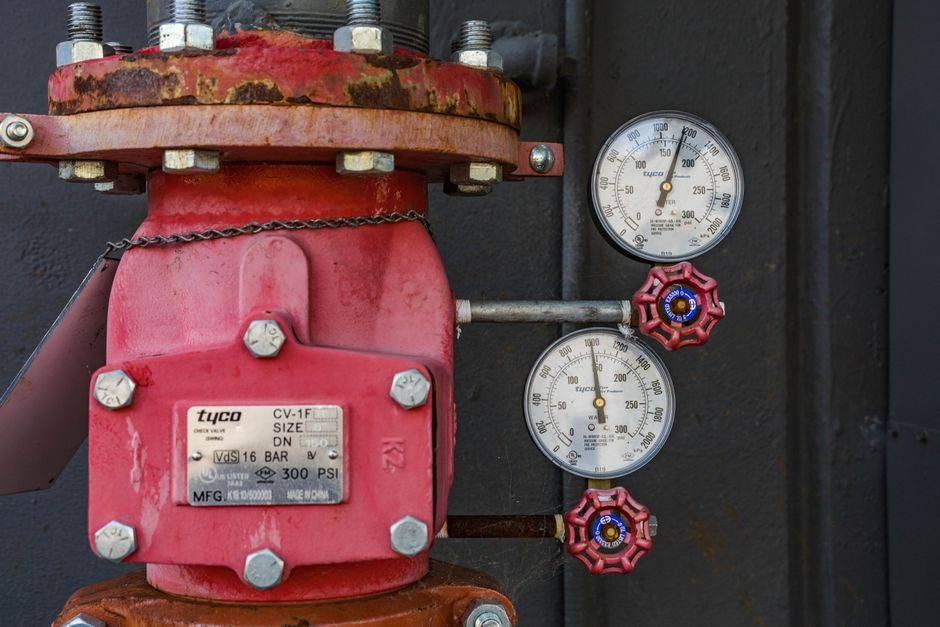
A pipe fitting is mechanically compatible with a flange only when its end-prep matches the flange facing, its schedule/SDR matches the bore, its pressure class is equal-or-higher, and its material grade (with compatible wetted chemistry) is on the same MOC line. Miss any one of the four and the joint will not seal, will not torque, or will fail in service — even when every datasheet in the spec binder is technically "correct" [S2][S5].
The Chinese and Indian supplier base shipping in 2026 — Hebei Ouhao (founded 1998, 60,000 m² site, 18 million yuan registered capital), HDSTEEL Group (Yanshan/Cangzhou elbow capital cluster), Xinfeng, Finelink (Hangzhou, ISO 9001 / ISO 14001) and Mumbai-based exporters — all quote the same four international flange standards: ANSI (ASME B16.5 family), DIN, EN 1092, JIS, BS and GOST [S2][S3][S4][S5][S6]. On the fitting side, ASME B16.9 (butt-weld), MSS-SP-75 (wrought), EN 10253, GOST 17374-17382 and JIS B2311/B2312/B2313 govern the matching end-preps.
Interface 1: Bore and Schedule Match
The single most common site failure is a nominal-size match with a bore mismatch. A Sch 40 SMLS pipe welded to a Sch 80 fitting leaves a 1.5–2.5 mm internal step that becomes a corrosion cell, an erosion point and a debris trap; NDE inspectors flag it as a fabrication defect on every standard I have worked under [S7]. The rule of thumb cited by the Mengcun/Cangzhou cluster: pipe OD × wall-thickness combo on the spool must equal the fitting's published bore chart for the same NPS, or the joint is re-cut.
For HDPE-to-flange transitions, Fluido and HDSTEEL both stock backing rings (flanges) for HDPE pipe — these are not pressure flanges, they are loose rings that clamp a stub end or flange adapter. The stub end carries the SDR-controlled bore; the backing ring supplies the bolt-pattern. This is the only sanctioned way to land a PE pipe on a PN10/PN16 metallic flange without leaking at the first thermal cycle [S1][S4].
Interface 2: Facing and Gasket Seat
Raised-face (RF) flanges to ASME B16.5 mate with RF-stub-end butt-weld fittings using a compressible ring-joint or spiral-wound gasket at the standard 1.6 mm (0.06 in) serration. Flat-face (FF) flanges, common on ASME B16.5 Class 150 and on EN 1092-1 PN 10/16, demand flat-face gaskets and full-face bolt patterns — using an RF gasket on an FF seat will not seal because the gasket is not confined [S2][S5].
RTJ (ring-type joint) flanges require RTJ groove machining on the mating flange face and a metal ring gasket; a weld-neck fitting with a flat face will not seat an RTJ ring and must be replaced. Tongue-and-groove (T&G) faces are an ANSI/ASME option frequently used on hazardous services where self-energizing gasket retention matters; a slip-on flange with stock FF face will not retain a T&G gasket [S1][S2].
Interface 3: Pressure-Class Equivalence
A Class 150 weld-neck flange paired with a Class 300 butt-weld elbow is a common engineering error that procurement routinely catches. The fitting must be rated equal-or-higher than the flange in the same nominal size, because the lower-rated component governs the joint's MAWP. For high-pressure service, Hebei Ouhao, Xinfeng and HDSTEEL all publish high-pressure fittings lines that they rate to ANSI Class 600, 900, 1500 and 2500 — the same pressure classes as ASME B16.5 flanges [S2][S5].
EN-side: PN 10, 16, 25, 40, 63, 100 must be matched between EN 1092-1 flange and EN 10253 fitting. A PN 16 flange on a PN 40 stub-end will not tighten to the right gasket stress; a PN 40 flange on a PN 16 fitting is the more dangerous direction because the fitting becomes the weak link and may rupture before the flange ever sees design load. Cold-service and cryogenic selections also drop to austenitic stainless (304L/316L) to keep impact toughness at –46 °C and below [S6].
Interface 4: Material and Wetted-Chemistry Match
Carbon-steel ASTM A234 WPB fittings and A105 flanges are the default match for hydro-carbon and utility service; mismatching A234 WPB with a 316L flange on a chloride-bearing line creates a galvanic cell at the gasket interface that pits the WPB within months. Stainless-to-stainless must keep the same family (304/304L, 316/316L, 321, 347) on both sides of the gasket [S6].
Alloy 20, Inconel 625 (UNS N06625), Incoloy 825 (UNS N08825), Hastelloy C-276, Monel 400 and duplex/super-duplex (UNS S31803, S32750, S32760) are all quoted by Mumbai-based stockists for fittings and flanges in matching grades — useful for sour service per NACE MR0175, sea-water, and concentrated H₂SO₄ [S6]. Ductile-iron pipe fittings (DI to ASTM A536, EN-GJS-450/500) are limited to non-corrosive water, sewage and fire-protection lines up to PN 25/PN 40; they must never be bolted to a Class 300 steel flange [S7].
Comparison: Fitting Family vs Flange Standard Compatibility
Butt-weld fittings (ASME B16.9 long-radius, short-radius, reducing, 3D/5D bends) mate with ASME B16.5 / B16.47 flanges and with EN 1092-1 PN-rated weld-neck flanges when bore and class match. Forged socket-weld fittings (ASME B16.11) are limited to Class 300 and below because the socket geometry cannot dissipate higher gasket stress without creep, and they do not pair with weld-neck flanges in clean service — they pair with socket-weld flanges or threaded companion flanges [S1].
Threaded fittings (ASME B16.11 NPT, BSP) pair with threaded companion flanges only at Class 150/300; they are banned in hydrocarbon service above 1.5" NPS in most operator specs. HDPE butt-fusion fittings pair only with HDPE stub-end flanges and a flange backing ring; they are not direct substitutes for steel weld-neck on a steel flange. Ductile-iron push-on or mechanical-joint fittings pair only with DI flanges to AWWA C110/C111 and will not bolt to a steel ASME B16.5 pattern in the same nominal size [S4][S7].
Integration Pitfalls That Pass the Datasheet Check
Three traps appear on almost every retrofit RFQ in the Mengcun/Mumbai export channel. First, an "ANSI 150" RF weld-neck stub end shipped to a project that actually requires an "EN 1092-1 PN 16" weld-neck — the bolt count and pitch-circle diameter are different even at the same nominal, and the gaskets do not interchange. Second, a 304 stainless fitting welded to a 304 stainless flange where one is dual-certified 304/304H and the other is L-grade only — the higher-carbon H grade promotes sensitization at the HAZ and grain-boundary corrosion in chloride service [S6].
Third, mismatched bolting: a flange to ASME B16.5 with B7 studs will not drop into a stainless flange stack that needs B8M studs on Class 150 because the galvanic couple of carbon-steel stud to stainless flange face corrodes the stud within two inspection cycles. A related failure mode is using a 1500# flange gasket on a 300# flange — the gasket is too thin, the seating stress is wrong, and the joint weeps on first hydrotest. Each of these is invisible in a line-item datasheet comparison and shows up only at torque-up or in service [S2][S5].
Standards Reference for Procurement
Reference the following family when writing the MOC table: ASME B16.5 (pipe flanges ½"–24", Class 150–2500), ASME B16.47 (large-diameter flanges 26"–60", Series A and B), ASME B16.9 (factory-made butt-welding fittings), ASME B16.11 (forged socket-weld and threaded), MSS-SP-75 (high-test wrought fittings), EN 1092-1 (steel flanges PN-rated), EN 10253 (butt-welding fittings in carbon and alloy), JIS B2220 (steel pipe flanges), JIS B2311/B2312/B2313 (steel butt-welding fittings), GOST 12820-12822 (Russian flange family) and GOST 17374-17382 (Russian butt-weld fitting family) [S1][S2][S5].
For hazardous-area and offshore service, add NACE MR0175/ISO 15156 (sour H₂S) and NACE MR0103 (refining) to the MTR clause; for cryogenic add ASME B31.3 Chapter IX impact-test requirements at –46 °C and below. The article on bellows-seal valve RFQ practice for corrosive service walks through the same MOC-table discipline and is the right cross-reference when the downstream valve is the most corrosion-sensitive item in the line. For PE-side work, the HDPE pipe reference and the plastic pipe compatibility page are the upstream reads before specifying a backing-ring adapter.