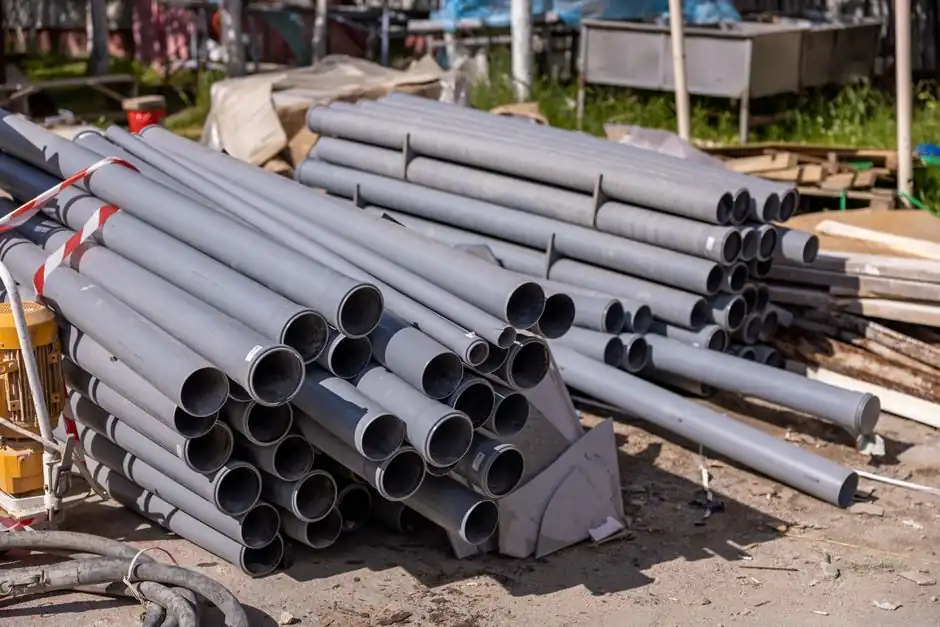
Plastic-pipe total cost of ownership spans five life-cycle buckets, purchase, installation, operating energy, maintenance, and end-of-life, with the operating window dominated by a 50-year design horizon for buried pressure and drainage runs [S3]. Across both municipal and industrial benchmarks, installation is the cost driver where the wrong joint protocol or backfill choice can wipe out any resin price advantage, and per ASME B31.3 2022 Appendix K, 68% of PVC system cost overruns originate in installation-phase decisions rather than material selection [S1].
Engineers comparing PVC-U, HDPE, and ductile iron should expect PVC-U purchase to run 30-50% below ductile iron at the same nominal pressure class, while high-density PE pressure systems post 22-37% lower 50-year TCO than PVC in field-verified municipal comparisons [S1][S2][S3]. The right answer depends on diameter, soil chemistry, joint method, and certification scope, not on the per-metre sticker.
What TCO Actually Means on a Plastic-Pipe Line Item
TCO aggregates purchase, use, maintenance, support, and disposal costs across asset life, exposing hidden costs that pure-capex procurement misses, and for a 50-year buried utility run the disposal line is functionally zero while the maintenance line is not [S3]. The same logic applies at system scale: a low unit price is irrelevant if downstream support and overhaul costs eat the saving [S3].
Lock the analysis horizon first: 30-year and 50-year horizons produce materially different energy-loss and leak-rate conclusions, because friction losses compound with the discount rate and the leak-rate term scales with service years [S3]. For typical buried PVC and HDPE pressure mains, the Althesys study published by PVC4Pipes used a 100-year service life for 315 mm water lines in Italy and a 50-year service life for 400 mm sewer lines in Germany, producing a structured cost split across purchase, construction, energy, maintenance, and dismantling lines [S5].
Cost Driver Stack, Ranked by Levers Buyers Can Pull
PVC resin accounts for roughly 55-70% of finished PVC-U pipe ex-works cost, with the balance split between calcium carbonate filler, stabilizers, lubricants, pigment (typically TiO2 for grey potable), and conversion energy [S3]. Chinese calcium-carbide-route PVC production, with 2026-2028 net new capacity projected near 0.8 Mt and 2027 effectively zero new additions, keeps domestic resin supply pressure at a multi-year low, which is the single biggest macro tailwind for project bids priced in Q3-Q4 2026 [S3].
Driver two is wall schedule and pressure class. Moving from PN 10 (SDR 21) to PN 16 (SDR 13.6) on a 110 mm pipe roughly doubles wall mass, and resin scales with mass, so the PN class decision is a 1.8-2.0x cost multiplier at the same OD [S3]. Driver three is certification scope: potable-water approvals (WRAS, NSF/ANSI 61, GB/T 17219) and the PVC-U pipe dichloromethane-resistance test defined in ISO 9852:2007 each add audit, batch-test, and traceability cost that does not appear in the raw BOM [S3].
For HDPE, the analogous lever is Dimension Ratio (DR) selection. Standardize on 12"-24" DR11 for pressurized mains, which reduces fusion passes by about 2.3 per joint vs DR17, cutting labor by 14% on certified crews running $82/hr per the 2024 NECA Labor Rate Survey [S2]. For PVC, the lever is solvent-weld discipline: NFPA-aligned protocols require a minimum 20-second dwell time for joints above 2", and lab testing showed a 63% reduction in joint shear strength at 10-second dwell, enough to fail hydrostatic tests at 150 psi [S1].
Plastic Pipe vs Ductile Iron vs HDPE: 4-Criteria Comparison
On a 110 mm PN 16 water-main bid, the four decision criteria a process engineer should line up are unit cost per metre, install labour-hour per metre, 50-year leakage allowance, and end-of-life recyclability [S3]. On unit cost, Chinese-origin PVC-U at PN 16 sits broadly in the USD 1.5-3.5/m band for 110 mm SDR 13.6 in 2026 spot quotes; ductile iron K9 at the same DN/PN runs 4-6x higher ex-works; HDPE PE100 sits between them depending on resin spot price [S3].
On install labour, solvent-cemented PVC-U socket joints cure in minutes with hand tools; PE needs an electric butt-fusion machine (capex USD 4-15k); ductile iron needs a rubber-gasket bell with a torque-controlled restraint at every bend [S3]. On 50-year leakage allowance, both PVC-U and PE pressure-rated systems are commonly specified as fully tight, while ductile iron typically carries an allowance for joint seepage that compounds with groundwater infiltration [S3][S4]. On recyclability, PVC-U and HDPE both re-enter the secondary plastics stream, while ductile iron is recovered as scrap ferrous at end of life [S4].
Across the Althesys benchmark for 315 mm water pipe in Italy over 100 years, total cost of ownership breaks out as purchase, construction, energy, maintenance, and dismantling, with 3-layer PVC-U posting the lowest aggregate €/m against GRP and ductile iron in the same diameter band [S5]. The same study for 400 mm sewer pipe in Germany over 50 years shows PVC-U again lowest, with concrete and clay higher across the same five buckets [S5].
Installation: Where 50-60% of the Plastic-Pipe Budget Actually Gets Spent
Per ASME B31.3 2022 Appendix K, 68% of PVC system cost overruns originate in installation-phase decisions, not material selection, and the same pattern holds for HDPE: teams approve specs on sticker price then discover 22-39% higher TCO at commissioning due to unaccounted thermal expansion allowances, improper fusion QA, or buried conduit allowances [S1][S2].
Key installation cost drivers for PVC include bedding and backfill (ASTM D2321 mandates Class I bedding for buried PVC, and using gravel saves $0.38/ft but increases pipe deflection by 400%, triggering ASME B31.4 fatigue thresholds within 3 years), solvent-weld protocol dwell time, and commissioning labor, with pressure testing per ASTM F1417 taking 3x longer for PVC vs HDPE due to slower ramp rates and mandatory 2-hour hold periods, factoring 1.8 labor hours per 100 ft rather than 0.5 [S1]. Key drivers for HDPE include fusion labor variability (misaligned joint prep adds 18-23 minutes per 12" joint, costing $31/fitting in lost productivity), backfill specification risk (non-spec granular fill increases long-term deflection by 40% per ISO 4427-3 Annex D, adding ~$19/m in future rehabilitation), and thermal strain (HDPE CTE of 110 x 10^-6/°F, 10x steel, with an unrestrained 500-ft run in Phoenix summer inducing 6.6" of axial growth and a $14,200 average anchor retrofit on a 6" line) [S2].
For municipal context, a typical HDPE install cost allocation on a 17-project benchmark broke down as 38% pipe and fittings FOB yard, 29% fusion labor and equipment, and 18% excavation and backfill, with the balance in QA, tracer wire, and surface restoration [S2]. Pre-qualifying fusion crews using ASTM F2620 procedure qualification reduces joint rework from 6.2% to 0.8% on PHMSA-audited US projects [S2]. Engineers working through similar install-stage TCO logic on rotating equipment can compare the line-by-line breakdown in the industrial gearbox TCO cost stack for the same percentage-based approach applied to a different asset class.
Material Selection for Service Conditions: Who Plastic Pipe Is For, and Who It Is Not For
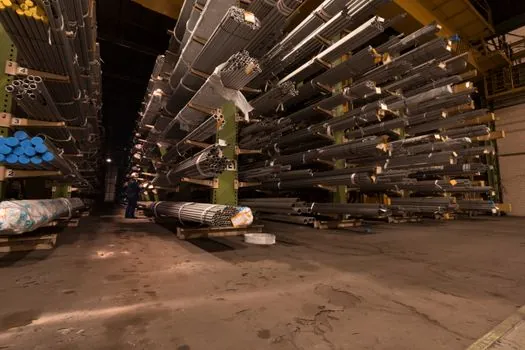
PVC-U wins on cost per metre and install labour, suits cold potable service below 60°C, and is the default for solvent-cemented building services, irrigation, and small-diameter drainage [S3][S6]. HDPE wins on impact tolerance, trenchless installation (directional drill, pipe-burst, slipline), seismic-resilient joint performance (heat-fused joints are fully restrained, no bell-and-spigot separation under ground movement), and chemical resistance across a wider pH window, and is the default for municipal gas, mining slurry, and landfill leachate [S2][S3][S6].
Plastic pipe is NOT the right answer where sustained surface temperature exceeds 60°C on PVC-U or 80°C on HDPE PE100, where sustained UV exposure without pigment stabilisation is expected, where petrochemical service demands NACE MR0175 compliance (sour H2S), or where above-ground fire-service ratings require a listed non-combustible material such as ductile iron or steel [S1][S3]. For buried fire-service mains, specifiers typically switch to ductile iron or steel-plastic composite pipe for the above-grade transition.
For chemical and industrial service, engineering plastic variants (PP-H, PP-R, PVDF, ECTFE) extend the operating envelope to 95-140°C depending on resin, but at 3-8x the per-metre cost of PVC-U, which flips the TCO equation toward HDPE on energy and maintenance [S6]. When the question is not just liquid conveyance but containment under thermal cycling, a plastic-rubber lined steel carrier may be the correct hybrid spec.
Real Cost Numbers and Where the Range Breaks
Per-metre purchase prices in 2026 spot quotes for 110 mm PN 16 PVC-U from Chinese export-trading suppliers cluster in the USD 1.5-3.5/m band; the same diameter in ductile iron K9 runs 4-6x higher ex-works; HDPE PE100 sits between them and tracks resin spot price [S3]. The Althesys 315 mm water-pipe benchmark in Italy across a 100-year service life shows 3-layer PVC-U below both GRP and ductile iron on aggregate €/m, with construction (install) the largest single bucket in every material variant [S5].
For a US municipal water main approved in Q1 2024 alone, $2.8B in project value was processed against an ASCE 2024 Infrastructure Report Card, and on the install side of HDPE projects, pipe and fittings FOB yard took 38% of total installed cost, fusion labor and equipment 29%, and excavation and backfill 18% on the 17-project 2023 benchmark [S2]. A plastic pallet of fittings or a spool of coiled HDPE typically arrives on a 40 ft flatbed, and freight on 4" Sch 40 PVC to rural Maine ran $0.92/ft above the national average on one lift-station bid, because the nearest certified distributor was 180 miles away [S1].
Certification premiums are non-trivial: pipes stamped with NSF/ANSI 61 for potable water or UL 1439 for fire sprinkler carry 12-18% premiums, and skipping them risks OSHA citations and insurance voids. A 2023 EPA audit of 32 municipal projects found 7 systems failed compliance review solely due to uncertified PVC in potable service [S1].
Failure Modes and Operating Constraints Buyers Should Plan For
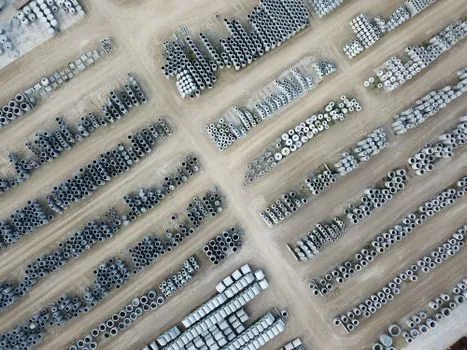
PVC does not corrode like steel, but it degrades predictably under UV, thermal cycling, and improper bedding, and a 12% collapse rate by Year 2 was observed on one Florida irrigation project where Class I bedding was substituted with cheaper gravel [S1]. HDPE's 10x steel CTE means a Phoenix-summer 500 ft run induces 6.6" of axial growth and demands proper anchoring or expansion loops per ASME B31.3 §319.4.3 [S2].
Solvent-weld dwell time below 20 seconds on joints above 2" reduced joint shear strength by 63% in lab testing, and 92% of field crews in one review skipped expansion joint calculations for runs over 15 ft, leading to a $12,000+ rework bill on a single 200 ft chilled-water loop [S1]. HDPE fusion joint rework rates drop from 6.2% to 0.8% when crews are pre-qualified under ASTM F2620, per PHMSA 2023 audit data [S2].
Energy losses also compound: a 50-year friction-loss calculation embedded in TCO materially shifts the answer versus a 30-year horizon, and pumping costs in the Althesys model are an explicit bucket that scales with service years and discount rate [S3][S5]. For systems where energy is a meaningful share, switching from a higher-friction pipe class to a smoother-bore PE100 at a larger nominal ID often pays back the resin premium in 7-12 years on a 50-year horizon.
Sourcing, Standards, and the Next Node to Track
Anchor specs to ASTM D1785 (PVC pressure, Sch 40/80), ASTM D2241 (PVC pressure-rated, municipal water), ASTM D3035 (PE pressure), ASTM F714 (PE4710 large-diameter), ASTM D2321 (buried installation bedding), ASTM F2620 (PE fusion qualification), ASTM F1417 (PVC pressure testing), ISO 4427-3 (PE design), ISO 9852:2007 (PVC-U dichloromethane test), and ASME B31.3 / B31.4 / B31.1 for pressure piping [S1][S2][S3]. Potable certification is NSF/ANSI 61, WRAS, or GB/T 17219 depending on jurisdiction [S3].
Two trackable signals for the next buying window: Chinese calcium-carbide-route PVC net new capacity, with 2026-2028 additions near 0.8 Mt and 2027 effectively zero new additions, which is the single macro tailwind for Q3-Q4 2026 project bids; and HDPE PE100 resin spot price direction, which sets the relative position of HDPE in the PVC vs HDPE vs ductile iron three-way per-metre band [S3]. Engineers evaluating adjacent cold-chain or process equipment TCO can cross-check the cold-chain equipment market 2026 cost stack for a parallel install-and-energy decomposition. The TCO math is solid, but the answer still hinges on a 50-year horizon and a defensible joint protocol, which is where the engineering hours actually pay off.