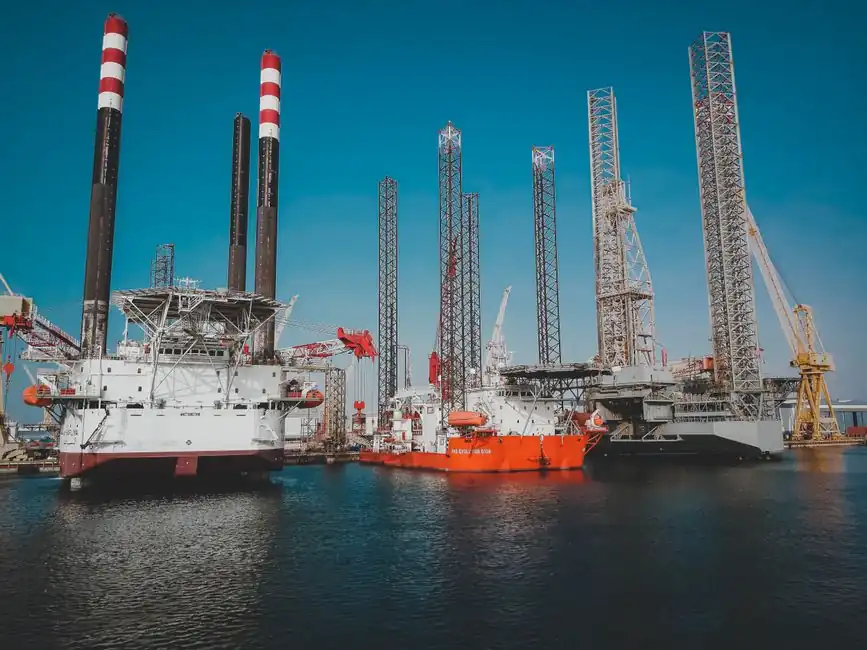
Selection in hydrocarbon service is driven by four hard constraints: pressure-temperature class (typically ASME 150 to 600 for upstream and midstream, with severe-service classes above 600), body and seat material compatibility with H2S, CO2, hydrocarbons and water phases, offset geometry matched to cycling duty, and end-connection style matched to the piping class [S4][S5].
Downstream operations from refining through distribution demand valves that can handle high pressures, corrosive service, and temperature extremes, which is why butterfly valves share specification space with ball valves, check valves, and gate valves rather than displacing them outright [S2]. A typical upstream and midstream flow-control package uses gate and ball valves for primary isolation and butterfly valves for large-bore, lower-cost isolation and modulation on lines DN 300 and above [S4].
Body, Disc, and Seat Material Compatibility with Hydrocarbons
Carbon steel bodies (ASTM A216 WCB, A352 LCC) and stainless steel bodies (ASTM A351 CF8M) dominate hydrocarbon service because cast iron loses rating above 250 psi and is generally ruled out for sour service by NACE MR0175 limits on carbon content and hardness [S3][S4].
Seat material is selected from the media, not the line size. EPDM is acceptable for water and steam up to roughly 120 deg C but is incompatible with hydrocarbon oils; NBR (Buna-N) is the workhorse for oils, fuels, and hydrocarbons; PTFE handles corrosive chemicals and higher temperatures but is limited by cold-flow creep; metal seats are required above the soft-seat thermal ceiling [S4][S5]. Disc material follows seat selection: 316 stainless for sour and chloride-bearing streams, duplex or super-duplex where pitting and crevice corrosion drive the metallurgy, and nickel-aluminum bronze or monel for seawater and produced-water injection service [S3][S4].
Offset Geometry: Concentric vs Double vs Triple Offset
Concentric (zero offset) butterfly valves are the lowest-cost design, with the disc in continuous contact with a resilient seat during rotation, so they are limited to low-pressure, ambient-temperature utility service such as water, HVAC, and fire protection, and are rarely the right pick for oil and gas process lines [S5].
Double-offset (high-performance) butterfly valves add two shaft offsets that create a camming action, so the disc only contacts the seat during the final 5 to 7 percent of closure, reducing seat wear and enabling bi-directional tight shutoff up to ASME Class 600 in hydrocarbon, chemical, and steam service [S5]. Triple-offset butterfly valves add a third conical sealing geometry that converts sealing from compression to metal-to-metal torque seating, giving zero friction during rotation and bubble-tight shutoff at the highest temperatures and in fire-safe and emergency-shutdown service [S5][S8].
The triple-offset design is treated as the default for severe-service oil and gas, LNG, and refining, but is not a universal code requirement: the choice is driven by temperature, cycling frequency, and leak-rate class rather than by a blanket industry rule [S8].
End Connections and Pressure Class Match-Up
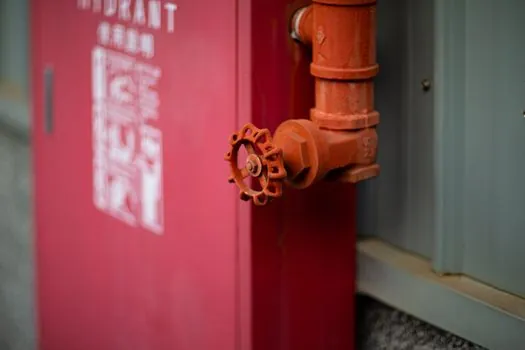
Wafer, lug, and double-flanged (or flanged) body styles differ in dead-end capability, alignment sensitivity, and pressure ceiling. Wafer bodies are lightweight and cost-effective, sandwiched between flanges and held by line-bolts, but cannot be used as a dead-end valve on either side without a downstream flange [S3][S4].
Lug bodies have threaded inserts that allow bolting to one or both flanges independently, so they can be specified for dead-end service and are easier to remove for maintenance without disturbing the rest of the line [S3]. Double-flanged bodies carry their own integral flanges, suit high-pressure and critical-service piping, and accept the full ASME Class 150 through 600 bolt pattern without transferring pipe load through the wafer body [S3][S4].
A practical rule from the spec desk: wafer for Class 150 non-dead-end, lug for Class 150 and 300 dead-end or frequent maintenance, double-flanged for Class 300 and above and for any hydrocarbon line where gasket seating reliability matters more than the small weight and cost penalty.
Comparison of Main Options Against Decision Criteria
The table below lines the three offset geometries against the criteria that drive a procurement decision in oil and gas: pressure class, temperature ceiling, typical media, and seat/seal type. [S2]
Concentric design covers ASME 150 (up to roughly 250 psi), ambient temperature, and resilient seat, with continuous disc-to-seat contact that wears the seat fastest and limits cycling duty [S5].
Double-offset design covers ASME 150 to 600, moderate to high temperature with the right seat (PTFE, metal, or high-spec polymer), hydrocarbons, steam and chemicals, with a resilient, polymer, or metal seat and disc contact limited to the final 5 to 7 percent of closure [S5].
Triple-offset design covers ASME 150 and above with the highest temperature ceiling in the family, severe-service oil and gas, LNG, refining, and high-cycle ESD service, with metal-to-metal torque seating and zero friction during rotation [S5].
Operating Envelopes and Failure Modes to Engineer Around
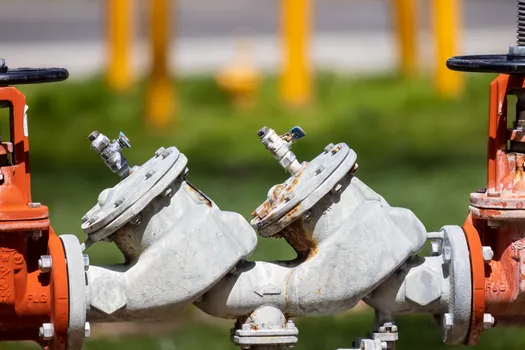
Soft seats fail by creep, swelling, and chemical attack above roughly 200 deg C depending on the polymer, and EPDM specifically is attacked by hydrocarbon oils, which is why specifying EPDM on an oil line is a common engineering error that surfaces as seat blistering and seat-edge extrusion within weeks of service [S3][S4].
Concentric designs fail by seat wear because the disc drags the seat through every cycle, and they exhibit poor throttling control in the lower portion of the disc stroke, a behavior covered in detail for soft vs metal temperature limits and in the line-size and Cv derating work for butterfly valve sizing [S5].
Metal-seated triple-offset valves trade higher torque and higher initial cost for a typical leakage class of IV to V, with Class VI achievable only in very small sizes and tightly controlled machining tolerances, which is why metal-seated units are rarely bid to Class VI shutoff in hydrocarbon service [S3][S8].
Actuation, Sizing, and Standards Anchors
Actuator selection is driven by the valve torque at the worst-case differential pressure, not the line pressure, and the spec needs to account for the safety factor demanded by the project ESD philosophy: pneumatic and hydraulic actuators give the fastest stroking time, electric actuators give the cleanest interface to a control valve network but add stroking-time penalty for ESD [S3].
Sizing must use Cv derating against line-size and trim geometry, with the operating point kept above 20 degrees open to avoid poor flow control and cavitation risk in hydrocarbon service [S5]. End-connection standard anchors to ASME B16.5 for flanges and B16.34 for valve body ratings, with seat-leakage tested to API 598 or FCI 70-2, and fire-safe variants qualified to API 607 or ISO 10497 for hydrocarbon and ESD service [S3][S4][S5].
Trackable signals for the next spec cycle: the rise of triple-offset butterfly valves in LNG and severe-service refining, broader adoption of fugitive-emission low-emission packing per ISO 15848 on hydrocarbon service, and increased specification of duplex and super-duplex discs in sour (NACE MR0175) applications as chloride and H2S partial pressures rise in deeper fields [S5][S8].