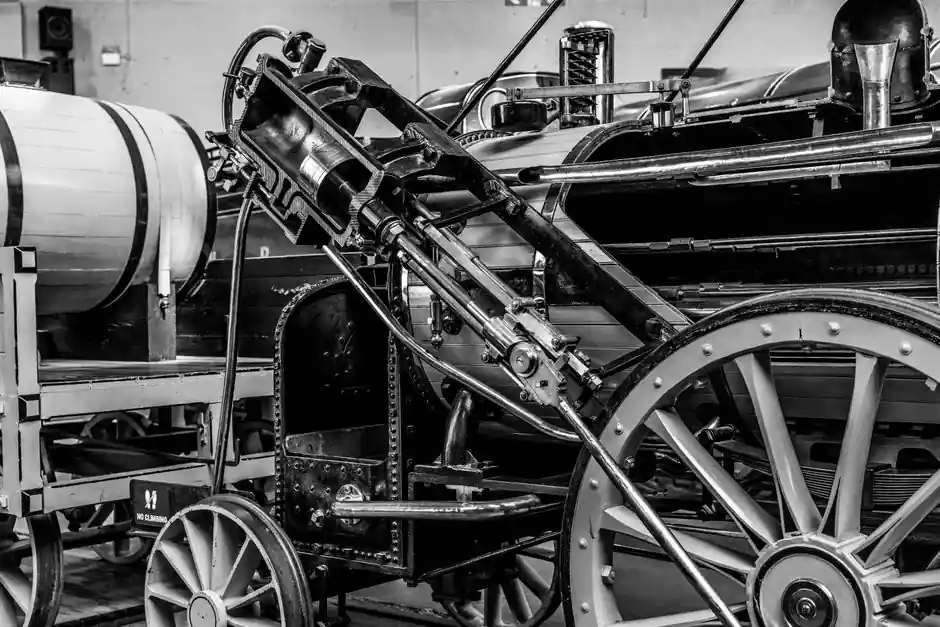
For high-pressure reciprocating duty, the plunger pump is generally the better fit than a piston pump: its stationary seal design decouples packing friction from the reciprocating rod, allowing higher discharge pressure at lower up-front cost [S2][S4].
The trade-off is a stationary high-pressure seal that is still a dynamic rubbing interface, with a recommended suction filtration floor of about 80 mesh (roughly 177 micron) for plain water and roughly 50 micron plus 50 ppm solids on reclaimed liquids, and the process liquid acting as the seal's only coolant and lubricant [S3].
Where the design difference actually comes from
Both designs are positive-displacement reciprocating pumps: a rod enters a cylindrical chamber, draws liquid through an inlet check valve, and forces it out a discharge check valve, with a swash plate or crank driving several chambers in phase [S3][S5].
The single mechanical difference that defines the performance class is seal placement. On a piston pump, the seal is mounted on the moving rod and travels with it, so the seal face slides against the cylinder bore on every stroke. On a plunger pump, the seal is fixed in the cylinder head or stuffing box and the bare plunger rod reciprocates through it, so the seal area does not change with stroke length [S2][S4]. Because the plunger pump's friction vector opposes the pressure vector, they partly cancel, so the drive does not have to work as hard to reach a given discharge pressure [S2].
Pressure capability, flow, and up-front cost
Piston pumps generally deliver more flow per revolution than plunger pumps of comparable displacement and are typically specified for lower discharge pressures, because piston rings do not tolerate high pressure as well as a stationary stuffing-box seal does [S3]. Plunger pumps are routinely specified for high-pressure cleaning, oil and gas injection, misting, and reverse-osmosis feed, with the seal kept out of the swept volume so it can be tightened, repacked, or replaced without entering the pressure chamber.
Up-front cost favours the plunger design in most catalogs: a plunger pump can be noticeably cheaper than a comparable piston pump because the cylinder bore does not have to be machined to the same tolerance as a piston ring seat, and the plunger itself is a simpler part [S2]. The same source notes that plunger pumps have a smoother sliding action, which is part of why they reach higher pressures with the same drive input [S2].
Materials, filtration, and what kills the seal

The plunger is the wear part on a plunger pump, so the materials choice is biased toward hardness and chemical compatibility rather than tensile strength. Common plunger materials are anodized aluminum, brass, and stainless steel, with ceramic plungers used on abrasive or chemically aggressive services because ceramic is hard, polishes to a smooth sealing surface, and resists many chemicals, but has poor tensile strength and can crack under bending loads [S2].
Filtration is the operating variable that most often kills a plunger pump seal. Particles lodge between the rod and the packing and grind both faces, so the published floor is about 80 mesh (177 micron) on clean water, tightening to roughly 50 micron and 50 ppm solids on reclaimed or abrasive liquid [S3]. The process liquid also cools and lubricates the packing, so dry running and high temperature shorten packing life, and the pump must be primed before start [S3]. The packing materials themselves are typically PTFE, PE, PEEK, or nitrile, and they are the same family of elastomers and polymers used on the liquid end of piston pumps, so the wear mechanism is not unique to plunger designs [S3].
Where a plunger pump is the wrong choice
If the fluid is shear-sensitive, dry-running is a real possibility, or the duty includes flooded suction and you cannot tolerate any oil in the product, the dynamic seal on a plunger pump is a problem, not a feature. On those services, diaphragm pumps with a hydraulically balanced diaphragm see roughly 2 PSI or less across the diaphragm face and have no rubbing stem seal on the process side, so particles, dry running, cavitation, and extreme liquid temperature do not cause leakage through a packing path [S3]. A field example from the same source: a D10 fluid-end kit was pulled after 11 years and more than 20,000 hours on reclaimed machine-tool coolant at up to 1,000 PSIG, with diaphragms still in spec and only the check valves needing replacement [S3].
For comparison, a piston pump is the better fit when the priority is flow per revolution, the discharge pressure is moderate, and the fluid is clean and lubricating. A plunger pump is the better fit when the priority is high discharge pressure, lower up-front cost, and the fluid can be filtered and kept primed, see the operating envelope captured in our plunger pump reference page.
Selection criteria side by side
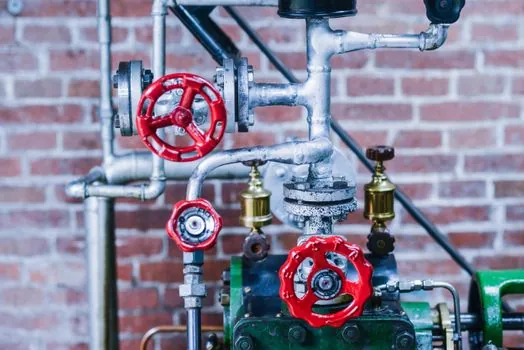
The decision reduces to four operating variables, and lining them up makes the choice mechanical. Discharge pressure: piston pumps are typically used at lower pressure, plunger pumps at higher pressure because the stationary seal can be tightened and the friction vector opposes the pressure vector [S2][S3]. Flow per revolution: piston pumps generally make more flow than plunger pumps of similar displacement, so for a given flow target at moderate pressure the piston geometry is more compact [S3]. Fluid cleanliness: both designs need at least 80 mesh (177 micron) suction filtration on clean water and roughly 50 micron with 50 ppm solids on reclaimed liquids; below that, packing life collapses and the suction must be primed because the packing depends on the process liquid for cooling and lubrication [S3]. Cost and seal serviceability: plunger pumps usually cost less up front and the seal is accessed from outside the pressure chamber, so repacking does not require entering the wetted end [S2].
A fifth variable is duty cycle and leakage tolerance. If a packing leak is unacceptable because the process is hygienic, oil-sensitive, or regulated, neither a piston nor a plunger pump is the right tool, and a diaphragm pump or sealless design should be evaluated instead, a comparison covered in our pressure measurement and pressure gauge reference material that frames the broader instrument-side decision.
Standards, sourcing, and what to verify before buying
There is no single ISO or API standard that fixes the boundary between piston and plunger pump service, so the specifier's job is to check the manufacturer's pressure rating, the maximum solid size and concentration on the suction side, the minimum suction pressure for prime, and the packing material compatibility with the process fluid [S3]. For high-pressure cleaning and hydrostatic test service, discharge pressures in the 1,000-3,000 PSIG range are common on plunger pumps, and a high-pressure pressure gauge rated above the pump's maximum working pressure should be fitted on the discharge manifold for overpressure protection. Calibration of that gauge should be traceable; see our pressure calibrator page for the instrument-side chain. If the discharge line is also feeding a pressure sensor or high voltage tester downstream in a test cell, the pulse profile from a single-plunger pump (one pulse per revolution) is harsher than that of a triplex plunger, and a pulsation dampener or multi-plunger configuration is worth specifying at the quote stage.
Two trackable signals to watch before you sign a PO: confirm the manufacturer's stated minimum solids size and concentration on the suction side for your specific fluid, and confirm the packing material compatibility chart against the chemistry and temperature of your process, both of which are the leading causes of premature plunger-pump failures in the field [S3].
Background reading: FOV from screen diameter and lens magnification: a 2026 engineer's reference.